
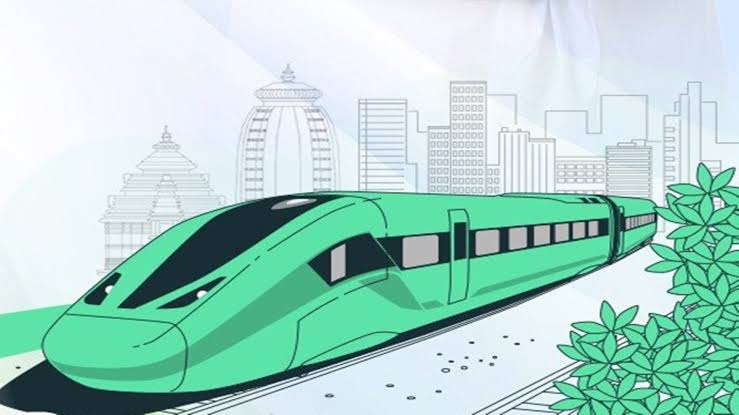
The long-awaited Bhubaneswar Metro Rail Project continues to be shrouded in uncertainty, with the state government keeping it under scrutiny.
In line with the National Metro Rail Policy, an inter-ministerial committee is actively re-evaluating the project’s feasibility, projected passenger volume, and technical specifications.
This information was shared by Housing and Urban Development Minister Dr Krushna Chandra Mohapatra in response to a non-starred question in the Odisha Legislative Assembly.
While the minister has not outright dismissed the possibility of the project’s implementation, the absence of any firm decision has left its future unclear and residents hopeful yet frustrated.
The project faced a setback when the incoming BJP government cancelled two tenders that had been floated during the previous administration. Nearly 20 months into the BJP’s tenure, the inter-ministerial committee has held only two meetings, yielding no conclusive outcomes. However, discussions at the official level have explored advancing the metro initiative in tandem with the Bhubaneswar-Cuttack Industrial Corridor Initiative (BCICI) economic corridor plan, potentially with support from the central government.
Metro projects in any major city typically require 8 to 10 years for full completion. As Odisha’s capital, Bhubaneswar, experiences steady expansion and population growth, the demand for efficient public transport like a metro system is on the rise. Anticipating future urban pressures, the prior government had conceptualised this rail network to address escalating mobility needs.
In his written reply to MLA Nalinikant Pradhan’s query, Minister Mohapatra detailed that the proposed metro line spans 26 km from Trishulia in Cuttack district to Bhubaneswar International Airport, with an estimated cost of ₹6,255.94 crore. The project is currently under review to ensure alignment with national policies. Alongside this, a Comprehensive Mobility Plan and Odisha’s ‘Sustainable Urban Mobility Plan’ are in preparation, aimed at enhancing the project’s operational efficiency and financial viability. As of December 31, 2025, ₹273.51 crore (unaudited) has been expended on the initiative. Existing surveys and Detailed Project Reports (DPRs) will serve as valuable resources for future sustainable urban development blueprints in the state.