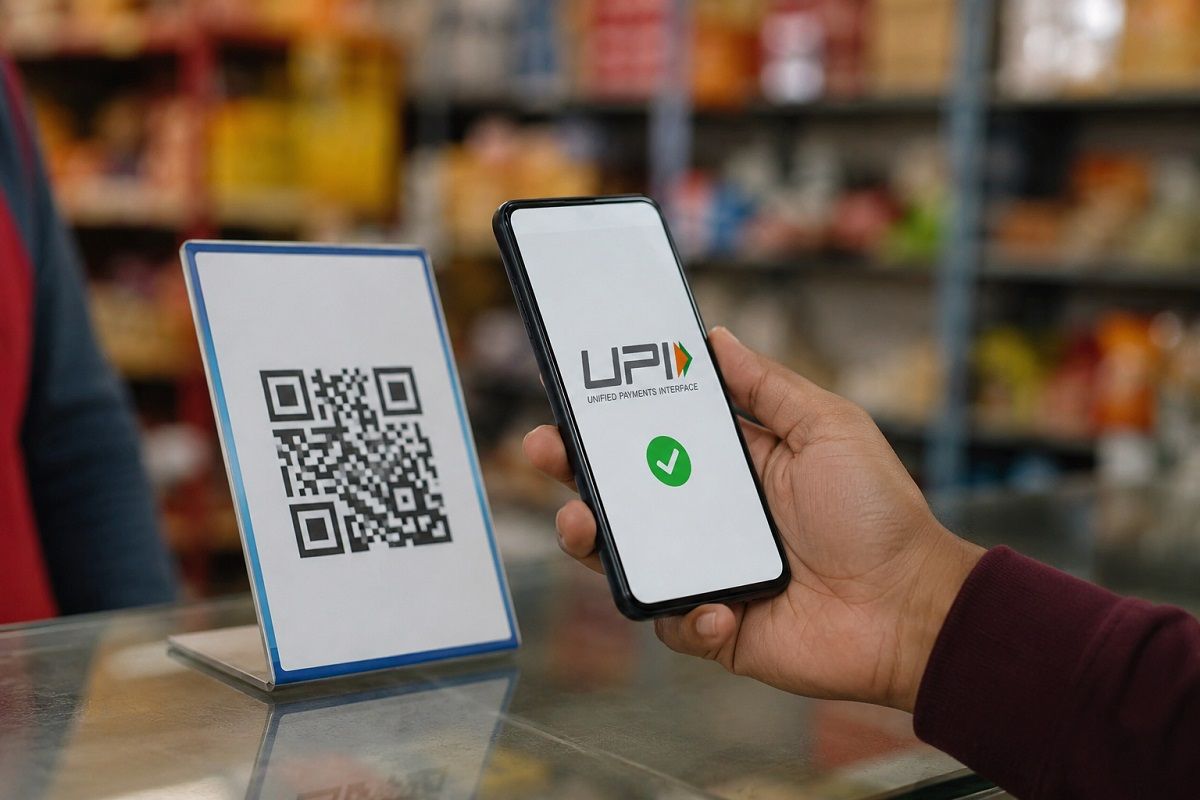
The government is preparing a monitoring mechanism to ensure that the new Merchant Discount Rate (MDR) on select UPI transactions above Rs 2,000 is not passed on to consumers.
The development comes after the National Payments Corporation of India (NPCI), which operates the Unified Payments Interface (UPI), issued a circular on September 15 introducing MDR on certain transactions from October 15.
According to sources cited in a PTI report, the Finance Ministry has begun discussions with payment aggregators and other stakeholders in the UPI ecosystem to sensitise them about the new framework and ensure that consumers do not bear the additional cost.
Who Will Pay The UPI MDR?
A 0.4% MDR will apply to person-to-merchant UPI payments above Rs 2,000 from October 15. The charge will be paid by merchants rather than consumers.
The MDR will also be capped at Rs 300 for transactions of Rs 75,000 or more.
Payments between individuals will continue to remain free. The vast majority of everyday merchant transactions will also not be affected by the new charge.
Only 4% Of UPI Volume Expected To Be Affected
Sources cited in the PTI report said only around 4% of total UPI transaction volume would be impacted by the new MDR framework.
The sources also said a reduction in overall UPI transactions is not anticipated because most digital payments will continue without the new charge.
Transactions made using RuPay debit cards will remain free regardless of the transaction amount.
Government Rejects US Pressure Claim
The Finance Ministry has rejected allegations that the decision to introduce MDR was influenced by pressure from the United States.
The Department of Financial Services (DFS) said the September 15 NPCI circular does not provide international credit cards with an advantage over RuPay.
The clarification came after observations in the US Trade Representative’s 2026 National Trade Estimate Report, which raised concerns about the participation of US electronic payment service providers in the UPI ecosystem.
The DFS described allegations that the MDR was introduced due to external influence as “patently false and misleading.”
Opposition Raises Questions Over UPI Charge
The issue has also triggered political debate, with some Opposition parties, including the Congress, alleging that the government introduced the MDR under US pressure.
The government has rejected the allegation and said the new framework does not favour international credit card networks over RuPay.
Officials and sources cited in the report also dismissed concerns that the MDR could encourage consumers to return to cash or have a significant inflationary impact.
For consumers, the key takeaway is that the new 0.4% MDR is not intended to become a direct charge on UPI users, while the government plans to monitor the ecosystem to ensure the burden remains with merchants.