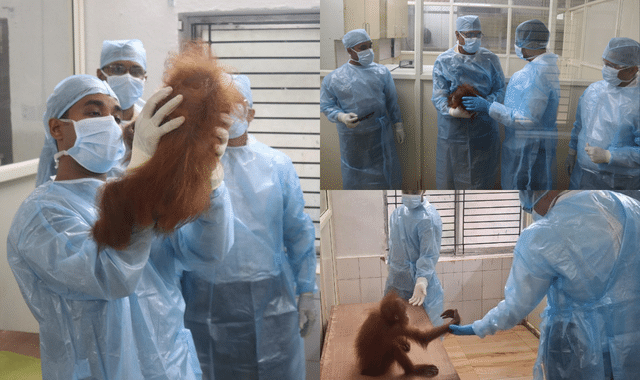
Inside the quarantine wing at Nandankanan Zoological Park, five infant orangutans spent Wednesday morning with a team of specialists who had come to answer a simple but urgent question: how are they really doing?
The answer, for now, is cautiously hopeful. The babies are stable. They are accepting food. Their condition is better than it was in the first days after rescue. But they remain motherless primates far from the forests of Borneo and Sumatra, and every test still matters.
A technical committee formed by Odisha’s Principal Chief Conservator of Forests (Wildlife) visited the hand-rearing and quarantine facility for nearly five hours. The panel included veterinarians from Mysore Zoo, Dr Aditya Prasanna Acharya of the Centre for Wildlife Health at Odisha University of Agriculture and Technology (OUAT), Nandankanan Director Sanath Kumar Narayan, Deputy Director Pradeep Mirase and senior zoo veterinarian Dr Sarat Kumar Sahu.
Working under full biosecurity protocols, the team examined health, diet, behaviour and living conditions of all five infants — three males and two females. One of the babies even reached out and held a gloved hand, a small sign that fear is easing and curiosity is returning.
“Their health is stable now and better than before,” Dr Acharya said. Blood, stool and urine samples were collected. X-rays of the chest, abdomen and skull were taken. In-house tests have already flagged severe anaemia in one infant and mild anaemia in two others. Supportive supplements recommended by the committee have begun.
Full laboratory reports are expected by Friday morning. Those results will guide the next steps in treatment, diet and housing.
The five orangutans were found in early September in a coastal forest area of Baleshwar district and shifted to Nandankanan. Because the species is not native to India, their appearance triggered a wildlife crime investigation alongside intensive veterinary care. Quarantine is planned for about 30 days, with discussion underway on whether that period should stay at 30 days or stretch to 45.
Director Sanath Kumar Narayan said the infants’ condition is now “normal” in day-to-day observation, but the bigger decision — how long they stay in closed quarantine and when they can use an open enclosure — will be taken only after the committee’s advice. An open area already exists near the quarantine unit. If experts recommend gradual outdoor exposure to help the babies settle, authorities will consider it.
That adaptation is the hardest part. Dr Shashidhar of Mysore Zoo noted that the infants are trying to accept a new climate without their mothers. Creating the right temperature, humidity, diet and stimulation takes time. Keepers are already feeding them at short intervals, monitoring temperatures with thermal cameras, and watching for stress as well as infection.
For Nandankanan, the immediate priority is not whether the five will remain in Odisha forever or eventually be considered for repatriation. The priority is keeping them alive, calm and growing. Friday’s reports will tell officials whether the current care plan should continue or change.
Until then, the nursery stays quiet, the team stays on watch, and five small orangutans keep learning a landscape they were never meant to wake up in.