The capital’s largest wholesale and retail hub, Unit-1 Market — locally called 1 Number Haat — looks less like a planned marketplace and more like a tinderbox waiting for the next short circuit.
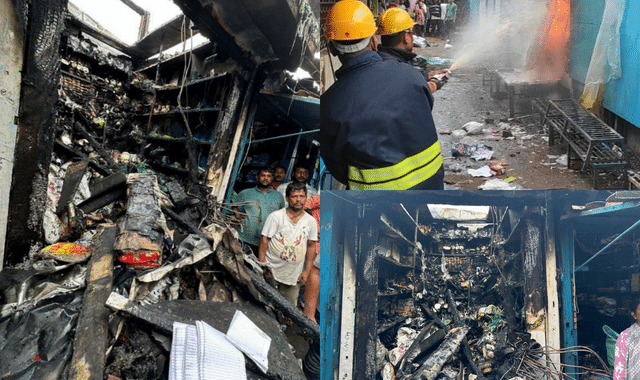
On Saturday, August 22, two shops — one grocery store and one puja-samagri outlet — were reduced to ash in the early hours. Locals noticed smoke around 5 am. By the time shutters were opened, the shops were already in flames. Firefighters contained the blaze before it leapt further, but the pattern was painfully familiar: engines could not push deep into the haat. They fought from the main road.
That is the story traders keep repeating. The market is so tightly packed, so illegally extended, so stacked with cooking gas, kerosene, ghee, camphor, sulphur, paper, cloth, plastic and polythene that one shop on fire becomes an invitation to the next.
Three major fires. Little change.
In two years, Unit-1 has seen three large infernos — and smaller ones that rarely make the headlines.
- October 22, 2025: Dozens of shops burned in an afternoon blaze. Estimates range from about 30 to around 40 shops.
- January 20, 2026: A night fire tore through regular shops and kiosks. Official counts vary — over 40 in some reports, 97 including kiosks and vending zones in others — with losses running into crores. Plastic and polythene fed the flames.
- August 22, 2026: Two shops gutted again. Short circuit suspected, as in most earlier cases.
December 2024 also saw five godowns burn in the vegetable market. Traders now ask a blunt question: after all this, who is accountable?
The Special Relief Commissioner had written to BMC, OSDMA and the chief fire officer. The order was clear: every shopkeeper must hold a fire-safety certificate; entry and exit lanes must be freed of encroachments; fire tenders must get a usable inner road; shops selling highly inflammable goods must move to open space. Two years later, traders say the paper is still paper.
The Odisha Human Rights Commission sought a report from the Bhubaneswar DCP. Police noted the haat sits under BMC control. Civic officials, traders allege, know everything and still stay quiet. Illegal polythene and plastic sheets remain in use. Live wires still hang dangerously. A modern market-complex plan floated since 2014 has not moved. A shift of some traders to Bhagabanpur was discussed, then stalled amid alleged irregularities.
About 2,839 traders work in the haat. After the January fire, Mayor Sulochana Das blamed polythene, promised an SOP, and spoke of about Rs 26 crore from the government and a plan to secure electrical wiring. Eight months later, traders say the next step never arrived. In May 2026, BMC prepared a blueprint for fire hydrants and underground pipelines. The August fire, they argue, is another warning bell — not a surprise.
The fear is simple
If one shop burns, the neighbour burns. Fire engines cannot enter. Promises arrive faster than hydrants.
Until lanes are cleared, wiring is fixed, inflammable stock is moved, and water reaches the inner rows, Unit-1 Market will keep living on borrowed time. Traders say they no longer want assurance. They want a date.