Letters Fly Over MMDR Act and Odisha’s Mineral Rights
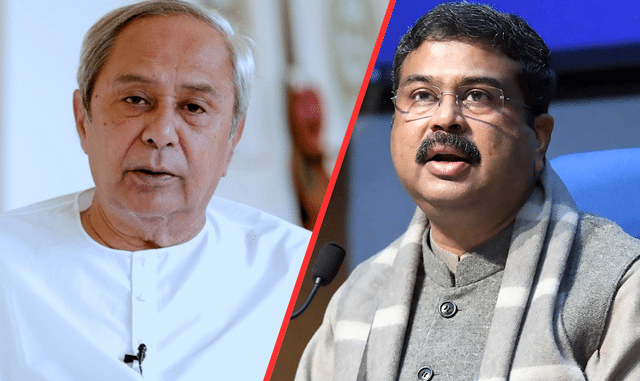
Leader of Opposition and Biju Janata Dal president Naveen Patnaik on Saturday wrote to Bharatiya Janata Party MPs from Odisha, calling the passage of the Mines and Minerals (Development and Regulation) Amendment Bill, 2026 a “black day” for the state and urging them to seek its reversal.
Responding to the letter, Sambalpur MP and former Union Education Minister Dharmendra Pradhan wrote back, accusing Patnaik of concealing facts and creating “unfounded fear.”
The exchange has turned a national mining reform into a direct political contest over revenue, federal power, and the future of India’s most mineral-rich state.
What Naveen told the BJP MPs
Patnaik’s letter is addressed to “MPs of BJP from Odisha.” He reminded them that Parliament is “the highest temple of Indian democracy” and that they were elected as Odisha’s voice there. Their vote for the Bill, he said, was a betrayal of that trust.
August 13, when the Lok Sabha passed the Bill with their support, was a black day, he wrote. The legislation was cleared after less than ten minutes of discussion despite “far-reaching implications” for Odisha. The state accounts for nearly 44 percent of India’s mineral wealth and has, for decades, fed the country’s steel, power, mining and infrastructure sectors. “India stands taller and stronger today because of the immense contribution made by Odisha and her people,” he said.
Appealing Hon’ble BJP MPs of #Odisha to challenge and call for a reversal of the amendment made in the #MMDR Act that takes away the powers of the Odisha Govt. Our Parliament is the highest temple of Indian democracy. As a member of Parliament, you are the voice of Odisha in this… pic.twitter.com/CPtGoFi1CL
— Naveen Patnaik (@Naveen_Odisha) August 29, 2026
The estimated annual loss, according to Patnaik, would exceed Rs 12,000 crore and run into lakhs of crores over time. The bigger loss, he argued, was political and constitutional: “in a single legislative stroke the control over our own minerals and our mineral-bearing lands was taken away from us. And this happened under your watch.”
He called the law an injustice to Odisha’s children and youth, to communities that live with pollution, displacement and mining hazards, and to “the dream of an empowered Odisha.” History, he warned, would judge the MPs not by the party they stood with, but by whether they stood up for Odisha when it mattered most. He left the choice to their “judgment.”
What the law actually changes
The MMDR Amendment Act, 2026 amends the 1957 Act. It brings “mineral-bearing lands” under Union regulation and inserts a new Section 9D. That section bars state governments from imposing any tax, cess or other levy on mineral rights or mineral-bearing lands—whether based on quantity, value, royalty or any other basis—except as the Centre may prescribe. Levies not already collected before the law takes effect are treated as invalid. Amounts already paid to states need not be refunded.
The Centre says the aim is a uniform fiscal regime for major minerals, price stability for steel, cement, power and coal, and protection against “predatory multi-level taxation.” Union Mines Minister G. Kishan Reddy has insisted the amendment does not take away existing royalty, auction premium or DMF flows and that about 90 percent of mining-sector revenues will continue to go to states. The government also links the Bill to the 2024 Supreme Court judgment that upheld states’ power to tax mineral rights—an opening New Delhi now wants to close through legislation.
Odisha’s BJP government has rejected Opposition demands for a special Assembly session, saying the issue can be discussed in the regular monsoon sitting.
Pradhan’s point-by-point reply
Pradhan’s letter to Patnaik is equally pointed. Political debate is healthy, he wrote, but “misleading the people of Odisha by concealing facts and spreading unfounded fear is completely unacceptable.”
On revenue, he said Patnaik’s claim of a lost share is “completely factually incorrect.” Under the new law, about 90 percent of mining-sector revenues will still flow to state treasuries. Odisha, he wrote, will retain 110 percent of its auction premiums, 15 percent royalties, and DMF collections.
He then recast recent history. Before 2014, he said, mining concessions were given through “non-transparent mechanisms to selective families and entities,” and Odisha’s annual mining revenue stagnated around Rs 5,000 crore. Prime Minister Narendra Modi’s 2015 MMDR reforms—mandatory e-auctions and a rise in ad valorem royalty from 10 to 15 percent—took that figure to nearly Rs 50,000 crore a year. The credit, Pradhan argued, belongs to central policy, not the previous state government.
MMDR ସଂଶୋଧନ ବିଲ୍, ୨୦୨୬ କୁ ନେଇ ଓଡ଼ିଶାର ବିରୋଧୀ ଦଳ ନେତା @Naveen_Odisha ଲେଖିଥିବା ଚିଠିପଢ଼ିବା ପରେ ଆଶ୍ଚର୍ଯ୍ୟ ଲାଗୁଛି, ସତ୍ୟକୁ ଲୁଚାଇ ମିଛରେ ଭୟ ସୃଷ୍ଟି କରି ଓଡ଼ିଶାବାସୀଙ୍କୁ ବିଭ୍ରାନ୍ତ କରିବା ଉଚିତ୍ କି ? ସତ୍ୟ କଥା ପ୍ରକାଶ କରିବା ପାଇଁ ଆପଣଙ୍କର ସଙ୍କୋଚ କାହିଁକି?
MMDR ସଂଶୋଧନ ଆଇନ ପ୍ରଧାନମନ୍ତ୍ରୀ… pic.twitter.com/zyZHjsvt4b
— Dharmendra Pradhan (@dpradhanbjp) August 29, 2026
Uncontrolled extra levies on mineral-bearing land, he warned, would have shut mines and factories in Kendujhar, Sundaragada, Jharsuguda, Anugola and Jajpur, cost youth their jobs, and pushed up the price of steel, cement, power and housing for ordinary families. Section 9D, in his telling, is a ceiling against that risk, not a raid on the state exchequer.
He also used the District Mineral Foundation as a political weapon. The Centre’s 2015 DMF framework has generated more than Rs 37,000 crore for drinking water, health, education and roads in Odisha’s mining districts. A CAG audit of the BJD years, he said, found Rs 983 crore spent in 976 non-affected villages while 584 directly affected villages received nothing, and 1,730 projects were executed without Gram Sabha approval.
On the older Orissa Rural Infrastructure and Socio-Economic Development (ORISED) Act, 2004, Pradhan noted that the High Court struck it down in 2005 and that Patnaik’s government spent 18 years in the Supreme Court without passing a validating law in the Assembly.
Odisha’s BJP MPs, he concluded, voted for the Bill in the larger interest of industry, jobs and youth. He asked Patnaik to rise above a “partisan prism.”
Why the fight is so sharp
This is not only about one year’s tax. Odisha’s politics has long been built on minerals: who auctions them, who taxes them, who lives with the dust, and who claims the credit when revenues rise.
Patnaik frames the amendment as a loss of sovereignty over land and future generations. Pradhan frames it as protection of existing revenues, industrial survival, and a decade of auction-driven growth.
BJD leaders have already talked of an Assembly resolution and, if that fails, a possible Supreme Court challenge. The ruling BJP says there is no revenue loss and no need for a special session. Between those positions sit 20 BJP Lok Sabha MPs from Odisha—the people Patnaik asked to listen to their conscience, and the people Pradhan says already voted for the state’s long-term interest.
The letters do not settle the legal question. They do make the political question unavoidable: when the Centre redraws the line between national mineral policy and state fiscal power, whose version of Odisha’s interest will hold?