

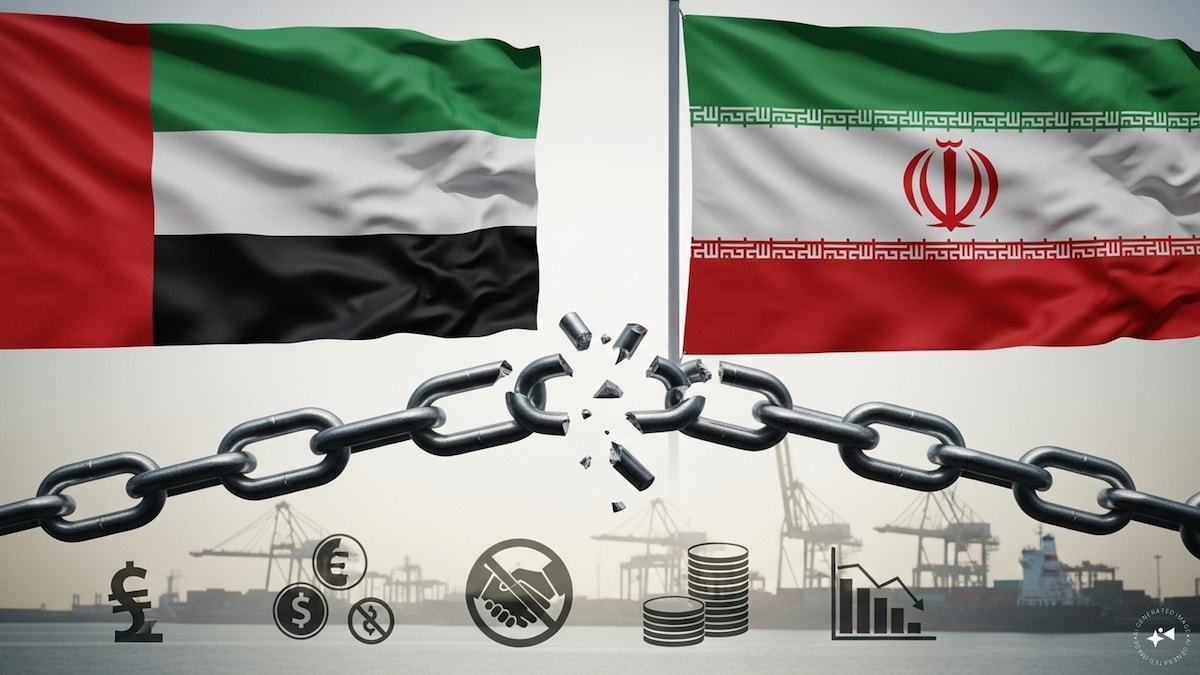
The United Arab Emirates remained on high alert on Wednesday after a missile warning triggered emergency alerts across the country, followed by an accusation from Abu Dhabi that Iran had launched two ballistic missiles towards the UAE.
The incident has added another layer of tension to an already volatile Middle East, with the wider US-Iran conflict unresolved and the strategically vital Strait of Hormuz remaining at the centre of the crisis.
Missile alert triggers panic across UAE
Residents in several parts of the UAE, including Dubai, received an emergency missile threat alert at around 6:52 pm on Tuesday. Authorities urged people to immediately seek shelter in the nearest secure building.
The alert was withdrawn around 15 minutes later after the UAE Interior Ministry declared the situation safe and asked residents to resume normal activities.
The UAE Ministry of Defence later said its air defence systems had detected two ballistic missiles launched from Iran.
According to the ministry, one missile fell outside UAE territorial waters, while the second came down within the country’s territorial waters. A subsequent assessment indicated that the missiles appeared to have been aimed at maritime traffic.
Both missiles ultimately fell into the sea, according to the UAE authorities.
The Defence Ministry said UAE forces remained on high alert and were prepared to respond to any threat to the country’s security and sovereignty.
Iran rejects UAE’s accusation
Iran has denied launching missiles towards the UAE.
Iranian Foreign Ministry spokesperson Esmaeil Baghaei reportedly rejected the allegation as baseless, saying such claims could damage efforts to rebuild trust between countries in the region.
Tehran also accused regional actors of making unsubstantiated allegations at a time when tensions are already running high.
The conflicting claims have further complicated an already fragile regional situation.
UAE suspends trade with Iran
Hours after the missile allegations emerged, the UAE announced a major economic measure against Iran.
Abu Dhabi suspended trade, commercial exchanges and financial transactions with Iran until further notice, citing regional developments that it said were threatening regional and international peace and security.
The decision represents a significant deterioration in relations between the two neighbouring countries, which had recently sought to maintain channels for dialogue.
The UAE has continued to stress the need to avoid further escalation, but the latest developments have put those diplomatic efforts under renewed pressure.
Strait of Hormuz remains at the heart of crisis
The latest UAE-Iran confrontation comes against the backdrop of continuing tensions over the Strait of Hormuz, one of the world’s most strategically important waterways.
The waterway normally handles a significant share of global oil and liquefied natural gas shipments. Any prolonged disruption could therefore have major consequences for energy prices, international trade and global markets.
The UAE has also reported a series of incidents involving UAE-linked shipping in the strait. Iran has not claimed responsibility for those reported attacks.
US-Iran tensions remain unresolved
The UAE missile scare comes as the broader US-Iran conflict remains unsettled.
A 60-day period established under a June memorandum for Washington and Tehran to negotiate a broader peace arrangement expired on August 17 without a breakthrough.
US President Donald Trump has said there are currently no talks with Iran, while Tehran has maintained that the Strait of Hormuz will remain closed until its conditions for ending the conflict are met.
Trump, meanwhile, has said the waterway is open and operating. However, shipping traffic remains far below pre-war levels.
With diplomacy stalled and tensions spreading across the Gulf, the latest UAE-Iran confrontation has raised fresh concerns over the possibility of further regional escalation.