
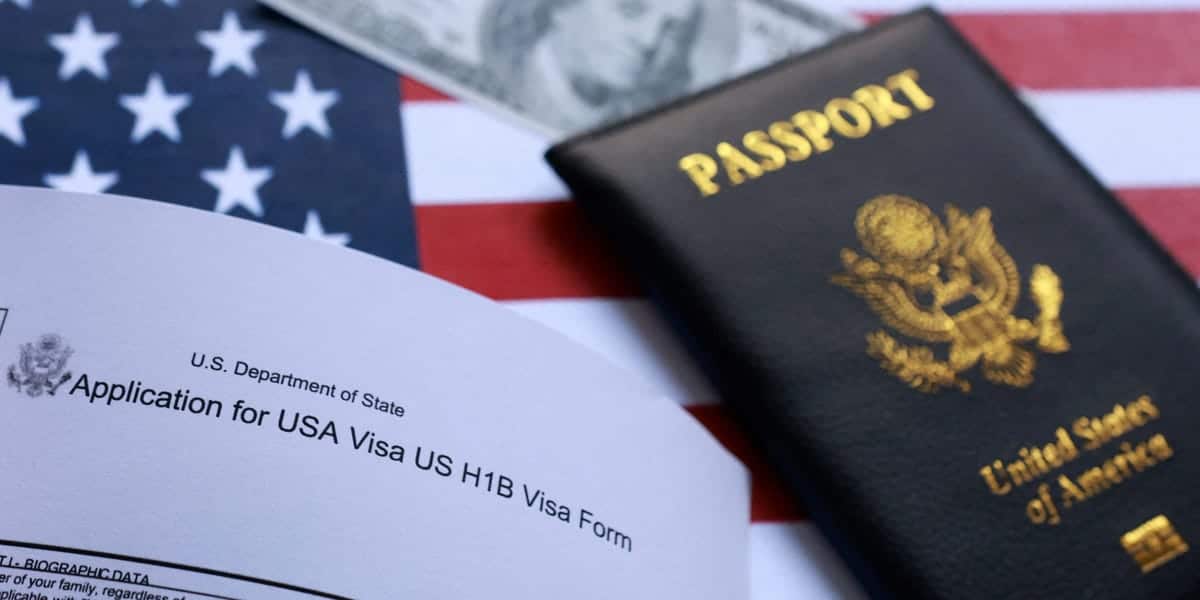
In a significant decision for skilled foreign workers and US employers, a federal court in Boston has struck down former US President Donald Trump’s controversial $100,000 H-1B visa application fee, calling it unlawful.
The ruling comes as welcome news for thousands of professionals seeking employment opportunities in the United States, particularly Indian workers, who make up the largest share of H-1B visa holders.
The decision contradicts an earlier ruling by a federal court in Washington, DC, which had upheld the fee increase. The legal battle over the policy is expected to continue, with the Trump administration indicating it plans to challenge the latest judgment.
What Is the H-1B Visa Program?
The H-1B visa program allows US employers to hire foreign professionals in specialized occupations requiring advanced knowledge and skills.
According to the US Department of Labor, these positions typically require at least a bachelor’s degree or equivalent qualifications. The program is widely used in sectors such as information technology, engineering, healthcare, finance, and scientific research.
Each year, the United States issues approximately 65,000 H-1B visas, along with an additional 20,000 visas for applicants holding advanced degrees.
Approved visas are generally valid for three to six years and can be renewed under specific conditions.
Why Was the $100,000 Fee Controversial?
In September 2025, the Trump administration dramatically increased the H-1B visa application fee to $100,000 for employers sponsoring highly skilled foreign workers.
Before the hike, employers typically paid between $2,000 and $5,000 in visa-related fees, depending on the category and application requirements.
Business groups, immigration advocates, and industry leaders argued that the massive increase would discourage companies from hiring global talent and create barriers for innovation-driven industries.
The Boston court agreed that the fee increase exceeded legal authority, leading to the policy being struck down.
Why the Ruling Matters for Indians
The court’s decision is especially significant for Indian professionals.
Government data shows that nearly 70 percent of H-1B visa holders in the United States are Indian nationals, making them the largest beneficiary group under the program.
For decades, the H-1B route has helped Indian engineers, software developers, researchers, healthcare professionals, and other skilled workers build careers in the US. Experts also credit the program with contributing to the rise of Indian-Americans as one of the most educated and highest-earning communities in the country.
With the $100,000 fee now invalidated, employers may find it easier and more affordable to recruit skilled international talent, potentially benefiting thousands of Indian applicants.
What Happens Next?
Although the ruling provides immediate relief, the legal dispute is far from over.
A White House spokesperson indicated that the administration intends to appeal the decision, pointing to a separate federal court ruling that had previously upheld a similar fee structure.
“The H-1B program has been abused for decades, and President Trump finally took action to fix it,” the spokesperson said, expressing confidence that the latest ruling would be overturned on appeal.
Meanwhile, several lawmakers, industry groups, and Indian diaspora organizations have welcomed the decision, describing it as a positive step for skilled workers and businesses.
However, many observers remain cautious, noting that future court proceedings could determine whether the fee increase is permanently blocked.