

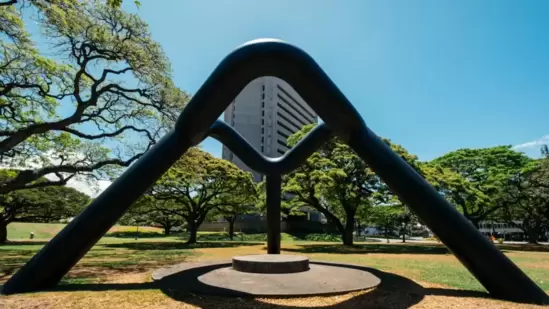
For a few magical minutes every year, shadows almost completely disappear. This rare astronomical phenomenon, known as Lahaina Noon or Zero Shadow Day, creates an unusual moment when the Sun sits directly overhead and upright objects stop casting visible shadows.
The fascinating event has once again sparked curiosity among skywatchers, students, photographers, and science enthusiasts worldwide.
What is Lahaina Noon?
Lahaina Noon occurs when the Sun reaches the subsolar point — the exact position where sunlight falls vertically on Earth. During this moment, the Sun appears directly above your head at solar noon, causing shadows to shrink dramatically or disappear altogether.
Street poles, trees, buildings, and even people may appear shadowless for a short period, creating a surreal visual effect.
The phenomenon is also popularly called:
- Zero Shadow Day
- Shadowless Noon
- No Shadow Event
Why Does Lahaina Noon Happen?
The event takes place because of Earth’s tilt and its yearly orbit around the Sun.
As Earth revolves around the Sun, the direct rays shift between the Tropic of Cancer and the Tropic of Capricorn. Regions located within these tropical boundaries experience the Sun directly overhead at certain times of the year.
23.5∘N≤Subsolar Point≤23.5∘S23.5^\circ N \leq \text{Subsolar Point} \leq 23.5^\circ S
At that precise solar noon:
- Sunlight falls vertically
- Shadows become extremely small
- Some shadows disappear entirely for a few minutes
Scientists describe this as the moment when the subsolar point passes directly overhead.
Which Places Experience Zero Shadow Day?
Lahaina Noon only occurs in locations situated between the Tropic of Cancer and the Tropic of Capricorn.
Countries and regions that experience this phenomenon include:
- India
- Hawaii
- Thailand
- Indonesia
- Mexico
- Parts of Africa
- Central America
Several Indian cities also witness Zero Shadow Days every year depending on latitude and seasonal Sun movement.
Why Is It Called Lahaina Noon?
The term “Lahaina Noon” became popular in Hawaii during the 1990s after a naming contest organised by Honolulu’s Bishop Museum.
The name comes from the Hawaiian phrase associated with the “cruel Sun,” reflecting the intense overhead sunlight experienced during the event.
Ancient Hawaiians earlier described it as:
“Kau ka lā i ka lolo”
meaning “the Sun rests on the brains.”
The phrase vividly captured the feeling of the blazing Sun directly overhead.
Why the Event Fascinates People
Lahaina Noon has become a popular attraction because everyday surroundings suddenly look unusual.
During the event:
- Objects seem unnaturally flat
- Buildings lose their shadow outlines
- People appear almost shadowless
- Photographers capture rare visual effects
The phenomenon is brief, usually lasting only a few minutes, making it even more special for observers.
Can Lahaina Noon Be Seen in India?
Yes. Many Indian cities located within tropical latitudes witness Zero Shadow Days annually.
The dates vary depending on geographical location and the Sun’s seasonal movement. Science centres and observatories in India often organise public demonstrations during these events to explain astronomy concepts to students and visitors.
A Stunning Reminder of Earth’s Cosmic Motion
Although Lahaina Noon lasts only a few minutes, it beautifully demonstrates the relationship between Earth, the Sun, and planetary motion.
For scientists, it is a practical astronomy lesson. For the public, it remains one of nature’s most fascinating visual spectacles — a rare moment when the midday Sun becomes so perfectly aligned that even your shadow disappears.