
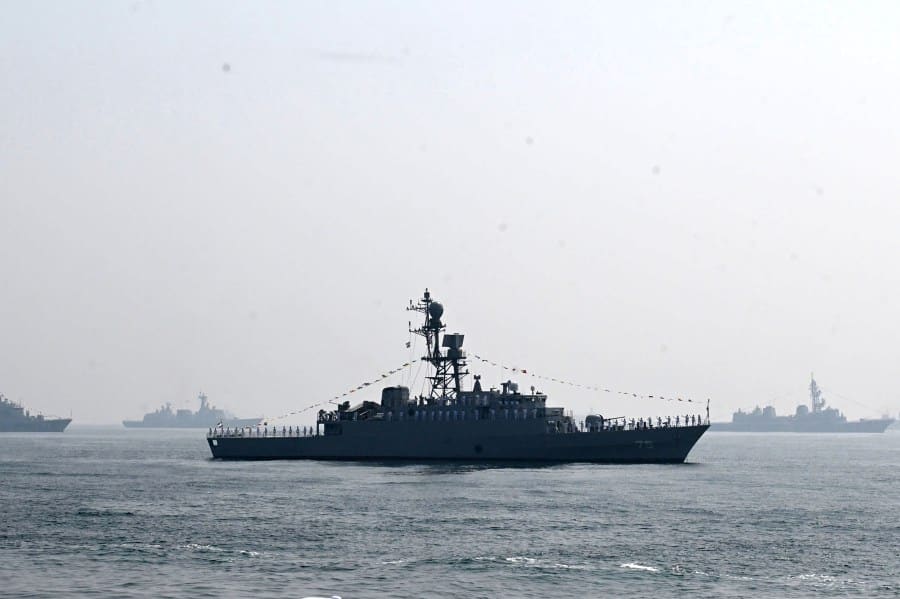
Global attention has turned to the Iranian military tanker Busheir, which is currently anchored near Colombo port in Sri Lanka, following the sinking of the Iranian warship IRIS Dena by a United States submarine in international waters.
The warship was reportedly destroyed by a torpedo fired from a Virginia-class submarine around 50 nautical miles off the coast of Galle, Sri Lanka.
While the attack occurred in international waters, the tanker Busheir is positioned about 10 nautical miles from the outer anchorage of Colombo Port, placing it within Sri Lanka’s territorial waters, which makes the situation diplomatically sensitive.
US Strike Part of Wider Naval Confrontation
The sinking of IRIS Dena is being viewed as part of a broader naval confrontation between the United States and Iran amid escalating tensions across the Gulf and the Indian Ocean.
According to defence assessments, the United States has targeted multiple Iranian naval assets after Tehran allegedly attempted to strike US naval strike groups and commercial oil tankers in the Strait of Hormuz.
Reports suggest that several Iranian vessels, including submarines and warships, have been neutralised in an effort to reduce maritime threats to global shipping lanes.
Strategic Importance of Colombo Anchorage
The presence of the Iranian tanker near Port of Colombo has drawn international attention because it sits within Sri Lanka’s sovereign waters.
This means any military action involving the vessel would require careful diplomatic considerations, as it could directly involve Sri Lanka in a rapidly escalating regional conflict.
Security analysts say the tanker’s location could potentially complicate naval operations if tensions escalate further.
Regional Tensions Continue to Rise
The conflict between the United States and Iran has expanded beyond naval engagements, with reports of missile and drone attacks targeting countries across the Middle East.
Iran has reportedly attempted strikes against Gulf nations and strategic locations, including infrastructure in countries that host US military bases.
Meanwhile, the United States and Israel have continued military operations targeting Iranian military infrastructure.
Despite these developments, analysts believe Iran’s Revolutionary Guard Corps (IRGC) and associated units remain operational, continuing missile and air-defence activities within the country.
Possible Diplomatic Outcome
Experts suggest that despite the intense military exchanges, the conflict may ultimately lead back to negotiations between Washington and Tehran.
Diplomatic discussions could focus on limiting Iran’s nuclear and missile programs, a long-standing issue in international negotiations.
Iran’s traditional partners, including China and Russia, have so far issued statements but have not directly intervened in the conflict.
With the situation continuing to evolve, international observers remain closely focused on developments in the Indian Ocean region and the strategic waters around Sri Lanka.