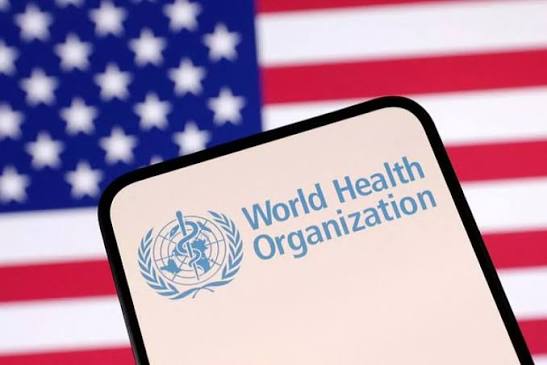
The United States has formally completed its withdrawal from the World Health Organization (WHO), ending all participation in the United Nations’ global health agency and leaving behind unpaid dues estimated at up to $260 million, according to international media reports.
The withdrawal comes a year after President Donald Trump, on the first day of his second term, signed an executive order directing the US to exit the WHO. The administration cited concerns over the agency’s handling of the Covid-19 pandemic, lack of institutional reforms, and alleged political influence.
The US Department of Health and Human Services (HHS) confirmed that all funding to the WHO has been terminated, and American personnel have been recalled from the organization’s headquarters and regional offices worldwide. The US has also ended its participation in WHO leadership bodies, technical committees, and working groups.
Despite completing the formal exit, the US has not paid its assessed contributions for 2024 and 2025. WHO officials estimate the outstanding dues at around $260 million, though some reports place the figure at over $130 million.
An administration official stated that the US is not legally required to clear outstanding payments before withdrawal, despite a 1948 Congressional resolution that mandates one year’s notice and settlement of dues prior to exiting the agency.
The move significantly impacts the WHO, as the US has historically been its largest donor. Between 2022 and 2023, Washington contributed nearly $1.3 billion to the organization, according to reports.
Global health experts have expressed concern over the decision. Lawrence Gostin, director of the WHO Collaborating Center on National and Global Health Law at Georgetown University, described the withdrawal as a “messy divorce” and warned it could weaken global responses to future health emergencies.
Medical professionals and public health leaders caution that the US exit could undermine initiatives such as polio eradication, maternal and child health programmes, pandemic preparedness, and emerging disease research. The withdrawal also means the US no longer has access to global influenza surveillance data, which plays a critical role in vaccine development and outbreak response.
Dr Ronald Nahass, president of the Infectious Diseases Society of America, called the decision “shortsighted and scientifically reckless,” warning that it could have lasting consequences for both global and domestic public health.