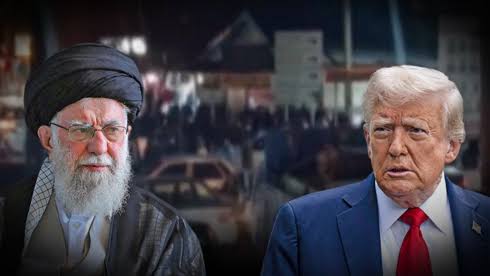
Iran has issued a strong warning against any foreign involvement in its internal affairs after former US President Donald Trump said the United States could intervene if Iranian authorities used lethal force against peaceful protesters.
Responding to Trump’s remarks, a senior adviser to Iran’s Supreme Leader Ayatollah Ali Khamenei stated that US interference would trigger widespread instability and chaos across the region. The comments come as Iran continues to grapple with expanding protests driven by economic pressure and public frustration.
Trump, posting on his Truth Social platform, said the US was “locked and loaded and ready to go” should Iranian forces harm demonstrators. His statement followed reports of escalating clashes between protesters and security personnel.
At least seven people have reportedly died during confrontations since protests began earlier this week, according to local and international media. Demonstrations initially erupted in Tehran, where shopkeepers and citizens gathered to criticise the government’s handling of the economy, citing a sharp fall in the national currency, weak growth, and rising living costs.
Official data shows Iran’s inflation rate reached 42.5 percent in December, intensifying financial strain on households. The movement widened on Tuesday as students from more than ten universities joined protests, while markets in several cities remained closed.
Authorities declared a public holiday citing severe cold weather, effectively slowing daily life in many areas. However, protests continued to spread to multiple provinces, with some gatherings turning violent. State media reported clashes involving stone-throwing and vehicle fires, and said weapons were seized from individuals accused of exploiting the unrest.
Iran’s civilian government, led by President Masoud Pezeshkian, has signalled openness to dialogue and emphasized a willingness to address public concerns through engagement rather than escalation.
Iran’s economy has faced prolonged challenges due to US and Western sanctions linked to its nuclear programme. Recent regional tensions, including a 12-day conflict with Israel in June, have further strained state finances and heightened domestic pressure.
As protests continue, international reactions and diplomatic responses remain closely watched, with regional stability hanging in the balance.