
US Vice President JD Vance has reiterated his support for tighter restrictions on the H-1B visa programme, arguing that American companies should not overlook domestic workers in favour of lower-cost labour from overseas.
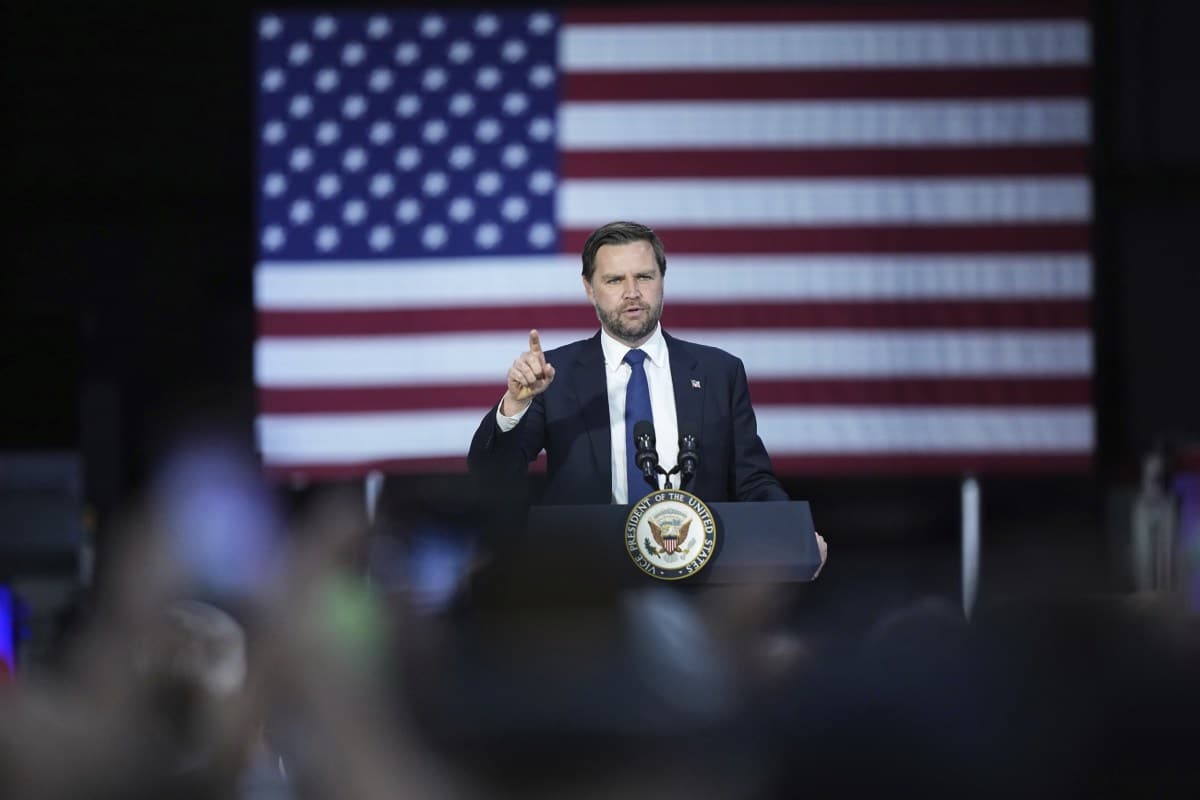
Speaking at the AmericaFest convention organised by conservative group Turning Point USA in Phoenix, Vance said the Trump administration’s approach to immigration and labour policy is rooted in protecting the dignity of work and ensuring opportunities for American citizens.
Vance questioned why governments impose penalties on companies that move jobs abroad and answered that such measures reflect a belief in the value of human labour and fair employment within the country. He added that labour policy should form a central part of governance, alongside other social and economic priorities.
Vance on H-1B Visa Restrictions
Addressing the H-1B visa programme, Vance said the administration has taken steps to restrict its use without additional congressional action. He argued that businesses should not rely on foreign hiring simply as a cost-saving measure when qualified workers are available domestically.
His remarks come amid broader changes to US immigration policy under President Donald Trump, who earlier this year announced a significant increase in fees for new H-1B visa applications.
Impact on the Tech Sector
The H-1B visa programme is widely used by the US technology sector to recruit skilled professionals from abroad, with Indian nationals forming the largest share of recipients. Industry experts have warned that higher fees and tighter rules could affect hiring and innovation in the sector.
Earlier this year, the Trump administration introduced a $100,000 fee for new H-1B visa applications, marking one of the most stringent measures taken so far as part of its immigration crackdown.
Meanwhile, reports indicate that major technology firms, including Google and Apple, have advised some employees on US work visas to avoid international travel. The advisory follows delays of up to 12 months for visa stamping appointments at US embassies, reportedly due to expanded social media screening requirements.
Immigration law firms have cautioned that such delays could leave employees stranded outside the US if appointments are postponed, adding to uncertainty for both workers and employers.