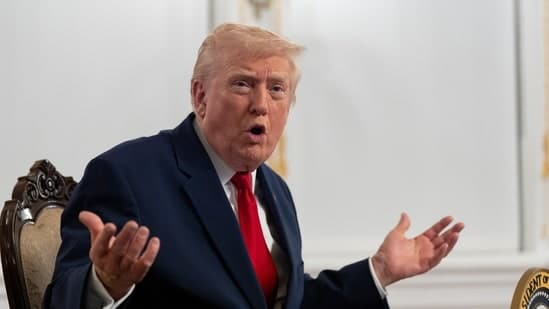
In a major shift in United States immigration policy, President Donald Trump announced a “permanent pause” on migration from countries he described as “Third World nations.” The announcement followed the fatal shooting of two National Guard service members in Washington, D.C., allegedly carried out by an Afghan national.
Trump also indicated that his administration will reassess millions of immigration approvals granted under former President Joe Biden. According to AFP, he stated that the new strategy includes deporting non-citizens who fail to meet contribution standards or present security risks, and eliminating federal benefits for individuals who are not U.S. citizens.
The comments reflect a significant escalation in the administration’s focus on mass removals, stricter vetting, and sharply limited immigration pathways during Trump’s second term.
“Only reverse migration can fully cure this situation,” the president said while defending the policy direction.
USCIS Orders Full Review of Green Cards From 19 ‘Countries of Concern’
The U.S. Citizenship and Immigration Services (USCIS) issued updated policy guidance directing a comprehensive review of all Green Cards belonging to individuals from nations classified as “high-risk.” This move comes after the attack in Washington that resulted in the deaths of U.S. Army Specialist Sarah Beckstrom, 20, and U.S. Air Force Staff Sgt. Andrew Wolfe, 24.
USCIS Director Joseph Edlow stated that the directive is already active and applies to all applications filed on or after November 27, 2025. He confirmed that “country-specific negative indicators” will play a central role in security assessments moving forward, PTI reported.
List of 19 countries under heightened review:
Afghanistan, Myanmar, Burundi, Chad, Republic of the Congo, Cuba, Equatorial Guinea, Eritrea, Haiti, Iran, Laos, Libya, Sierra Leone, Somalia, Sudan, Togo, Turkmenistan, Venezuela, and Yemen.
These nations were also part of a travel restriction order issued earlier this year based on security-related criteria.
What Does “Third World” Mean Today?
Although the term “Third World” appears frequently in political rhetoric, it does not have official status in U.S. immigration policy. Originating during the Cold War to describe nations aligned with neither the United States nor the Soviet Union, it has since evolved into a loosely used—and often inaccurate—reference to developing or low-income countries.
Many of the 19 countries on the updated USCIS scrutiny list fall into categories such as low or middle-income economies, conflict-affected regions, or nations requiring enhanced security screening.