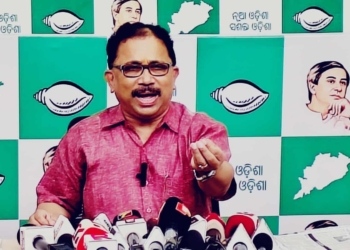
At a press conference held today at Sankha Bhawan in Bhubaneswar, Cuttack Mayor and senior Biju Janata Dal (BJD) leader Subas Singh expressed cautious optimism along with serious concerns regarding the recent labour law amendments approved by the Odisha Cabinet.
These amendments to the Factories Act of 1948 and the Odisha Shops and Commercial Establishments Act of 1956 permit extended working hours, 24/7 operations, and night shifts for women, signifying a significant shift in the state’s labour policy. While acknowledging the government’s intention to promote economic growth and attract investment, Mayor Singh emphasised that these reforms should not come at the expense of workers’ rights and dignity, especially for vulnerable groups such as contract and casual labourers.
Singh highlighted several key areas of concern. He insisted that overtime should remain strictly voluntary, warning that, without explicit safeguards, workers could face undue pressure to work beyond reasonable limits. He also expressed alarm over the existing gaps in enforcement and inspection mechanisms, questioning how compliance would be ensured across thousands of establishments. Singh advocated for a robust, well-funded labour inspectorate, equipped with digital wage tracking, and empowered to conduct surprise audits.
Regarding the provision for women’s night shifts, Singh cautioned that written consent and theoretical safety protocols may not ensure real-world security. He called for the urgent publication of detailed safety guidelines and clear accountability structures to guarantee that women’s safety is non-negotiable.
Mayor Singh urged the state government to engage extensively with labour unions, women’s organisations, and civil society groups to develop effective monitoring frameworks, grievance redressal mechanisms, and transparent wage systems. He concluded by reaffirming the BJD’s commitment to inclusive growth, gender-sensitive governance, and the protection of workers’ rights, stating, “Development should never come at the cost of dignity. Odisha must set a national example in balancing industrial flexibility with humane and just working conditions.” He called on industry, government, and labour to collaborate in a spirit of mutual respect to ensure that reforms serve all stakeholders fairly.