The Union government on Friday, November 27, 2026, made public the Delimitation (Second) Bill, 2026, after the Union Cabinet, chaired by Prime Minister Narendra Modi, approved the legislative package aimed at implementing 33% reservation for women in the Lok Sabha and state and Union Territory legislative assemblies through delimitation—explicitly putting a 50% increase in Lok Sabha seats for every state into writing.
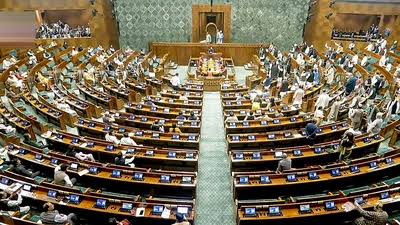
The Cabinet clearance and public release come a day after the Lok Sabha Secretariat announced a four-day special sitting of Parliament beginning Monday, November 30, and likely concluding on Thursday, December 3, 2026, subject to exigencies. By codifying the uniform 50% seat expansion directly in the legislative text, the Centre aims to overcome the key objection that derailed its earlier attempt in April.
How the New Bill Addresses the April 2026 Deadlock
During a three-day special sitting on April 17, 2026, the Constitution (131st Amendment) Bill—which sought to raise the Lok Sabha’s maximum strength from 550 to 850 (up to 815 from states and 35 from Union Territories) and roll out 33% women’s reservation in time for the 2029 general elections—was defeated in the 543-member Lower House, receiving 298 votes in favour and 230 against against the 352 votes (two-thirds of members present and voting) required.
It marked the first time a constitutional amendment brought by the government failed since the National Democratic Alliance (NDA) came to power in 2014, prompting the Centre to withdraw two linked simple-majority bills.
In April, southern states and Opposition parties warned that allocating expanded Lok Sabha seats solely on the basis of the 2011 Census would boost North India’s tally at the expense of South India, which contributes around 30–31% of India’s GDP.
Although Union Home Minister Amit Shah had offered a uniform 50% seat increase for every state during the House debate, Opposition leaders blocked the measure on the ground that the assurance was verbal rather than written into the bills’ text.
High-Stakes Parliamentary Arithmetic Ahead of November 30
While the ruling side maintained that opposing the package was detrimental to women’s empowerment, Opposition parties contended they backed women’s reservation but opposed an open-ended delimitation formula. Because the NDA still lacks a two-thirds majority on its own to pass a Constitution amendment bill, the fate of the 2026 delimitation and women’s quota package during the upcoming four-day sitting will hinge closely on unaligned parties, regional swing votes, and floor attendance—where every vote and every absence will count.