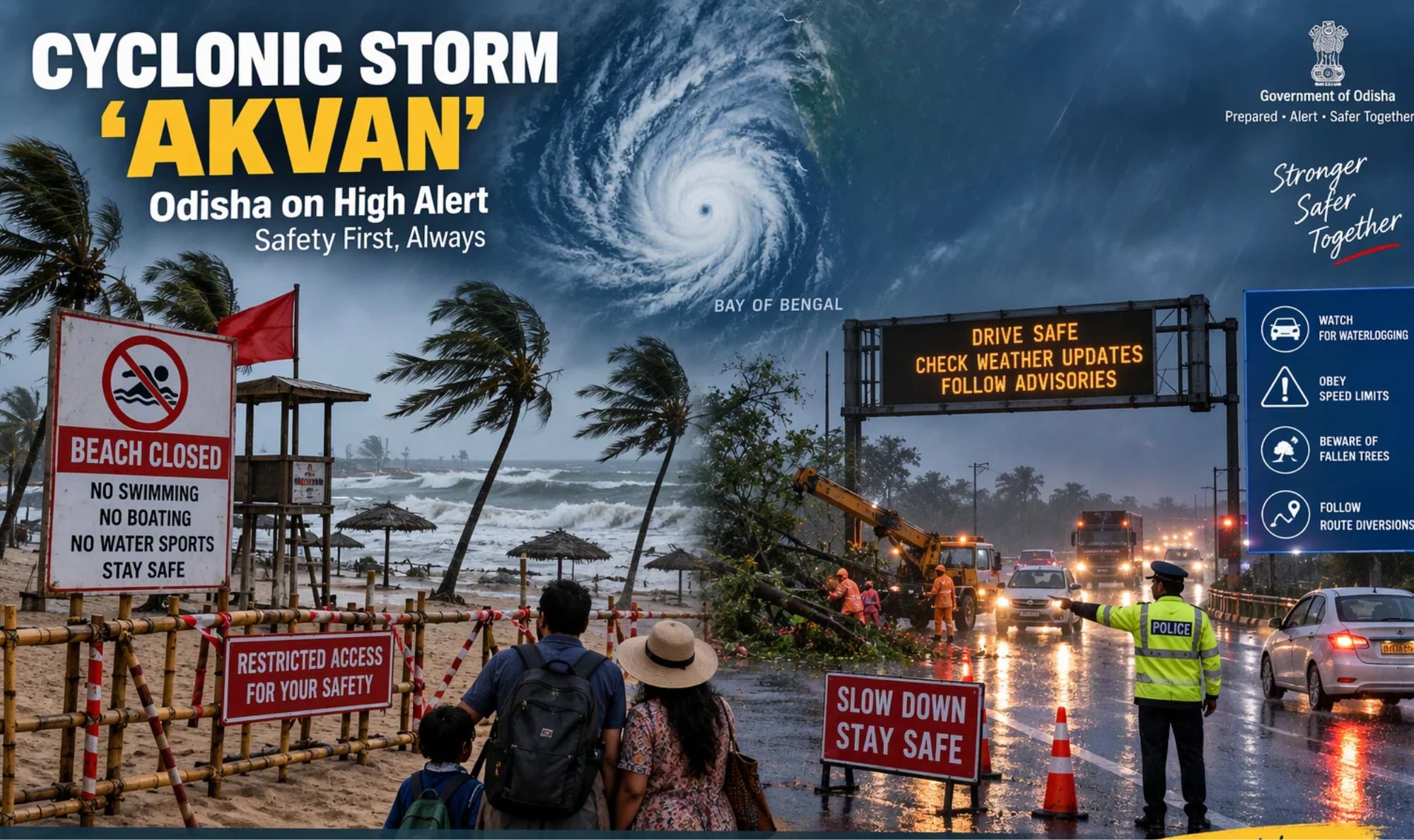
As cyclonic storm ‘Akvan’ brews over the Bay of Bengal, the Odisha government has swung into high gear to safeguard residents, tourists, and commuters.
Acting on warnings issued by the India Meteorological Department (IMD), the Office of the Special Relief Commissioner (SRC) has written urgent letters to the secretaries of the Tourism and Commerce & Transport departments, ordering immediate preventive measures across vulnerable coastal districts until November 20.
Complete Freeze on Beach and Marine Tourism
With rough sea conditions, high winds, and coastal waterlogging anticipated over the next 48 hours, the SRC has instructed the Tourism Department to coordinate closely with District Collectors and local police to enforce strict restrictions:
-
Suspension of Marine Activities: Sea bathing, boating, water sports, pleasure cruises, and all other beach tourism activities at vulnerable beaches have been completely suspended until normalcy returns.
-
Restricted Access & Barricading: Public entry to unsafe beaches, jetties, and coastal viewing points has been barred. Authorities have been asked to install barricades and clear warning signboards with police assistance.
-
Protocol for Hotels & Tour Operators: Coastal hotels, resorts, and tour operators must immediately alert guests, cancel outdoor excursions, stock essential supplies, and display emergency contact numbers. They have also been directed to comply swiftly with any administrative evacuation or shelter orders.
-
Multilingual Advisories: Clear safety alerts will be broadcast in multiple languages through government channels and hospitality establishments, backed by continuous coordination with District and State Emergency Operation Centres (DEOC and SEOC).
Intensified Night Patrolling and Rapid Clearance on Highways
To prevent accidents caused by heavy downpours, waterlogging, and poor visibility, the SRC has directed the Commerce & Transport Department to prioritise the safety of passenger and goods vehicles—especially during night travel:
-
Night Vigil & Signage: Enforcement agencies will intensify night patrolling along low-lying, flood-prone, accident-prone, and poorly lit stretches of National and State Highways, supported by additional reflective warning boards.
-
Pre-Positioned Rescue Teams: In coordination with the Works Department, NHAI, police, and district administrations, cranes, recovery vans, and tree-cutting teams are being stationed at strategic points to swiftly clear uprooted trees, debris, and stranded vehicles.
-
Real-Time Driver Alerts: Toll plazas, bus terminals, check gates, and major transport hubs will provide up-to-date weather and road condition advisories. Digital display boards and bus owners’ associations will also disseminate information on vulnerable stretches and route diversions.
-
Traffic Regulation & 24/7 Monitoring: Authorities are empowered to enforce speed limits, divert traffic, or temporarily halt vehicular movement on unsafe roads. Dedicated nodal officers will maintain round-the-clock coordination with the SEOC and district control rooms.
The SRC has mandated the immediate execution of all directives alongside the submission of an Action-Taken Report. All restrictions will remain strictly in force until the IMD withdraws its cyclonic warning and district administrations declare the situation safe.