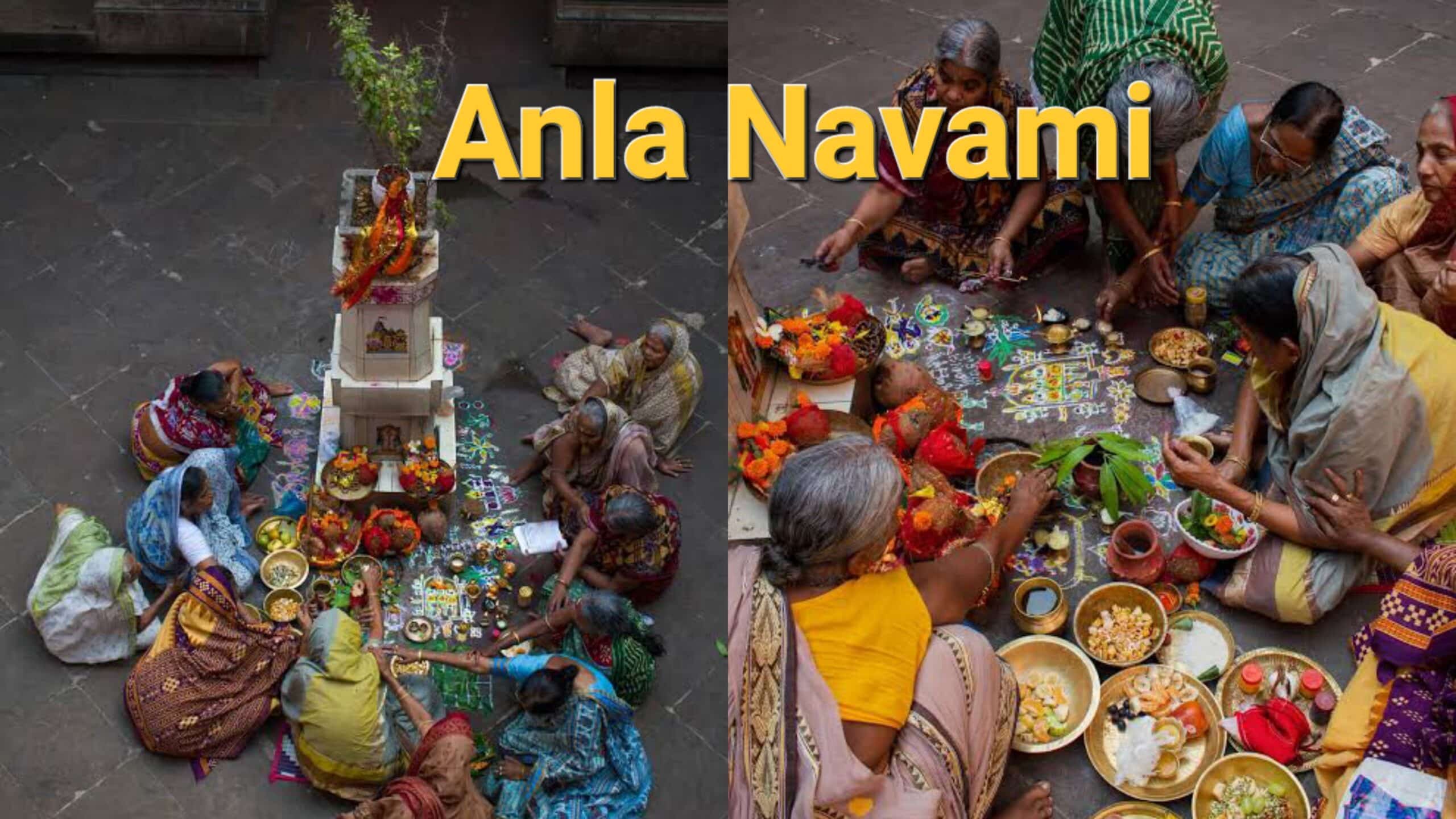
Celebrated on Shukla Navami during the sacred Hindu month of Kartik, Anla Navami (also known across India as Akshaya Navami) is one of Odisha’s most deeply cherished spiritual and nature-centric festivals—marked by dawn chants of Vishnu Sahasranama and Kartik Purana, community feasts beneath Indian gooseberry (amla) trees, and the rare Radha Pada Darshan at Puri’s Sakshigopal Temple.
Rooted in ancient scriptures that revere the amla tree as beloved of Lord Vishnu and home to all deities, the occasion brings families together in temple courtyards and village groves from Sambalpur to coastal Odisha to offer prayers, perform charity (Daan-Punya), and honour the bond between faith and nature.
Key Rituals, Legends & Spiritual Beliefs of Anla Navami
-
- Worshipping the Sacred Amla Tree: Devotees begin the day with ritual baths, lighting earthen lamps and incense beneath gooseberry trees, anointing Lord Vishnu with amla fruits, performing seven circumambulations (Pradakshinam), and cooking traditional Naivedya meals directly under the tree’s canopy.
- Radha Pada Darshan at Sakshigopal Temple: Anla Navami marks the only day of the year when pilgrims can witness and touch the sacred feet of Goddess Radha at Sakshigopal Temple in Satyabadi (Puri district). According to local legend, after a priest’s daughter named Lakhmi—believed to be an incarnation of Radha—pointed out that Lord Gopala (Krishna) should not be worshipped alone, a Radha idol brought from North India was draped in a traditional Odisha saree, revealing her feet for the first time in a moment priests hailed as a divine sign.
- Satya Yugadi & Imperishable Merit: Revered as Satya Yugadi—the auspicious day believed to mark the dawn of the Satya Yuga—Akshaya Navami carries the promise that any act of devotion or charity performed on this tithi yields eternal (akshaya) spiritual merit. (In neighbouring West Bengal, the same day is observed as Jagaddhatri Puja.)
“We spend the day under the tree, light incense sticks and lamp and do Pradakshinam (going around the tree seven times). It is also the only day when devotees can have ‘Radha Pada Darshan’.”
— Debendra Nanda, Priest, Radha Krishna Temple (Sambalpur)
Why Ayurveda Celebrates ‘Amalaki’ in Autumn
Beyond scripture, Ayurveda reveres Amalaki (Indian gooseberry) as one of nature’s foremost rejuvenating herbs (Rasayana), as documented in the Charaka Samhita:
-
-
- Potent Natural Vitamin C: Packing 720 to 921 mg of Vitamin C per 100 grams of edible fruit, amla offers one of the highest concentrations of natural antioxidants in the plant kingdom.
- Seasonal Immunity & Pitta Balance: According to Ayurvedic physicians, consuming amla during Sharad Ritu (autumn) helps pacify aggravated pitta while supporting cardiovascular health, digestion, respiratory immunity, and mental clarity.
-