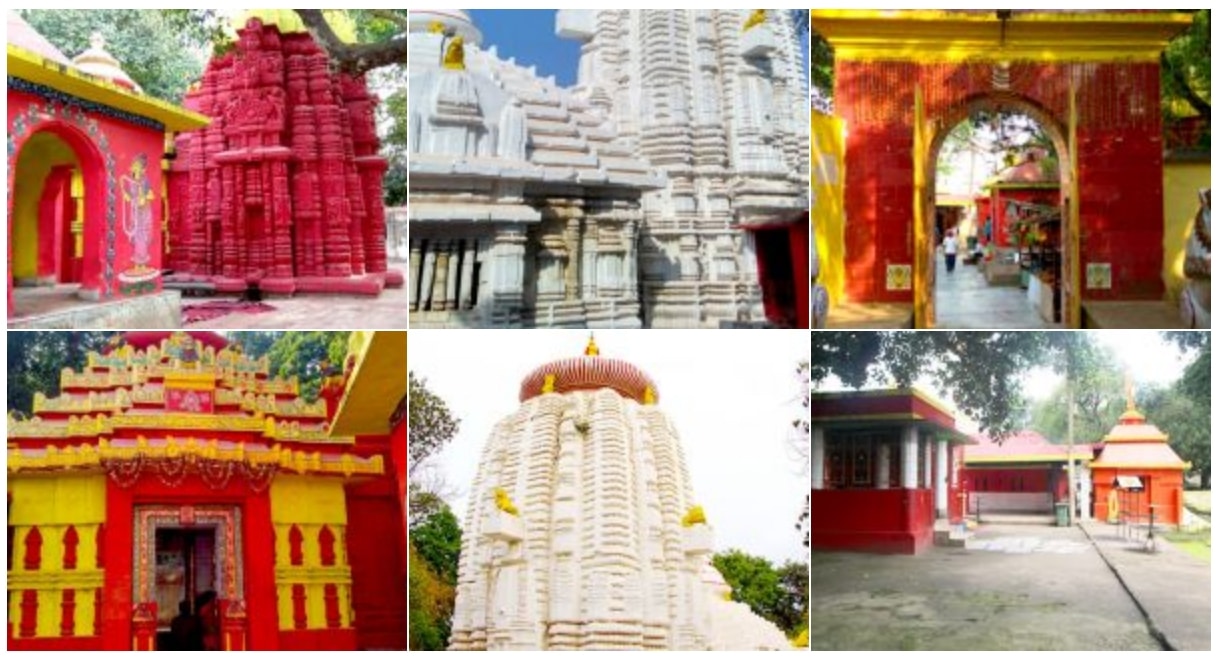
In a significant step toward preserving Odisha’s rich architectural and spiritual heritage, the State Government has formally notified the Kedargouri Temple Complex in the Old Town of Bhubaneswar as a State Protected Monument.
According to the Extraordinary Gazette of Odisha (No. 4806, dated October 23, 2026 / Kartika 1, 1948), the Odia Language, Literature & Culture Department has confirmed its earlier notification of June 23, 2026. The declaration, issued under sub-section (3) of Section 3 of the Orissa Ancient Monuments Preservation Act, 1956, covers the Kedargouri Temple Complex situated in Old Town, Bhubaneswar (Lingaraj Police Station area), in the district of Khordha.
A Jewel of Kalinga Architecture
The Kedargouri Temple Complex is an ancient twin-shrine complex dedicated to Lord Shiva as Kedareswar and Goddess Parvati as Gouri. Dating back to the 10th–11th century during the Somavamshi period, it stands as one of the eight sacred Ashtasambhu (Astasambhu) temples of Bhubaneswar.
Architecturally, the complex is a fine example of classic Kalinga style. The Kedareswar temple features a Rekha Deula with a tall curvilinear spire, while the Gouri temple is notable for its rare Khakhara Deula (barrel-vaulted) design, typically associated with Shakta shrines. The complex also houses smaller shrines dedicated to deities such as Hanuman, Ganesha, and Durga, along with two sacred water bodies — Khira Kund and Marichi Kund — which are traditionally believed to possess healing and fertility-enhancing properties.
Located close to the iconic Mukteswar Temple, the complex has long drawn devotees and architecture enthusiasts. Local legend links the site to the tragic love story of a couple named Kedar and Gauri, after whom the temples are named. Couples still visit the shrine seeking blessings for a happy married life.
What the Protected Status Means
With the official declaration, the Kedargouri Temple Complex will now receive enhanced protection and conservation measures under the 1956 Act. This includes safeguards against unauthorized alterations, damage, or encroachments, while facilitating better maintenance of its ancient structures, intricate carvings, and sacred precincts.
The move is expected to help preserve this living heritage site for future generations while ensuring that its religious character and public access continue in accordance with established practices.
As Bhubaneswar continues to grow as a modern capital while remaining a living “Temple City,” the formal protection of monuments like Kedargouri reflects the State’s commitment to balancing development with the conservation of its extraordinary cultural legacy.