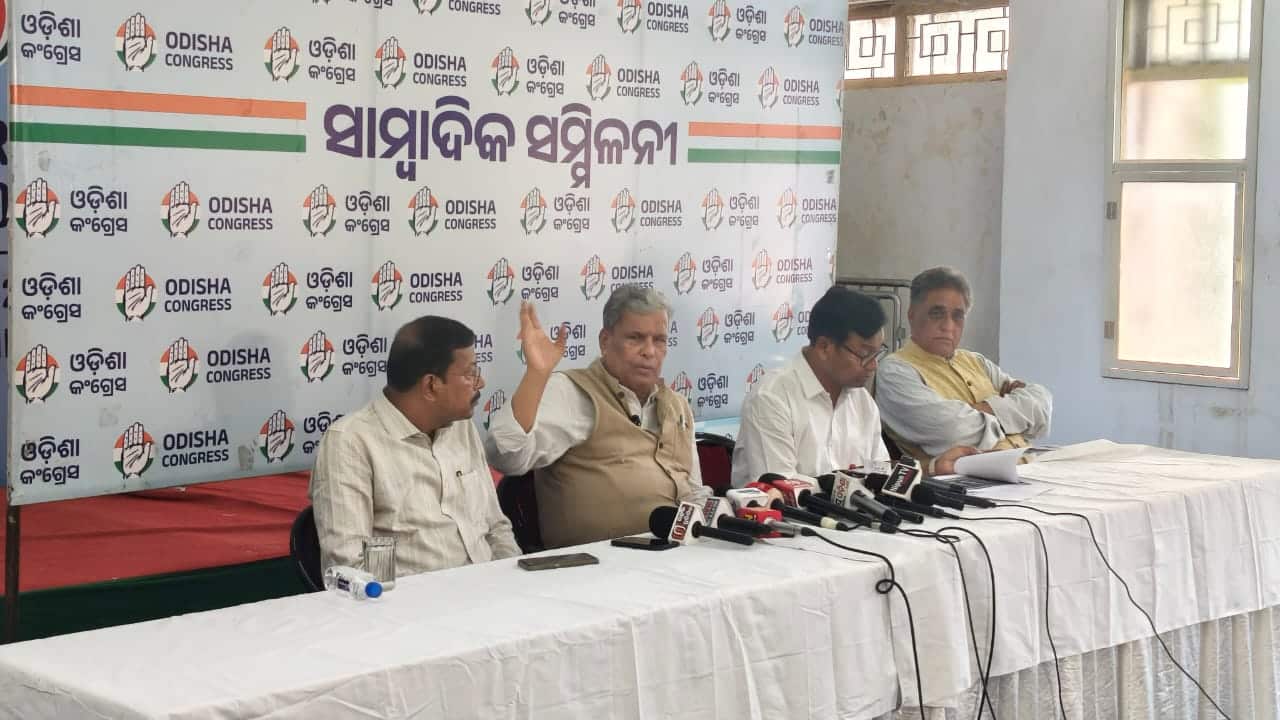
The Odisha Congress on Monday strongly opposed the proposed high-capacity AI data centre at Naraj, to be developed with Adani, warning that the project could push the Bhubaneswar-Kataka region into severe water stress, sharply raise local temperatures and impose a heavy pollution burden on residents while generating very few jobs.
Addressing a press conference at the Congress Bhawan, Pradesh Congress Committee (PCC) President Bhakta Charan Das and former Union Minister Srikant Jena called on the state government to hold an open public debate on the project. The leaders released details based on a letter they had written to the Chief Minister two days earlier.
According to Congress, of the 27 projects worth Rs 2.47 lakh crore approved in the 46th HLCA meeting held on 23 September, the AI data centre alone accounts for Rs 1.04 lakh crore in investment. It is proposed to have a capacity of 1 gigawatt (1,000 MW) and will require approximately 250 acres of land.
The party said that key documents — including the Memorandum of Understanding (MoU), related agreements, detailed minutes of the HLCA meeting, and specifics on electricity supply, water use, environmental impact assessment and tax concessions — have not yet been made public.
Major Concerns Raised
Electricity: Congress claimed that a fully operational 1 GW data centre could consume about 2.4 crore units of electricity per day, roughly equal to the total domestic power consumption of Odisha’s 4.5 crore population. The party asked where this power would come from and what the environmental impact would be if it is supplied from coal-based thermal plants. It also questioned why domestic consumers and farmers in Odisha continue to pay for electricity while several other states provide free power to households and agriculturists.
Referring to reports about a proposed data centre in Visakhapatnam, the leaders asked whether similar concessions — free land, free water, power at Rs 1 per unit and a 20-year tax holiday — had been offered for the Naraj project, and noted that the Visakhapatnam proposal had already faced local opposition.
Water: The project is estimated to require more than 30 million litres per day (30 MLD). Congress pointed out that Bhubaneswar already faces a daily water supply shortfall of over 100 MLD, groundwater levels are declining due to excessive borewell use, and the Mahanadi system along with linked canals is under pressure. Canal shortages in the undivided Cuttack district and Puri, together with the unresolved Mahanadi water dispute with Chhattisgarh, make the additional demand particularly worrying. The party asked how the government would ensure that drinking water for ordinary citizens and irrigation water for farmers are not affected.
Employment: Despite the massive investment of Rs 1.04 lakh crore, only about 1,000 jobs are expected. AI data centres typically require very few permanent staff — perhaps around 50 engineers and 200–300 maintenance and security personnel. The Congress contrasted this with labour-intensive industries such as a large garment manufacturing hub modelled on Tiruppur (Tamil Nadu), which could generate up to 10 lakh jobs and Rs 50,000 crore in annual business with far smaller investment. It questioned why the government was prioritising a project with limited local employment over sectors that can absorb more workers in a state facing serious unemployment and migration.
Environment: The leaders demanded an independent Environmental Impact Assessment (EIA) and its full public release. They expressed concern that the data centre could generate substantial noise and heat pollution, contribute to air pollution, and place heavy demand on water resources. Local temperatures around Bhubaneswar and Kataka could rise by 2–3°C, with the risk of temperatures reaching 50°C, posing dangers to residents and biodiversity.
Das urged the government to examine alternative locations where seawater could be used for cooling, water recycling is feasible, or the project’s power needs can be met largely through wind and solar energy. He stressed that investment priorities in Odisha should focus on job creation, sustainable use of natural resources and environmental protection, rather than treating corporate-friendly projects as the sole measure of development.
The Congress demanded the immediate public release of:
- The complete MoU
- Detailed minutes and decisions of the HLCA meeting
- All related agreements
- Arrangements and conditions for electricity and water supply
- Full details of tax holidays, land, water, power and other incentives
The party said it would take the issue to the people of Odisha and launch a strong agitation if the government remained silent.