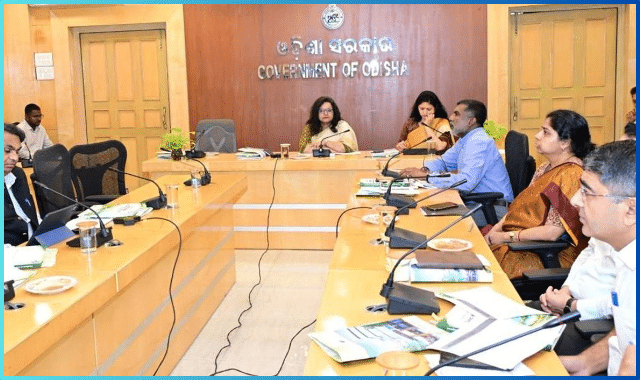
In a significant push toward environmental sustainability and urban-rural cleanliness, Chief Secretary Anu Garg chaired the inaugural state-level committee meeting on the implementation of the Solid Waste Management Rules, 2026 at the Lok Seva Bhawan conference hall today.
The high-level meeting, convened by the Odisha State Pollution Control Board (OSPCB), focused on effective enforcement of the newly framed rules, compliance with Supreme Court directions, inter-departmental responsibilities, and setting up a clear roadmap for execution across urban and rural sectors.
OSPCB Member Secretary Dr. Manoj V. Nair presented an overview of the key provisions under the Solid Waste Management Rules, 2026. The discussion highlighted several core operational areas:
- Source Segregation & Scientific Processing: Strengthening waste collection, segregation at source, and scientific processing while ensuring safe disposal of inert residual waste.
- District-Level Monitoring: Directives issued to District Collectors to establish dedicated cells for integrated monitoring, compliance, and execution of waste management systems within their respective jurisdictions.
- Infrastructure & Disposal Sites: Accelerated land identification for sanitary landfills, establishing waste processing plants, and scientific remediation of legacy dump sites.
- Bulk Waste Generators: Strict action and enforcement targeting bulk waste producers to ensure full compliance with the statutory norms.
- Digital Oversight: Implementing digital monitoring mechanisms to ensure transparency and accountability at every stage of the waste management chain.
To make waste management a sustainable public habit, the committee emphasized integrating solid waste management concepts into school curricula to educate students on environmental preservation and cleanliness.
The state will launch widespread awareness campaigns involving local communities, public representatives, educational institutions, industrial bodies, and ordinary citizens.
CS Garg emphasized that achieving a clean and healthy environment requires collective responsibility from citizens, industries, educational institutions, and government agencies. She urged seamless coordination and regular reviews among key stakeholders, including the departments of Housing & Urban Development, Panchayati Raj & Drinking Water, Rural Development, School & Mass Education, District Administrations, and OSPCB.
The meeting was attended by the Additional Chief Secretary of Housing & Urban Development Department, Usha Padhee, along with secretaries and senior officials of member departments.
The Chief Secretary directed all departments and District Collectors to strictly adhere to the timelines prescribed by the OSPCB to complete all compliance mandates.