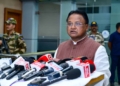
A fresh political debate has erupted over the inclusion of the 1975–77 Emergency in the National Council of Educational Research and Training (NCERT) Class 9 Social Science textbook.
Swaraj India founder Yogendra Yadav has challenged Union Education Minister Dharmendra Pradhan’s claim that NCERT has newly brought the subject to the forefront, arguing that the Emergency has been part of school textbooks since 2007.
The exchange began after Pradhan praised NCERT for highlighting the Emergency in the newly revised curriculum. Yadav, however, called the minister’s statement inaccurate and said students have been studying the topic for nearly two decades.
Dharmendra Pradhan Praises NCERT’s Emergency Chapter
Speaking on the revised NCERT curriculum, Dharmendra Pradhan said the inclusion of the Emergency would help younger generations understand one of the darkest periods in India’s democratic history.
According to the Union minister, the revised textbook enables students to learn about the challenges democracy faced during the Emergency and ensures that such events are remembered by future generations.
Yogendra Yadav Says Emergency Was Already Included
Responding through a post on X, Yogendra Yadav disputed the minister’s remarks.
He stated that a dedicated chapter on the Emergency had already been included in NCERT Political Science textbooks since 2007. Yadav added that he was involved in writing the chapter and ensured that the historical events surrounding the Emergency were presented to students.
Calling Pradhan’s statement “a lie,” Yadav argued that the history of the Emergency had never been concealed from school students.
What the New NCERT Class 9 Textbook Says
The updated Class 9 Social Science textbook describes the Emergency of 1975–77 as one of the major challenges faced by Indian democracy.
The chapter explains that public dissatisfaction with the government during the early 1970s grew because of unemployment, inflation and allegations of misgovernance. It further states that a National Emergency was declared in June 1975 on the grounds of internal disturbance.
The textbook also notes that during the Emergency:
- Fundamental Rights were suspended.
- Press censorship was imposed.
- Several political leaders and activists were arrested.
The chapter presents the Emergency within a broader discussion on the strengths and challenges of democratic governance.
Political Debate Intensifies
The disagreement highlights differing political narratives surrounding how the Emergency should be taught in schools.
While the Union government has described the revised chapter as an important effort to educate students about a significant period in India’s democratic history, Yadav maintains that the topic has long been part of NCERT textbooks and should not be portrayed as a new addition.
The debate has once again brought attention to school curriculum revisions and the interpretation of historical events in educational materials.
Also Read:
NCERT Class 9 Textbook Adds Emergency Chapter, Omits Preamble and ‘Secularism’