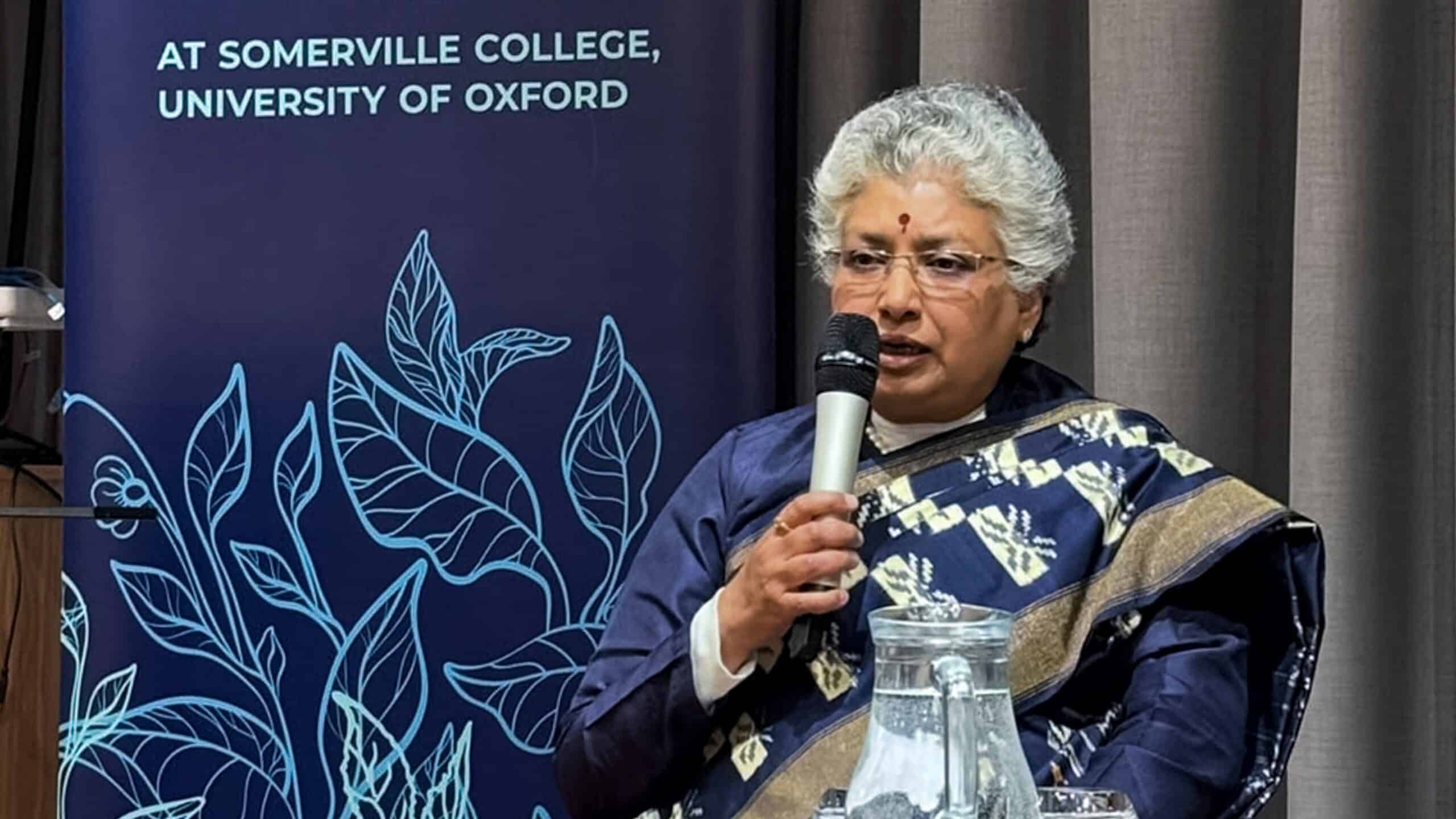
The presence of a few women in prominent public offices cannot be mistaken for true gender equality across society, Supreme Court judge Justice BV Nagarathna has said, urging deeper introspection into the structural and social barriers that continue to limit women’s access to education, careers, and institutional leadership.
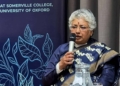
Delivering the inaugural Cornelia Sorabji Memorial Lecture at Somerville College, University of Oxford, earlier this week, Justice Nagarathna—who is in line to become India’s first woman Chief Justice in September 2027—stressed that substantive equality must look beyond symbolic representation and account for intersecting realities such as caste, class, disability, religion, and economic status.
Call for One-Third Quota on Government Legal Panels & Higher Judiciary Diversity
Highlighting persistent gender disparities in India’s higher judiciary—where women account for just three of 37 sitting judges in the Supreme Court and 111 of 781 judges (around 14%) across the 25 high courts—Justice Nagarathna called for one-third representation for women lawyers on government panels, including those representing public sector undertakings and legal aid services.
She noted that while she benefited from education and a legal career, many qualified women across India are still held back by unpaid domestic and care burdens as well as societal attitudes, urging Indian society—particularly men—to introspect if constitutional ideals are to be fulfilled.
“I have had the benefit of education and a career to pursue but there are many women in India who find it difficult to pursue education or have a career, even though well qualified. Indian society, particularly the male society needs to introspect on this critical aspect, if the cherished goals of our Constitution are to be achieved by the women of India.”
— Justice BV Nagarathna, Judge, Supreme Court of India (at University of Oxford)
From Constitutional Milestones to Everyday Autonomy
Tracing the evolution of women’s rights under Articles 14 and 21, Justice Nagarathna cited landmark Supreme Court rulings—including the 2005 coparcenary inheritance judgment, the Vishaka workplace harassment guidelines, rulings opening opportunities in the armed forces, the Anuj Garg verdict rejecting protective paternalism, and the Sikkimese women tax-exemption judgment affirming that marriage cannot erase a woman’s independent identity.
Drawing parallels with women’s reservation in panchayats, municipalities, and the 106th Constitutional Amendment, she emphasised that genuine empowerment requires securing women’s basic rights at home and in public life—from the right to be born and educated to marital choice, career freedom, inheritance, and safety.
(Note: Trailing wire paragraphs in the source feed regarding an unrelated homicide investigation in Canada were excluded to keep this report focused and clean.)
📊 Gender Representation in India’s Higher Judiciary (Cited in Lecture)
|
Judicial Tier |
Women Judges |
Total Sitting Judges |
Share / Milestone |
|---|---|---|---|
|
Supreme Court of India |
3 |
37 |
Justice BV Nagarathna in line to be 1st woman CJI in Sept 2027 |
|
High Courts (25 Courts) |
111 |
781 |
~14% representation across the country |
|
Proposed Legal Reform |
33.3% (One-Third) |
Government & PSU Panels |
Recommended by Justice Nagarathna for State & legal-aid panels |