The United States government has announced a reward of up to $20 million, along with the potential for personal relocation, for actionable intelligence regarding Iran’s nuclear programme.
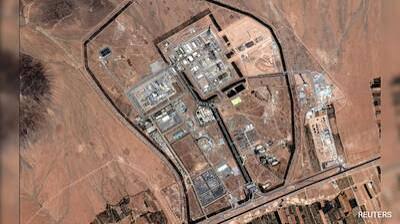
The announcement, issued through the U.S. Department of State’s Rewards for Justice programme and amplified by U.S. Central Command (CENTCOM), targets critical details on nuclear facilities, specialized equipment, scientific personnel, and material transport networks.
The intelligence push follows heightened international scrutiny over Tehran’s atomic operations, specifically its uranium enrichment levels and compliance with international monitoring safeguards.
Concerns Over 60% Uranium Enrichment Levels
The Rewards for Justice framework highlights findings from International Atomic Energy Agency (IAEA) monitoring:
- Near Weapons-Grade Purity: Iran remains the only non-nuclear-weapon state enriching uranium up to 60% purity—a level far exceeding civilian power requirements and close to the 90% threshold required for weapons-grade material.
- Stockpile Escalation: Technical experts estimate that Tehran’s existing inventory of 60%-enriched material, if processed further, could yield sufficient fissile material for multiple nuclear devices.
- Loss of Safeguard Continuity: The notice highlights compliance gaps that have caused the IAEA to lose what it describes as “continuity of knowledge” regarding the production, inventory, and location of critical centrifuge components.
Historical Precedents & Geopolitical Context
The $20 million bounty builds upon previous U.S. counter-proliferation and anti-terrorism reward initiatives:
- IRGC Financial Networks (2019): Washington previously offered up to $15 million to disrupt illicit oil sales and front companies funding the Islamic Revolutionary Guard Corps (IRGC) Qods Force.
- Plot Target Bounties (2024): A $20 million reward was issued for information leading to the arrest of IRGC operative Shahram Poursafi over an alleged plot against former U.S. officials.
- Post-Strike Intelligence Monitoring: The campaign comes after military operations targeting Fordow, Natanz, and Isfahan facilities. Intelligence assessments indicate that while infrastructural damage set back Tehran’s operational timeline, full accounting of enriched stockpiles remains unverified by international inspectors.