
In a major development, the US Supreme Court struck down former President Donald Trump’s sweeping global tariffs, ruling that the measures exceeded presidential authority.
The court, in a 6–3 decision, held that the administration’s use of emergency powers to impose broad trade levies lacked clear congressional authorisation.
Chief Justice John Roberts, writing for the majority, stated that any “extraordinary assertion” of executive power over taxation requires explicit approval from Congress under the US Constitution.
Why Were the Tariffs Struck Down?
The tariffs had been imposed under the International Emergency Economic Powers Act (IEEPA), a 1977 law traditionally used for sanctions and asset freezes rather than broad-based trade taxes.
The ruling concluded that the president’s interpretation of IEEPA extended beyond its intended scope. The Constitution grants Congress — not the executive branch — the authority to levy taxes and tariffs.
The verdict effectively ends the administration’s reliance on IEEPA for imposing wide-ranging global trade duties.
Trump Responds With 10% Global Import Surcharge
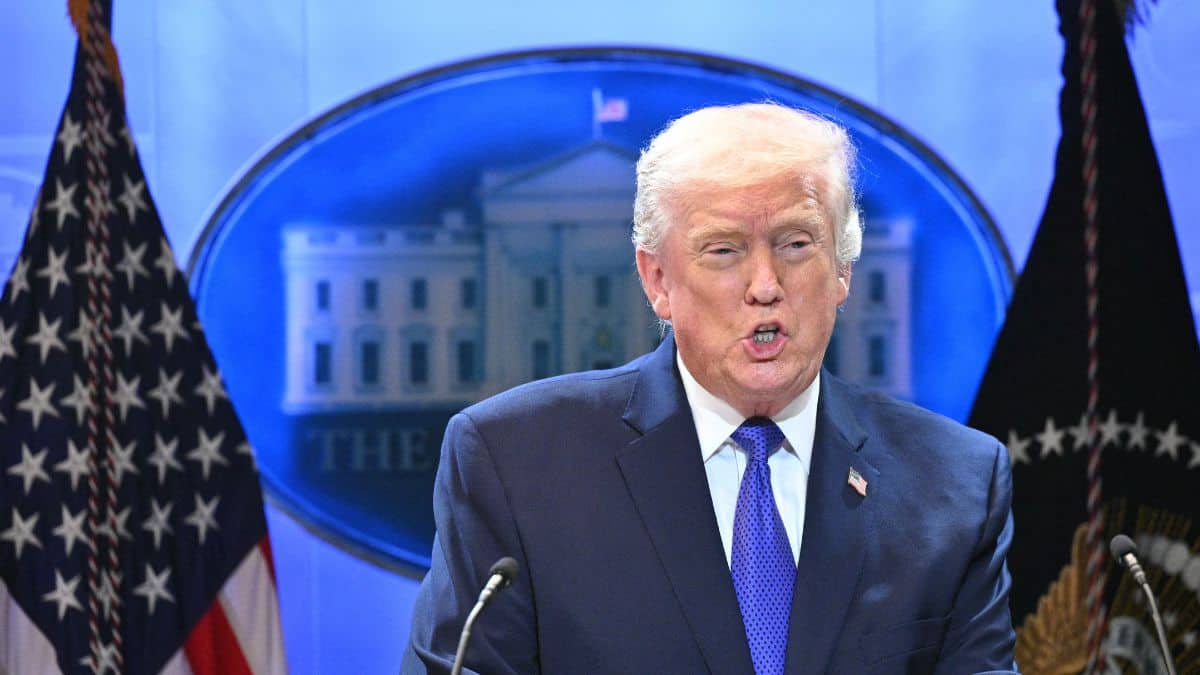
Within hours of the ruling, Trump signed a new executive order at the White House imposing a 10% global tariff on foreign goods, described as a “temporary import surcharge.”
According to an official fact sheet, the new tariff will take effect on February 24 at 12:01 am Washington time.
In a public statement, Trump said the order would be “effective almost immediately” and indicated that certain earlier tariff actions would be withdrawn following the court’s decision.
Impact on India-US Trade Deal
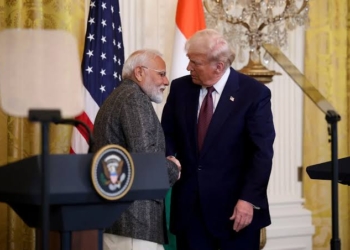
The ruling has drawn attention to the ongoing trade arrangement between the United States and India.
Earlier, Washington had reduced tariffs on India from 25% to 18% under an interim trade framework. Following the Supreme Court verdict, Trump clarified that “nothing changes” regarding the India-US trade agreement.
Under the revised understanding:
-
India’s tariff rate stands at 18%
-
The earlier 25% punitive tariff linked to Russian oil imports was removed
-
Energy trade commitments were part of the broader negotiation
Officials have stated that the trade framework remains intact despite the legal setback.
Revenue and Future Tariff Plans
US Treasury Secretary Scott Bessent said the newly announced 10% duties, along with possible future tariffs under Section 301 (unfair trade practices) and Section 232 (national security), are expected to maintain projected tariff revenue levels in 2026.
However, questions remain regarding:
-
Whether previously collected tariff revenues will be refunded
-
How implementation oversight will function
-
Potential congressional action following the ruling
Political and Market Reactions
The ruling has intensified political debate in Washington. While critics described the decision as a constitutional safeguard, Trump publicly criticised the justices who ruled against him.
Global markets are closely watching further developments, especially the practical impact of the new 10% global surcharge on trade flows and diplomatic relations.