

The sacred precincts of Lalitgiri recently hosted a moment of profound spiritual and historical significance during the 2nd Guru Padmasambhava Ceremony.
This event drew revered Buddhist monks, esteemed scholars, spiritual practitioners, and devotees from across the country and abroad.
The ceremony commemorated Guru Padmasambhava, the venerated Buddhist master attributed with the propagation of Vajrayana Buddhism, and focused on his teachings of compassion, mindfulness, and enlightenment. Sacred rituals, prayers, and meditative observances took place in an atmosphere of devotion and solemnity, underscoring the site’s spiritual sanctity.
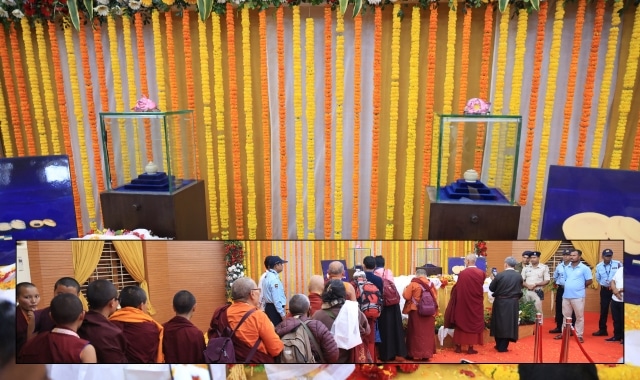
As part of the observance, a rare Buddhist relic dating back to the 3rd Century BC, as identified by the Archaeological Survey of India, was ceremonially brought out of its protected enclosure at the ASI Lalitgiri Museum and placed on public display on January 16. Typically preserved under stringent conservation protocols, the relic was made accessible to the public as part of the religious observance, offering devotees a rare and deeply reverential opportunity to pay homage.
The public display of the sacred relic was carried out as an initiative of the Archaeological Survey of India, in collaboration with the Department of Tourism and the Department of Odia Language, Literature & Culture. This partnership reflects a shared commitment to preserving, promoting, and respectfully presenting Odisha’s rich Buddhist heritage.
The unveiling of the relic was the spiritual highlight of the ceremony. Reputable monks, Buddhist scholars, practitioners, and devotees gathered in large numbers to offer prayers and receive blessings, emphasising the enduring spiritual significance of Lalitgiri as one of the most important early centres of Buddhism in the Indian subcontinent.
The event was organised with careful coordination among religious authorities and archaeological custodians, ensuring that the dignity, security, and preservation of the relic were maintained at all times. The public display not only enhanced the spiritual experience of the devotees but also highlighted Odisha’s rich Buddhist heritage and its continued relevance in contemporary spiritual discourse.
This observance reaffirmed Lalitgiri’s significance on the global Buddhist map and further established Odisha as a custodian of ancient Buddhist civilisation, heritage, and living traditions.