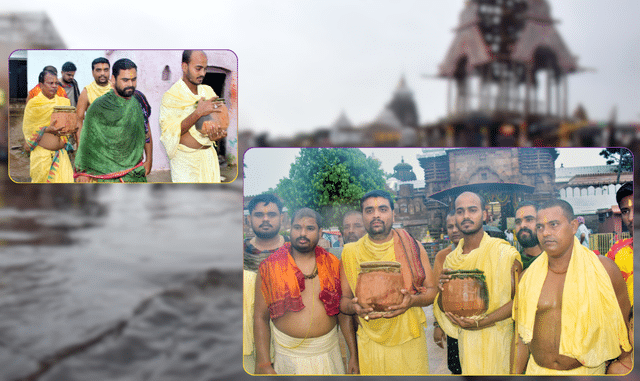
In a deeply devotional and time-honoured ritual, Daitapati sevaks today applied the sacred Phuluri Tel to the divine bodies (Sri Anga) of Lord Jagannath, Lord Balabhadra, Devi Subhadra and Lord Sudarshana at the Shree Jagannath Temple in Puri, Odisha.
This special application took place on Anasara Panchami, the fifth day of the deities’ seclusion in the Anasara Griha following the grand Snana Purnima bathing festival. After the elaborate public bath, the Chaturdha Murti are believed to suffer from fever and undergo confidential treatment away from public view.
The Sri Anga Phita Niti (body cleansing) was completed on the fourth day of Anasara. Today’s Panchami marked the next crucial step in the secret healing process with the traditional massage of Phuluri Tel.
Ancient Preparation of the Sacred Oil
Every year, the Bada Odia Math supplies six seras of specially prepared Phuluri Tel for the deities’ service. The oil is made through a unique year-long process: ghana-peda rashi tel is infused with 14 varieties of fragrant flowers, seven types of medicinal roots and herbs, and aromatic blooms such as Ketaki, Hena, Jui and Malli. The mixture is sealed in an earthen pot and buried underground for one full year.
Just before Snana Purnima, the pot is unearthed, the oil is filtered and preserved. On Anasara Panchami, it is filtered again, specially processed into amunia form and sent to the temple. After the midday Dhupa Niti, the Patimahapatra sevak sanctifies the oil in three silver vessels and hands it over to the Daitapati sevaks, who then lovingly massage it onto Mahaprabhu’s Sri Anga with deep reverence.
Part of Secret Medicinal Care
Devotees consider the Phuluri Tel application an integral part of the gupta chikitsa (secret treatment) during Anasara. Along with offerings of Pana and Chakata Bhoga, this traditional herbal oil is believed to gradually relieve the deities of fever and prepare them for the rejuvenating Nabajouban Besha (youthful form) ahead of the Rath Yatra.
The ritual reflects centuries-old faith, meticulous tradition and the profound love of the sevaks for their Lord.