
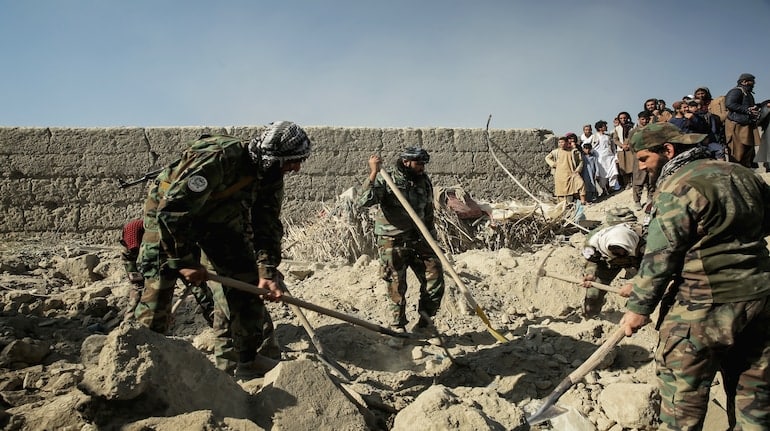
In a dramatic escalation of cross-border tensions, Pakistan has launched a major military offensive, dubbed Operation Ghazab lil-Haq, against neighbouring Afghanistan.
The action follows months of intermittent clashes and growing diplomatic strain between the two countries.
Islamabad described the operation as a response to “unprovoked firing” from across the border, marking what officials have now termed an “open war” situation.
What Is Operation Ghazab lil-Haq?
According to Pakistan’s information ministry, the operation—loosely translated as “wrath for justice”—was initiated after alleged cross-border attacks targeted multiple sectors in Khyber Pakhtunkhwa, including Chitral, Khyber, Mohmand, Kurram, and Bajaur.
Pakistani daily Dawn reported that two Pakistani security personnel were killed in the clashes, while officials claimed that 133 Afghan Taliban operatives had been neutralised.
State broadcaster PTV News stated that Pakistan’s armed forces carried out airstrikes on key installations in Kabul, Kandahar, and Paktia. An ammunition depot in Nangarhar province was also reportedly destroyed during the operation.
‘Open War’: Pakistan’s Official Stand
Pakistan’s Defence Minister Khawaja Asif confirmed that the military campaign was underway and described it as a decisive response to aggression.
Asif noted that following the withdrawal of NATO forces from Afghanistan, expectations were high for regional peace. However, he asserted that Islamabad’s patience had “run out,” despite previous efforts to maintain diplomatic normalisation and host Afghan refugees.
“Our forces have delivered a strong response to aggression,” he said, reiterating Pakistan’s stance that it acted in self-defence.
Root of the Conflict
Islamabad has repeatedly accused Kabul of providing sanctuary to militant groups, particularly the Tehrik-i-Taliban Pakistan (TTP), which has carried out a long-running insurgency within Pakistan.
Afghanistan has denied the allegations, countering that Pakistan shelters groups hostile to Afghan sovereignty and security.
The escalating hostilities now risk destabilising an already fragile region, with diplomatic observers warning that prolonged military engagement could have far-reaching consequences for South Asia’s security landscape.