Odisha’s total debt burden has crossed the ₹1.30 lakh crore mark, pushing the per capita debt in the state to ₹27,502.98 as of October 2026.
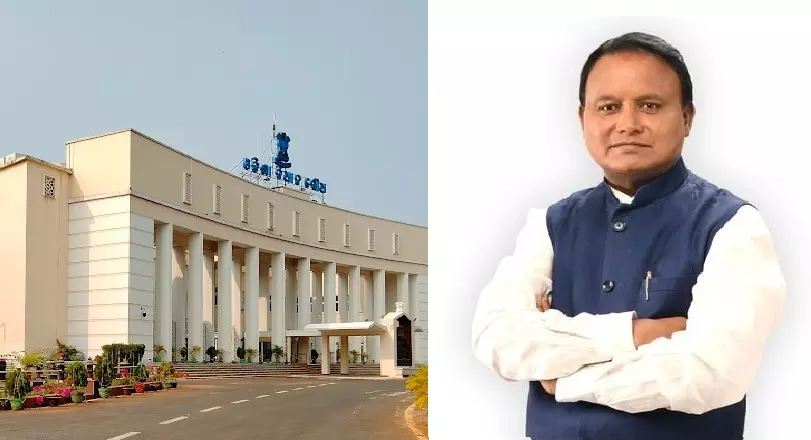
Chief Minister Mohan Charan Majhi shared these figures in a written reply in the Odisha Legislative Assembly on Monday.
Responding to Starred Assembly Question (SAQ No. 132) raised by BJD MLA Aswini Kumar Patra regarding the state’s per capita income, debt burden, and measures to tackle rural inflation, the Chief Minister provided a detailed breakdown of the state’s financial standing.
According to the data presented by CM Majhi, Odisha’s total debt stood at ₹1,22,893.68 crore at the end of the 2025–26 financial year, with the per capita debt pegged at ₹26,133.18. However, by the end of October 2026, the total debt rose to ₹1,30,025.84 crore, resulting in an increase of ₹1,369.80 in per capita debt within seven months. Meanwhile, the state’s per capita income for 2025–26 (at current prices) has been estimated at ₹1,86,761 as per advance estimates.
Defending the state’s borrowing, the Chief Minister stated that the loans raised by the government are strictly utilised for Capital Expenditure (CapEx). He noted that such investments accelerate Odisha’s economic development and directly contribute to increasing the per capita income of its citizens.
CM Majhi further assured the House that Odisha’s debt remains well within acceptable and safe limits under the Fiscal Responsibility and Budget Management (FRBM) Act, 2005.
- Debt-to-GSDP Ratio: Under the FRBM Act, a state’s debt stock must be capped within 25% of its Gross State Domestic Product (GSDP). Odisha’s Debt-to-GSDP ratio stood at just 12.43% at the end of 2025–26.
- Interest Payment Ratio: The ratio of Interest Payment to Revenue Receipts (IP/RR) must remain below 15%. For Odisha, this ratio was recorded at a comfortable 3.42% at the end of 2025–26.
The Chief Minister emphasised that since both key fiscal indicators are significantly lower than the prescribed statutory limits, the state’s debt burden remains at an acceptable and sustainable level.