
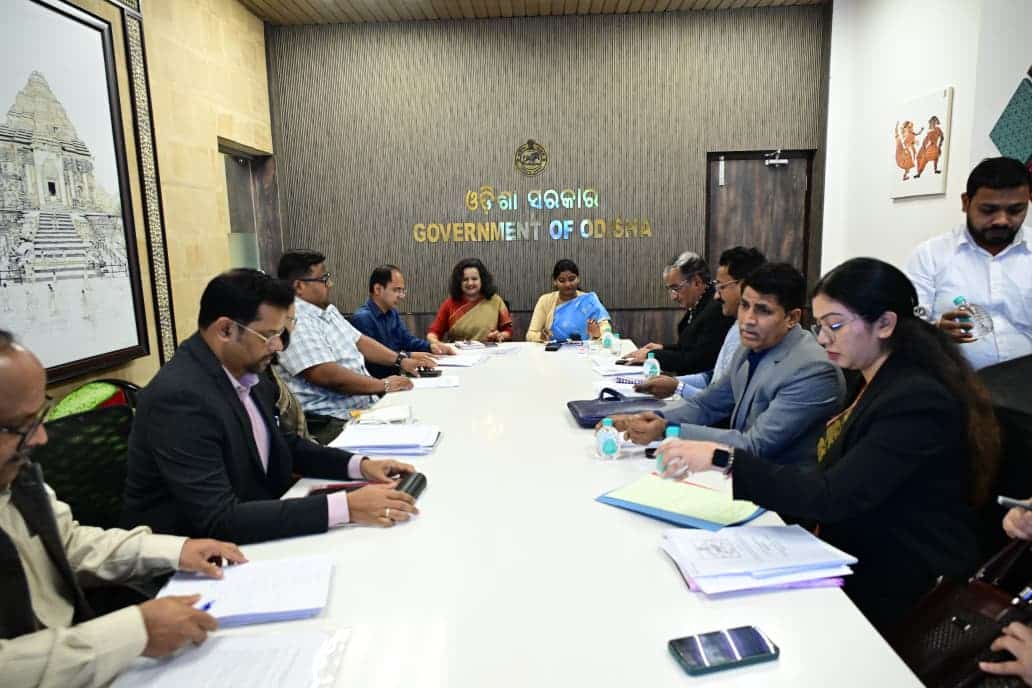
In a significant step towards enhancing tribal development, Odisha’s Chief Secretary, Anu Garg, held a review meeting today with Dr Asha Lakra, a member of the National Commission for Scheduled Tribes (NCST), at the Lok Seva Bhawan conference hall.
The discussions focused on evaluating and strengthening various central and state government schemes aimed at uplifting Scheduled Tribes (STs) in the state.
The meeting brought together key officials, including B. Parameswaran, Commissioner-cum-Secretary of the Scheduled Tribes, Scheduled Castes Development, Minorities, and Backwards Classes Welfare Department. Representatives from the Panchayati Raj and Drinking Water Department, as well as the Revenue and Disaster Management Department, also participated. They provided detailed insights into ongoing programs designed to benefit tribal communities.
A major emphasis was placed on central schemes implemented by the state government. Dr Lakra reviewed initiatives for providing quality residential education to tribal students, highlighting the need for female matrons in girls’ hostels, construction of boundary walls, and improved sanitation facilities. Discussions also covered Ashram schools, Eklavya Model Residential Schools, and Sevashrams, with the department currently operating 1,765 such institutions.
The state government’s achievements in forest rights were a highlight of the session. Officials reported that by October 2025, 7.32 lakh applications for individual forest land rights had been received, with 4.64 lakh successfully granted. Group forest rights were also discussed, underscoring Odisha’s progress in empowering tribal communities through land entitlements.
Further deliberations addressed the Protection of Civil Rights Act, 1955, and the Scheduled Castes and Scheduled Tribes (Prevention of Atrocities) Act, 1989. The Panchayats (Extension to Scheduled Areas) Act (PESA) was another key topic, with the NCST stressing the importance of involving tribal groups in its effective implementation to ensure grassroots-level benefits.
Other prominent schemes reviewed included the PM-Janman program, the Chief Minister’s Tribal Livelihood Mission, the Particularly Vulnerable Tribal Groups (PVTG) Livelihood Mission, and the Dharati Aba Tribal Village Excellence Campaign. These initiatives aim to improve livelihoods, infrastructure, and overall development in tribal areas.
Concluding the meeting, Dr Lakra emphasised the need for better coordination between the central and state governments to ensure that scheme benefits reach the grassroots level. She advocated for increased field visits to monitor implementation and called for higher budget allocations for tribal welfare programs. Additionally, there was a strong focus on skill development training for tribal girls and providing them with suitable employment opportunities to foster empowerment.
This collaborative effort reflects Odisha’s commitment to inclusive growth and the holistic development of its tribal population, aligning with national goals for marginalised communities.