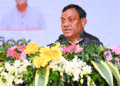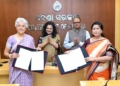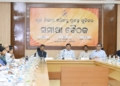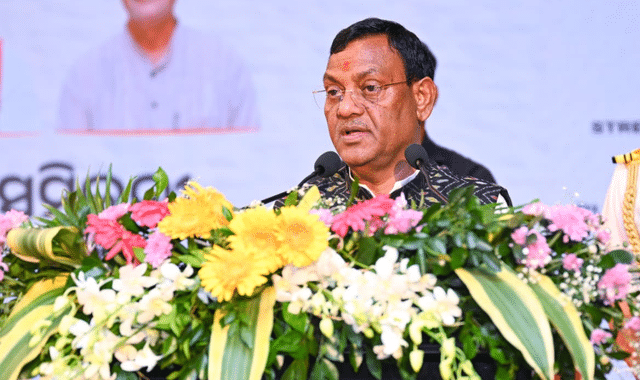
Odisha Governor Brajmohan Ram inaugurated the state conference titled “Strengthening Shree Anna and Landrace Seed Systems–2026” in Bhubaneswar on Tuesday, calling for collective action to integrate millets into daily diets and conserve indigenous seed landraces.
Addressing the gathering, the Governor urged the public—particularly the youth, students, and government personnel—to adopt millets such as finger millet (mandia), pearl millet (bajra), and sorghum (jowar) into their regular eating habits. He highlighted that adopting a nutritious diet is not only vital for individual health but also serves as a gesture of respect toward farmers and the state’s agricultural legacy.
Highlighting the cultural and historic significance of millets in Indian agriculture, Governor Ram noted that these super-cereals have been an integral part of traditional food culture for centuries. In Odisha’s tribal and drought-prone regions, millet farming remains deeply intertwined with local livelihoods and heritage. Promoting millet cultivation enhances farmers’ income while safeguarding these traditional agricultural practices.
Against the backdrop of climate change, erratic rainfall, rising temperatures, and water scarcity, the Governor described millets as a sustainable agricultural solution. Thanks to low water requirements, low cultivation cost, and resilience against adverse weather conditions, millet farming offers a profitable and eco-friendly alternative for farmers.

Speaking on the nutritional value of millets, the Governor emphasised their high dietary fibre content and essential micronutrients. With lifestyle diseases like diabetes, obesity, and hypertension on the rise, regular consumption of millets acts as a key dietary intervention for public health. He also advocated for robust processing, packaging, value addition, and marketing networks to take Odisha’s millet products to national and international markets.
Turning to the preservation of landrace seeds, Governor Ram called for establishing community seed banks, documenting native seed varieties, and facilitating seed exchanges. He described local landraces as the embodiment of generations of farmers’ knowledge, essential for maintaining agricultural biodiversity. Recognising tribal communities and women farmers as the primary custodians of indigenous seeds, he recommended blending their traditional knowledge with modern science, technology, and market connections.
Praising the state government’s Shree Anna Abhiyan and the central government’s initiatives to expand millet production, the Governor reaffirmed that collaborative efforts in seed conservation and crop diversification will propel the vision of a Vikasit Odisha 2036 and Vikasit Bharat 2047.
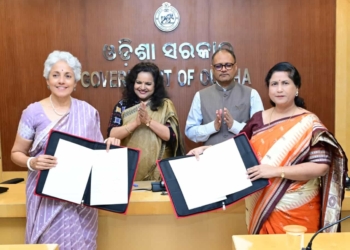
The summit featured prominent leaders and experts, including Deputy Chief Minister Kanak Vardhan Singh Deo, ICAR Director General Dr. Mangi Lal Jat, M.S. Swaminathan Research Foundation (MSSRF) Chairperson Dr. Soumya Swaminathan, and OUAT Vice-Chancellor Prof. Prabhat Kumar Roul.
Earlier, Commissioner-cum-Secretary of the Agriculture & Farmers’ Empowerment Department, Sachin Ramchandra Jadhav, delivered the welcome address, while Director of Agriculture and Food Production, Dr. Poma Tudu, presented the vote of thanks.