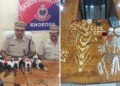


Odisha’s Director General of Police (DGP), Yogesh Bahadur Khurania, undertook a two-day visit to Boudh, Kandhamal, and Ganjam districts, engaging in detailed discussions with senior officials on critical issues including law and order, Maoist activities, and the eradication of ganja cultivation and smuggling.
The tour aimed at formulating specialised strategies to combat criminals and insurgents while ensuring the districts become free from Naxal influence and illegal cannabis operations.
During the visit, DGP Khurania reviewed the overall law and order situation in the regions and emphasised the need for intensified efforts against Maoists. He highlighted the proactive role played by district police in past anti-Maoist operations and urged officials to accelerate these initiatives further.
Special attention was given to preparing tailored blueprints to counter Naxal threats and to identify and completely destroy areas involved in ganja cultivation. Additionally, he directed the creation of dedicated plans to curb ganja smuggling in the affected zones.
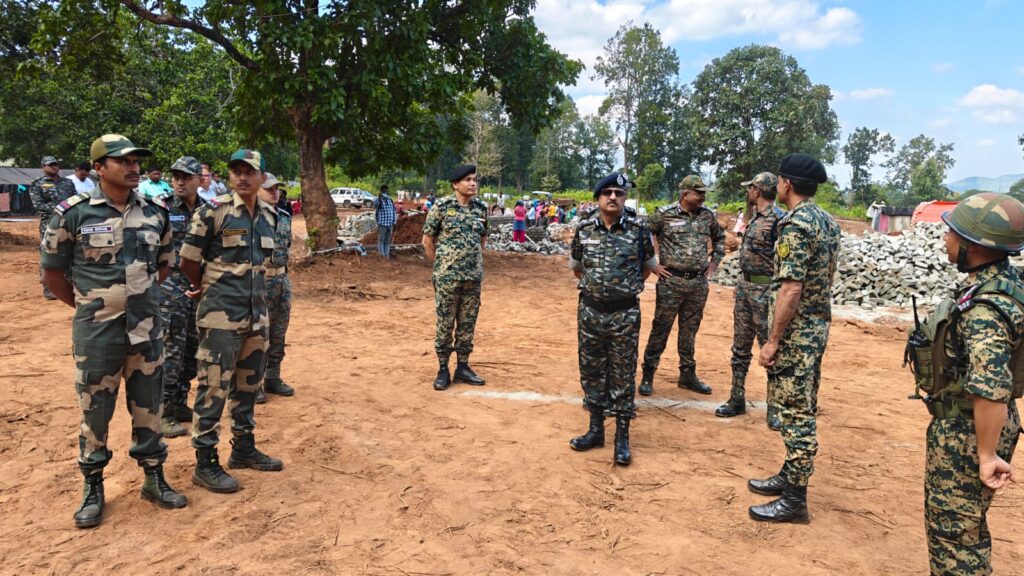
On the first day, the DGP visited Boudh district, where he held comprehensive talks on various pressing matters. The following morning, he proceeded to Kandhamal, inspecting the COB camp and CRPF camp at Penamal. There, he interacted with the SOG team leader and DVF jawans, discussing operational challenges and strategies.
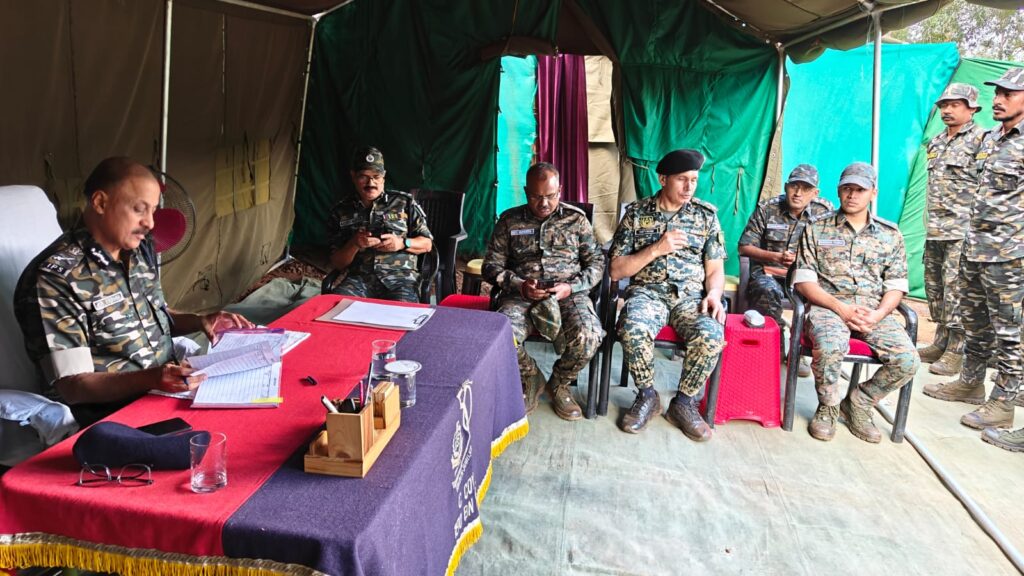
Later, DGP Khurania arrived in the Bhanjanagar sub-division of Ganjam district for an in-depth review of the law and order scenario. He advised police officers to maintain vigilance in controlling crime and criminals while preserving public order.
Accompanying the DGP were key officials, including Additional Director General of Police (Anti-Naxal Operations) Sanjeev Panda, IG (Southern Range) Niti Shekhar, IG (Operations) Dr. Deepak Kumar, SP (Rayagada) Swathi S. Kumar, SP (Kandhamal) Harish B. S., and SP (Ganjam) Shubhendu Patra, along with senior officers from BSF and CRPF.
The DGP’s call to action underscores the state police’s commitment to rooting out extremism and drug-related issues in these vulnerable areas, paving the way for enhanced security and development.