
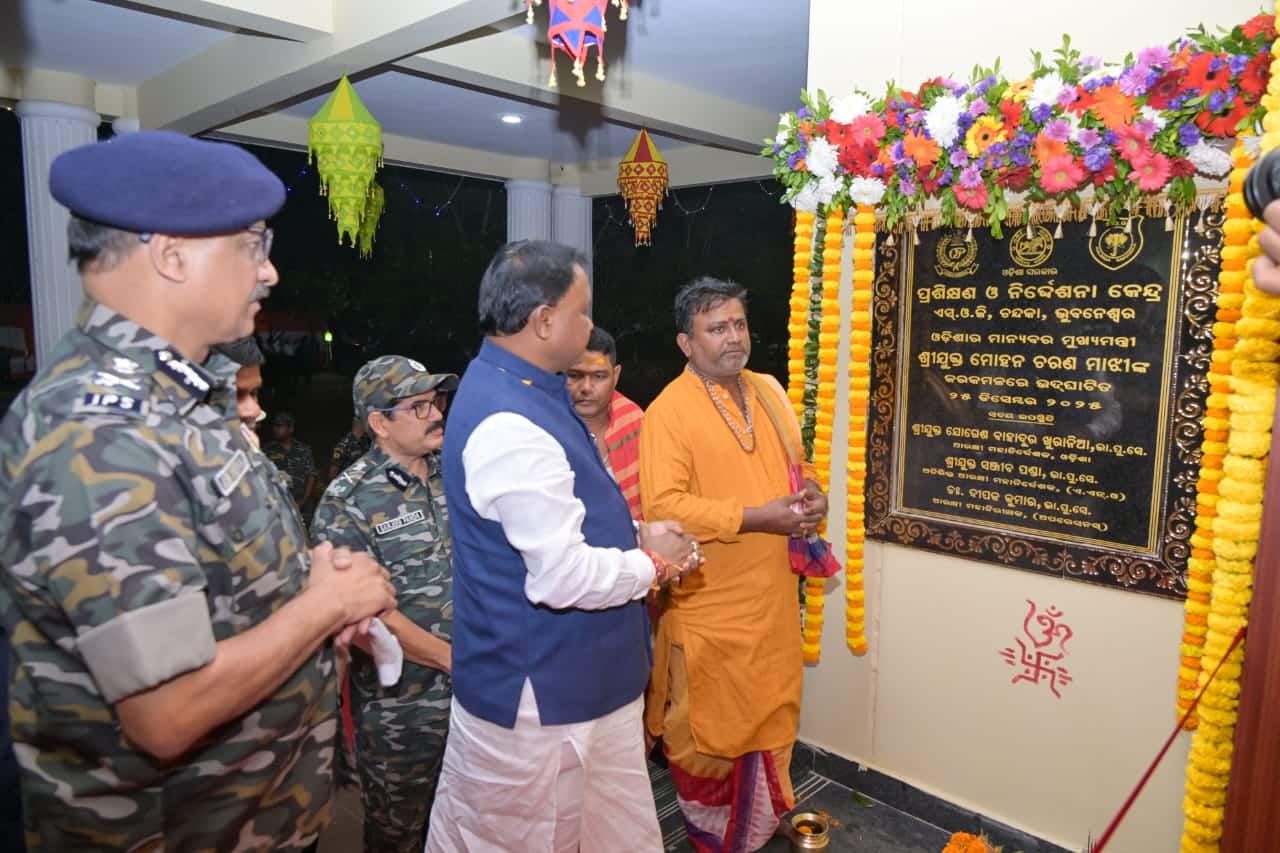
In a significant push towards enhancing Odisha’s counter-terrorism and anti-Naxal capabilities, Chief Minister Mohan Charan Majhi today inaugurated the state-of-the-art Training cum Briefing Hall and a modern Counter Terrorism Training Complex at the Special Operations Group (SOG) base in Chandaka.
The facilities, designed to train up to 400 personnel simultaneously, mark a major upgrade in the state’s security infrastructure amid ongoing efforts to eradicate Left-Wing Extremism.
The Chief Minister also virtually inaugurated a slew of infrastructure projects, including 16 new police stations across 16 districts, 70 residential quarters, office buildings, barracks, an armoury, and administrative blocks. These developments underscore the state government’s commitment to modernising law enforcement amid persistent Maoist threats in the region.
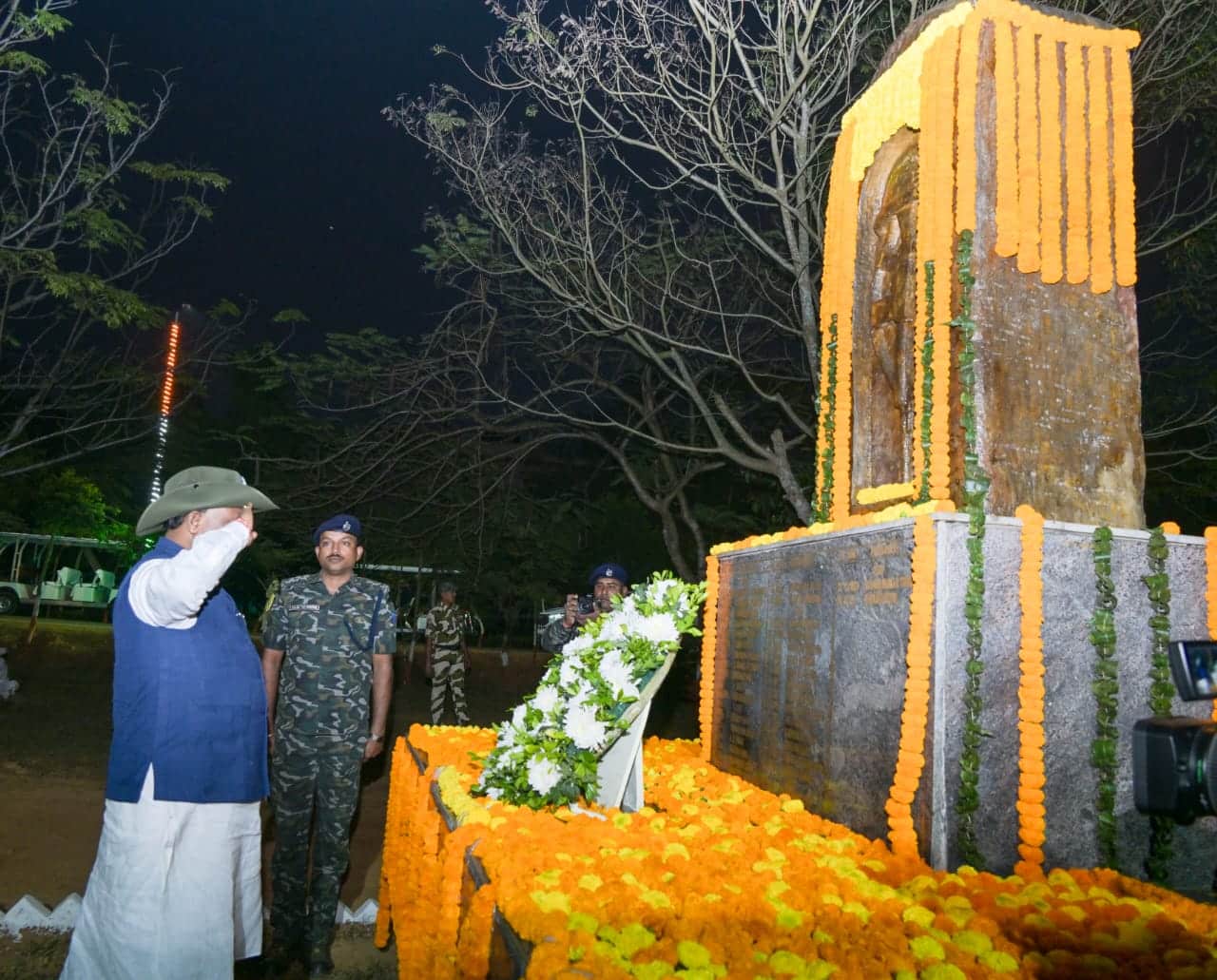
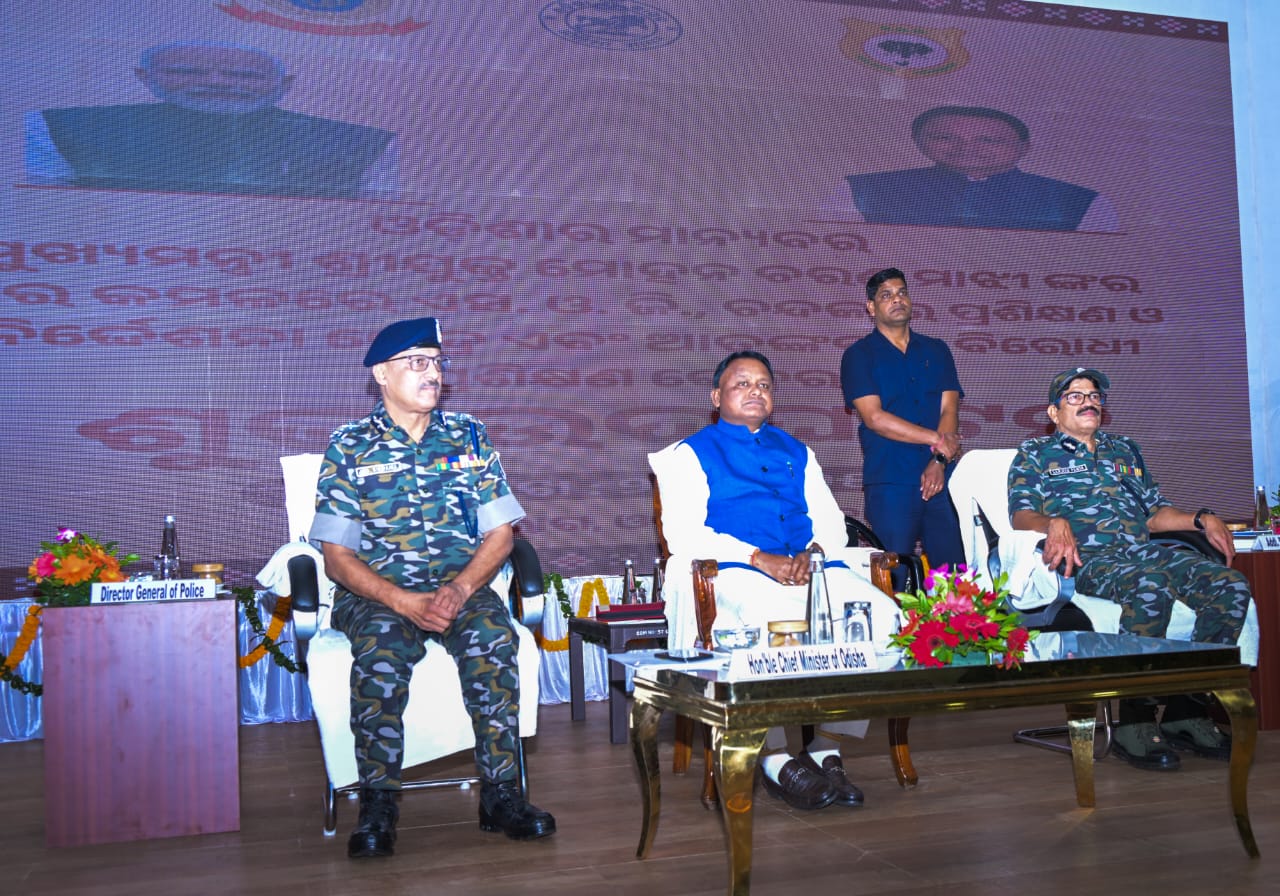
Addressing a gathering of senior police officials and SOG personnel, Majhi reiterated that “violence has no place in a democracy.” He vowed a “zero-tolerance” approach towards organisations and individuals involved in violence, urging the state machinery to suppress such elements with utmost firmness. In a heartfelt appeal to Maoists, the Chief Minister extended an invitation for them to surrender arms, reintegrate into mainstream society, and “join the government’s chariot of progress for development.”
Praising the SOG’s pivotal role, Majhi highlighted their “invaluable contributions” over the past three decades in combating the Maoist insurgency that has plagued Odisha. “We are on track to succeed in the Central government’s deadline to eliminate Naxalism from the country by March 2026,” he stated, citing recent progress. Notably, 22 Maoists surrendered en masse in Malkangiri district, a development Majhi described as “highly encouraging.” He credited Prime Minister Narendra Modi’s vision and Union Home Minister Amit Shah’s strategy for propelling India towards rapid peace and development.
In a morale-boosting announcement, the Chief Minister revealed enhanced Risk Allowances for SOG and allied anti-Naxal units, effective from this December. Personnel directly engaged in operations will receive the following monthly stipends:
- SOG officers: Up to Rs 25,000
- Subedars and Deputy Subedars: Rs 24,000
- Havildars: Rs 20,000
- Constables and Sepoys: Rs 16,000
Those involved in training or other duties, even if not in direct operations—including personnel from the Anti-Extremist Training (AET) and Reinforcement Centres (RC)—will get up to Rs 12,000. Additionally, District Volunteer Force (DVF) members will receive up to Rs 10,000, while Special Intelligence Wing (SIW) staff will be entitled to up to ₹20,000.
Majhi outlined broader reforms to fortify the Odisha Police, including the establishment of three Odisha Special Striking Force (OSSF) battalions, three Odisha Industrial Security Force (OISF) units, 10 new Odisha Disaster Rapid Action Force (ODRAF) units, a dedicated Traffic and Road Safety Wing, 21 cyber and economic crime police stations, and a new police district in Rairangpur. The government has also approved the creation of 15,326 new posts across the department to bolster manpower.
Further emphasising rehabilitation, the Chief Minister announced approval for a revised “Surrender and Rehabilitation” scheme. Surrendering Maoists stand to benefit from financial assistance of up to Rs 1.2 crore, along with housing support, education aid, marriage assistance, and a monthly Rs 10,000 stipend during vocational training to facilitate self-reliance.
The event culminated with a thrilling demonstration by SOG commandos, showcasing high-stakes anti-terror operations that left the audience in awe of their precision and bravery.
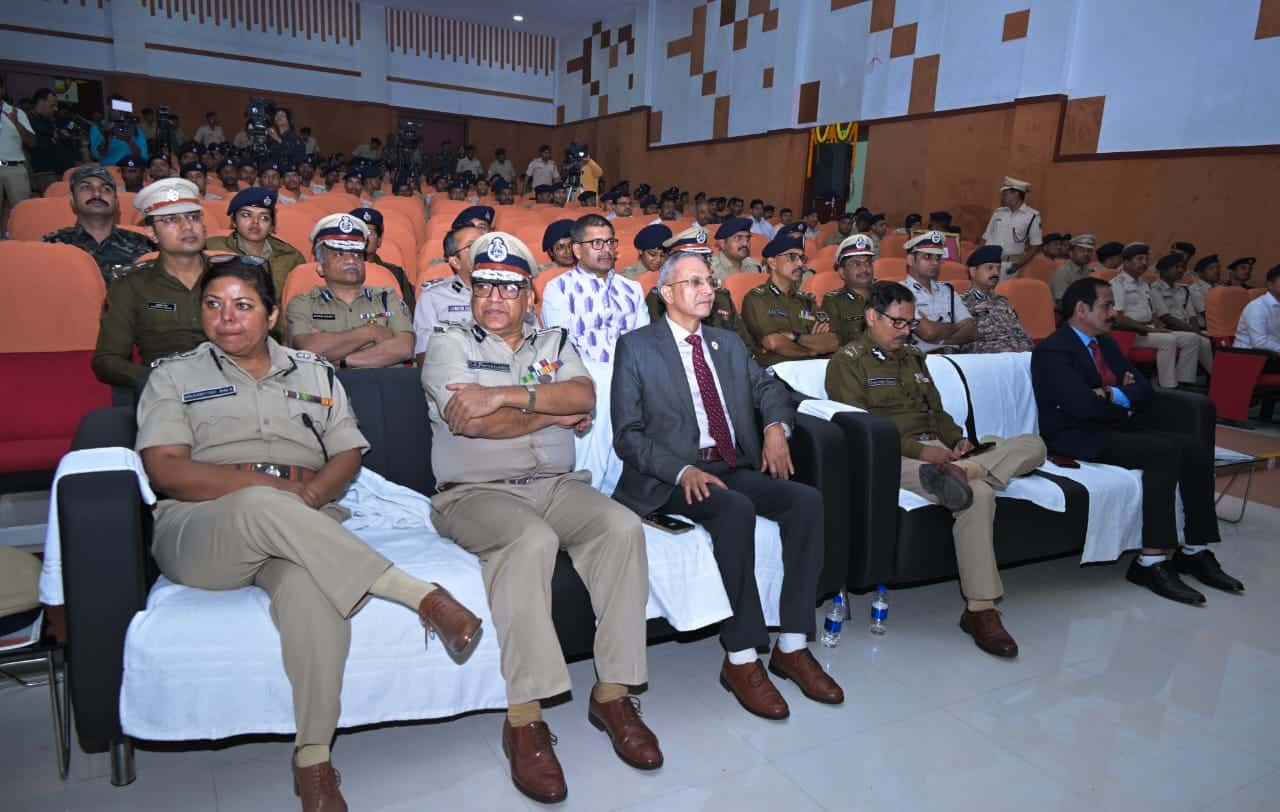
Among the dignitaries present were Director General of Police (DGP) Yogesh Bahadur Khurania, Additional DGP (Armed Police and Operations) Sanjeev Panda, Inspector General of Police (Operations) Dr Deepak Kumar, Deputy Inspector General of Police (SIW) Akileshwar Singh, and a host of senior officers alongside SOG ranks.
This inauguration not only equips Odisha’s elite forces with cutting-edge tools but also signals a multi-pronged strategy blending enforcement, incentives, and empathy to steer the state towards lasting peace.