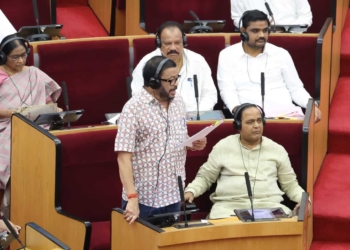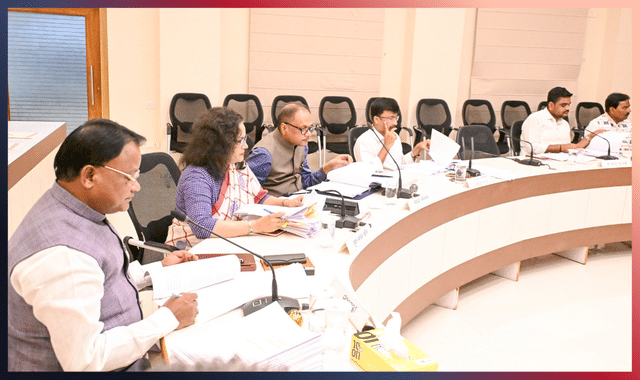
Chief Minister Mohan Charan Majhi chaired the 37th meeting of the Odisha State Cabinet today at Lok Seva Bhawan.
Out of 19 proposals placed before the Cabinet, 16 from 13 departments were approved after discussion, including one related to the conclusion of the sixth session of the 17th Odisha Legislative Assembly.
The Cabinet took two landmark decisions aimed at social empowerment and food security, which CM Majhi personally briefed the media on, while Chief Secretary Anu Garg provided details on the remaining proposals.
Big Leap in Reservation for ST, SC & SEBC Students in Professional and Higher Education
In a significant move towards social justice, the Cabinet approved a revised reservation policy for admissions in medical, engineering, and other professional and technical courses across the state.
Under the new policy:
- Scheduled Tribes (ST) will get 22.50% reservation
- Scheduled Castes (SC) will get 16.25% reservation
- Socially and Educationally Backward Classes (SEBC) will get 11.25% reservation
This reservation will apply to all state universities, their affiliated colleges, ITIs, polytechnics, and institutions offering undergraduate and postgraduate programmes in engineering, technology, management, medicine, dental, nursing, pharmacy, veterinary sciences, agriculture, architecture, and other allied fields. It will also cover certificate, diploma, and degree courses notified by the government from time to time.

CM Majhi highlighted the historical injustice: despite ST population exceeding 22% and SC over 17%, their reservation in professional courses was limited to just 12% and 8%, respectively, with no provision for SEBC. He described the decision as a long-overdue step for equitable access to quality education.
Impact on seats:
In medical seats (total UG + PG: 2,421): ST seats will rise from 290 to 545; SC from 193 to 393; SEBC will get 272 seats (previously zero).
In engineering seats (total: 44,579): ST seats will increase from 5,349 to 10,030; SC from 3,566 to 7,244; SEBC will get 5,015 seats (previously zero).
The Chief Minister credited the visionary leadership of Prime Minister Narendra Modi for enabling such empowerment initiatives and said this would strengthen efforts towards building a prosperous Odisha.
Mukhyamantri Annapurna Yojana: Additional Free Rice for Food Security
The Cabinet also approved the launch of the Mukhyamantri Annapurna Yojana (MAPY) for the financial year 2026-27 to further strengthen food security.
Under this scheme, all beneficiaries under the National Food Security Act (NFSA) and the State Food Security Scheme (SFSS) will receive 5 kg of additional free rice per person per month, over and above their existing entitled quota.
This will benefit approximately:
- 1.96 crore families comprising over 3.28 crore individuals.
The state will distribute an average of 1.64 lakh metric tonnes of rice per month (about 19.71 lakh MT annually) free of cost through the Targeted Public Distribution System.
The estimated annual expenditure for 2026-27 is ₹8,813 crore** (monthly average ≈ ₹734 crore).
CM Majhi stated that this initiative would make Odisha’s food security system even more robust and ensure no eligible family faces shortage of rice.
The Cabinet meeting marked another step by the Majhi government towards inclusive development, social justice, and welfare of the common people.