In a significant move to make Odisha’s tourism sector more attractive and investor-friendly, the Odisha Cabinet has approved the “Odisha Tourism (Amendment) Policy-2026.”
Key changes include reducing the minimum number of rooms required for 3-star and above hotels from 50 to 10, aligning with the guidelines of the Union Ministry of Tourism. This is expected to encourage smaller-scale investments while maintaining quality standards.
The policy also simplifies the capital investment subsidy structure, offering up to 30-40% assistance. For projects with investments up to ₹200 crore, a maximum subsidy of ₹50 crore is available, while investments exceeding ₹200 crore can receive up to ₹100 crore. Special provisions have been made for projects in designated zones, where women, Scheduled Caste (SC), Scheduled Tribe (ST), and differently-abled entrepreneurs can avail enhanced subsidies of 40%, capped at ₹60 crore for up to ₹200 crore investments and ₹120 crore for larger ones.
To promote good governance and stakeholder involvement, a State Tourism Advisory Council will be formed under the chairmanship of the Tourism Minister. The Cabinet, chaired by Chief Minister Mohan Charan Majhi, also approved 11 proposals from eight departments during the meeting, including an increase in the income limit for ration cards.
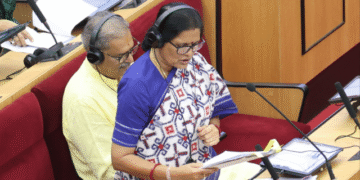
Chief Secretary Anu Garg, briefing the media post-meeting, highlighted that the amendments aim to boost private investments and create 15,000 star-category hotel rooms by 2036. This is projected to generate over a lakh direct and indirect employment opportunities, strengthening tourism-led economic growth in Odisha.
Garg further explained that the eligibility criteria for expanding existing tourism units have been rationalized, reducing the threshold from 50% to 25% to enable smoother and faster scaling. The special tourism zones have been expanded beyond existing areas like Chilika, KBK (Koraput-Bolangir-Kalahandi), Kandhamal, and Gajapati to include high-potential sites such as Hirakud, Satkosia, Similipal, Ratnagiri-Udayagiri-Lalitgiri, and Bhitarkanika.
Targeted subsidies are introduced for emerging sectors: museums and heritage properties can receive up to 40% capital assistance, while electric boats, electric caravans, and art & craft complexes qualify for up to 50%. The policy promotes niche areas like destination weddings, luxury camping, and electric mobility-based tourism products to align with evolving demands.
Additionally, a dedicated capital investment and operational expense support framework has been rolled out for promoting authentic Odia cuisine. This includes outlets at notified tourism sites in Odisha, as well as in five metro cities (Mumbai, Delhi, Bengaluru, Chennai, and Kolkata) and five major tourist destinations outside the state (Agra, Varanasi, Goa, Kochi, and Jaipur). The initiative aims to enhance the global recognition of Odia food culture.
These reforms are poised to position Odisha as a premier tourism destination, fostering sustainable development and economic inclusivity.