

The Odisha government, under the Mukhyamantri Kanya Bibah Yojana (MKBY), organised district-level mass marriage ceremonies in Cuttack and Sundargarh on Thursday to support economically disadvantaged families and promote social reforms.
Deputy Chief Minister Pravati Parida, who holds the portfolio for Women and Child Development, graced the event in Cuttack. She extended heartfelt congratulations and blessings to the newlywed couples, emphasising the scheme’s role beyond financial aid.
“This initiative is not merely financial assistance but a strong social step against child marriage and the dowry system,” Parida stated. “It ensures dignity, security, and social acceptance for young women starting a new phase of life, while also encouraging widow remarriage.”
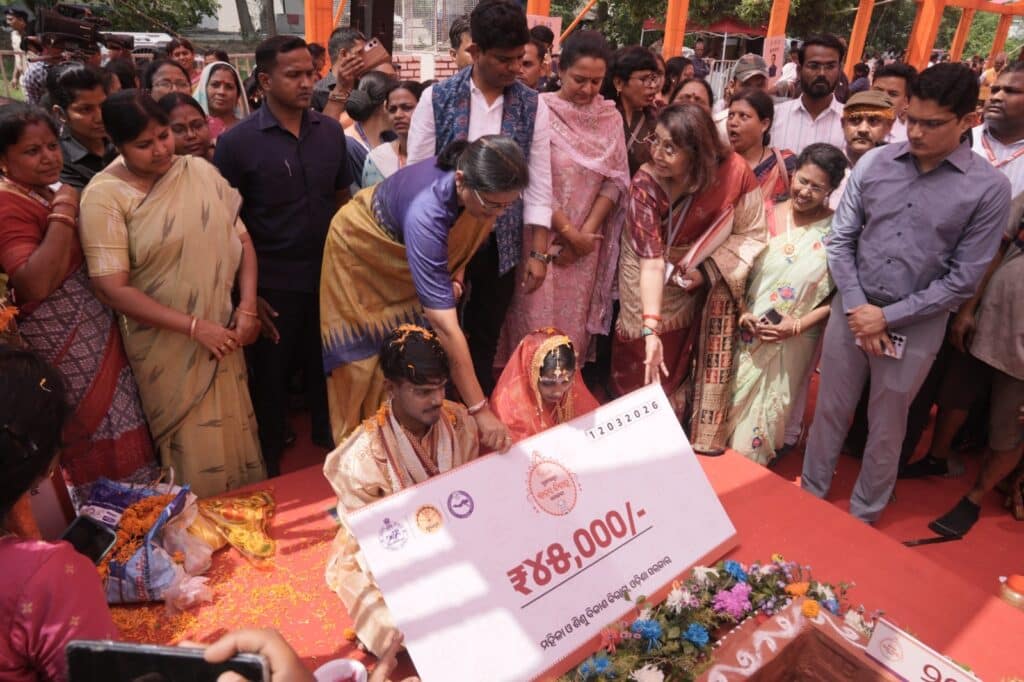
In Cuttack, the mass wedding saw the participation of 55 couples from diverse communities. The event was attended by prominent figures, including Cuttack Sadar MLA Er Prakash Chandra Sethi, Commissioner-cum-Secretary of the Women and Child Development Department Dr Mrinalini Darswal, Director Monisha Banerjee, District Collector Dattatrey Bhausaheb Sinde, CMC Commissioner Kirandeep Kaur Sahota, and other dignitaries.
Parida personally interacted with the couples, advising them to build families based on mutual respect, understanding, and equality.
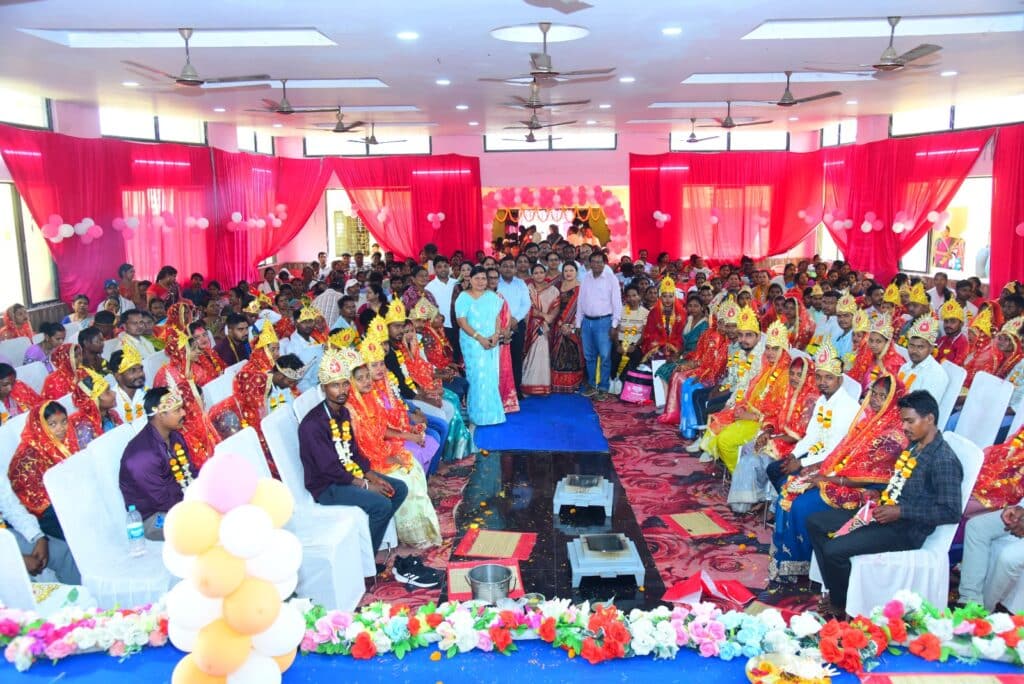
Similarly, in Sundargarh, a district-level mass marriage was held at Shankar Sthit Kalyan Mandap, where 61 couples solemnised their unions following traditional rituals. The ceremony was attended by District Collector Dr Subhankar Mohapatra, Sundargarh Municipality Chairperson Tanaya Mishra, Sub-Collector Tejaswini Behera, Additional District Magistrate Suraj Kumar Patnaik (General), Additional District Magistrate Abhimanyu Majhi (Revenue), and District Social Welfare Officer Suchita Panda, among others.
Under the MKBY scheme—strengthened by the Odisha government—eligible brides aged 18 and above from economically weaker sections receive financial assistance of Rs 60,000 per marriage. Of this, Rs 45,000 is directly transferred to the bride’s bank account, while the remaining Rs 15,000 supports the wedding arrangements and management, often through selected implementing agencies.
The program promotes dowry-free, dignified marriages, combats social evils, and empowers women by ensuring greater security and recognition.