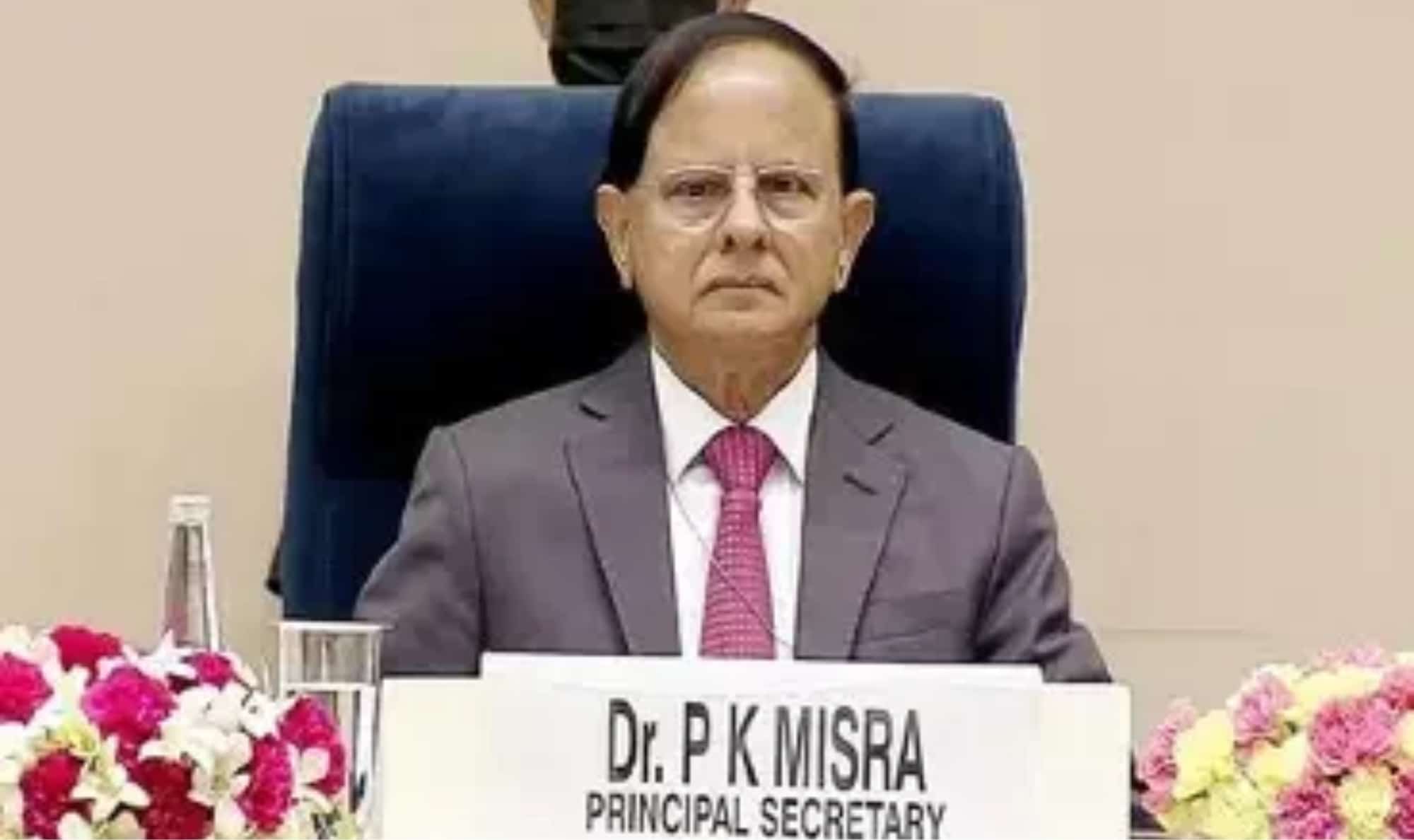
Prime Minister’s Principal Secretary, Dr P.K. Mishra, has strongly advocated for a comprehensive, multi-dimensional approach toward disaster risk reduction (DRR).
Addressing a high-level meeting of senior officials organised by the United Nations Office for Disaster Risk Reduction (UNDRR) in New Delhi, Dr Mishra emphasised that the upcoming decade must focus not only on saving lives but also on safeguarding development gains and drastically curbing economic losses.
Co-chaired by India and the United Kingdom, the meeting served as a crucial platform to discuss escalating global challenges. Dr Mishra pointed out that climate change, rapid urbanisation, sprawling infrastructure expansion, and environmental degradation are deeply interconnected risks multiplying by the day.
Moving Beyond Sunk Costs and Silos
While acknowledging that early warning systems, disaster preparedness, and emergency responses have successfully saved countless lives, Dr Mishra noted that economic damages remain disproportionately high. He stressed the urgent need to move beyond departmental silos to understand systemic risks through a collective lens.
Reiterating India’s unwavering commitment to the Sendai Framework, he urged accelerated implementation by 2030, highlighting the necessity of heavy investments in alertness, mitigation, and institutional capacity.
India’s Leadership and Strategic Innovations
Under the visionary leadership of Prime Minister Narendra Modi, India has emerged as a global frontrunner in disaster mitigation. Dr Mishra highlighted key national milestones, including the Ten-Point Agenda on Disaster Risk Reduction (2016) and the Disaster Mitigation Act (2025).
He underscored that funding for disaster management must yield measurable, result-oriented outcomes. Development planning, he added, must seamlessly integrate long-term resilient infrastructure, robust urban institutions, and nature-based solutions.
Harnessing Artificial Intelligence and Global Synergy
Emphasising the transformative role of modern technology, Dr Mishra called for leveraging Artificial Intelligence (AI) and Machine Learning (ML) to upgrade multi-hazard early warning systems. Timely warnings must immediately translate into swift administrative action and rapid financial mobilisation. Furthermore, he advocated for proactive recovery planning so that post-disaster reconstruction eliminates pre-existing vulnerabilities rather than worsening them.
Reaffirming India’s dedication to global collaboration, Dr Mishra recalled India’s instrumental role during its G20 Presidency in 2023—where a dedicated Disaster Risk Reduction Working Group was established—alongside ongoing efforts within the BRICS framework.
Three Pillars for the Future
Concluding his address, Dr Mishra outlined three core priorities for the global community:
-
Deeper Risk Comprehension: Better understanding of compounding and interconnected hazards.
-
Impactful Investments: Channelling public funds into resilient infrastructure, sustainable cities, and natural ecosystems backed by robust institutions.
-
Pragmatic International Cooperation: Fostering cross-border solidarity and unified frameworks.
“The true measure of our success in the coming decade,” Dr Mishra concluded, “will not just be the lives we save, but our ability to secure man-made assets, critical infrastructure, and sustainable development for generations to come.”