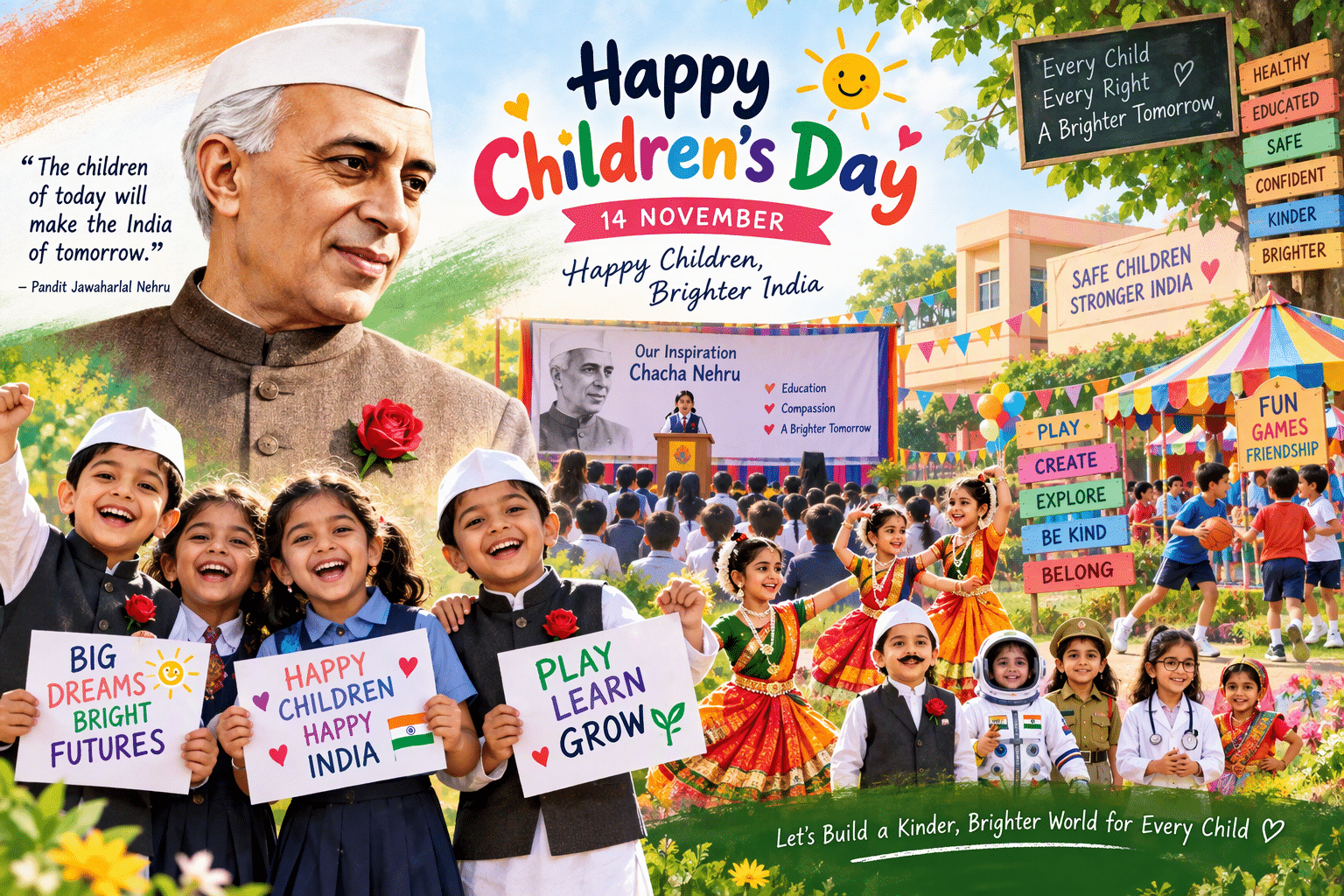
Every year on November 14, schools and communities across India burst into color and laughter to celebrate Children’s Day, locally known as Bal Diwas.
While much of the world observes Universal Children’s Day on November 20, India holds its celebrations six days earlier to commemorate the birth anniversary of the nation’s first Prime Minister, Pandit Jawaharlal Nehru.
Fondly remembered across generations as ‘Chacha Nehru,’ the iconic leader was renowned for his deep affection for young people and his unwavering belief in the transformative power of education. Nehru frequently emphasised that children are the true foundation of a nation, famously stating that the way a country nurtures its children directly determines its future.
From November 20 to November 14: The History Behind the Date
Before 1964, India aligned with the global calendar, celebrating Children’s Day on November 20—the date designated by the United Nations as World Children’s Day.
However, following the passing of Pandit Jawaharlal Nehru in May 1964, the Indian Parliament passed a unanimous resolution to pay a lasting tribute to his legacy. Recognising his lifelong dedication to the welfare and education of youth, November 14—Nehru’s birthday—was officially declared India’s national Children’s Day. Since that historic decision, Bal Diwas has served as an annual reminder to protect children’s rights, prioritise their health, and provide a safe, nurturing environment for them to thrive.
How India Celebrates Bal Diwas
Across the country, November 14 is a day when regular textbooks are set aside in favour of creativity, play, and celebration.
-
Inspiring Assemblies: The day typically begins with special morning assemblies where teachers share anecdotes about Chacha Nehru’s life and his vision for young India.
-
Cultural Showcases: Auditoriums come alive with student-led skits, musical performances, traditional dances, poetry recitations, and storytelling sessions. Fancy dress competitions remain a crowd favourite, with many students dressing up in Nehru’s signature jacket and rose.
-
Carnivals and Sports: To promote physical fitness and teamwork, schools organise friendly sports tournaments and transform campuses into vibrant carnivals complete with game stalls, prizes, and festive treats—bringing to life Nehru’s dream of a childhood defined by curiosity and joy.