

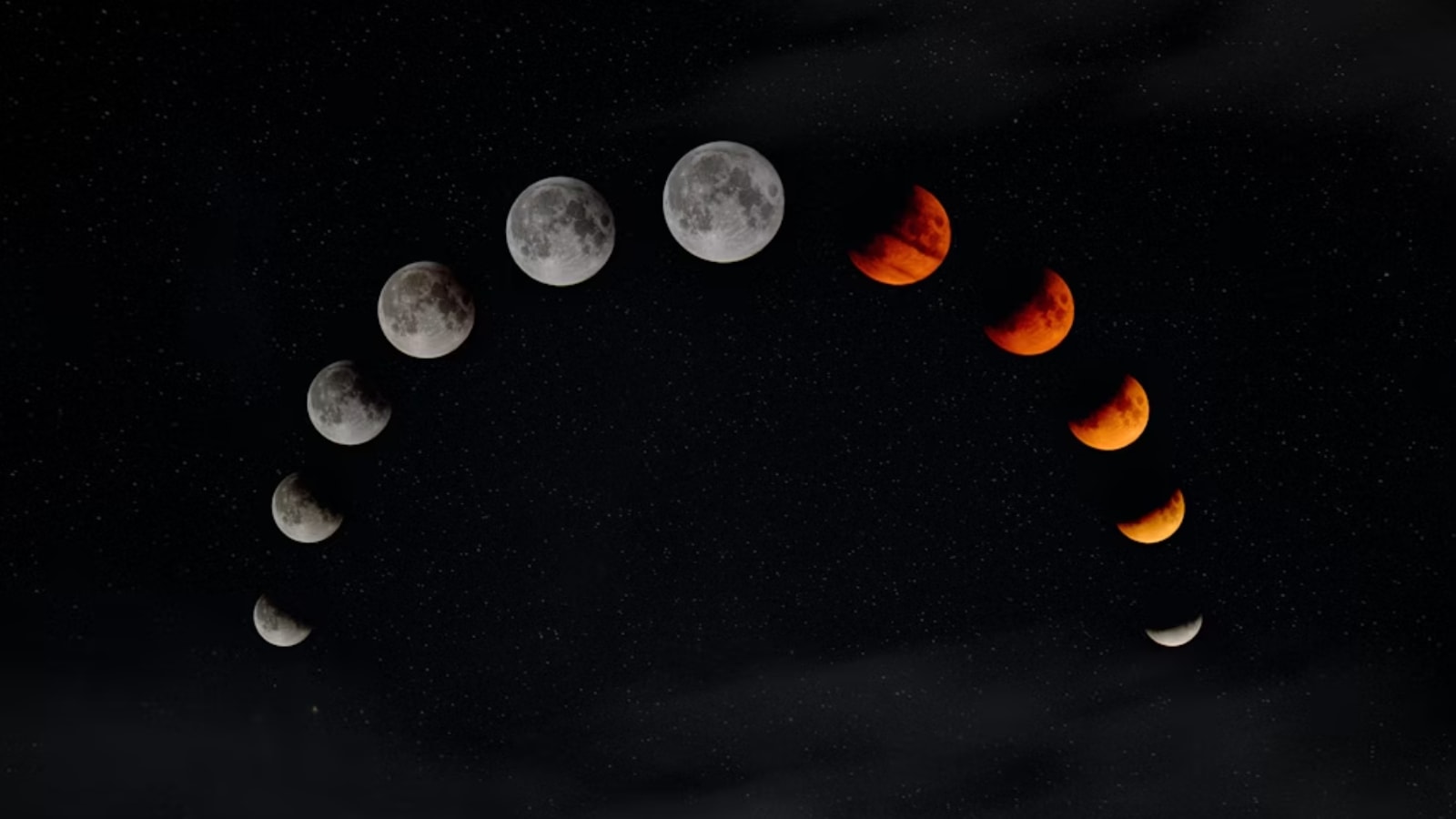
The first lunar eclipse of 2026 will occur today, drawing attention from skywatchers and followers of astrology alike. The celestial event is scheduled to begin at 3:20:17 pm, with the total phase lasting 56 minutes and 6 seconds. The eclipse will conclude at 6:47 pm.
Astrologers have shared specific timings and precautionary guidelines traditionally associated with the lunar eclipse.
Eclipse Timings and Duration
-
Eclipse begins: 3:20:17 pm
-
Total phase duration: 56 minutes and 6 seconds
-
Eclipse ends: 6:47 pm
-
‘Handi Chhad’ period: 6:04 am onwards (lasting over 13 hours)
-
‘Ghat Kala’ period: 6:20 am to 6:46 pm
Advisory on Religious and Household Practices
According to traditional astrological beliefs, certain practices are observed during a lunar eclipse.
Advisories suggest:
-
Suspending worship during the eclipse period
-
Keeping shrine rooms closed
-
Avoiding cooking and consuming cooked food
-
Refraining from auspicious activities
-
Keeping doors and windows closed
Individuals are also advised to avoid activities such as cutting, sewing, or handling sharp objects during the eclipse period. The consumption of oil-based foods, fish, meat, and intoxicating substances is traditionally discouraged.
Significance of the ‘Ghat Kala’ Period
The ‘Ghat Kala’ period is considered significant in astrology. It begins nine hours before the eclipse starts and continues until the event concludes. During this time, religious rituals and cooking are traditionally avoided.
Astrologers also suggest postponing long-distance travel for a week following the eclipse. Marriage ceremonies are generally not recommended during the eclipse week, according to these beliefs.
Zodiac Sign Perspectives
Astrological interpretations suggest that viewing the lunar eclipse may be considered favorable for individuals born under:
-
Aries
-
Gemini
-
Leo
-
Scorpio
-
Libra
-
Sagittarius
-
Pisces
However, for those born under Capricorn, Taurus, Cancer and Virgo, viewing the eclipse is regarded as inauspicious, according to astrological interpretations.
Scientific Note
A lunar eclipse is a natural astronomical event that occurs when the Earth comes between the Sun and the Moon, casting a shadow on the Moon. While cultural and religious beliefs vary, the event is safe to observe with the naked eye.