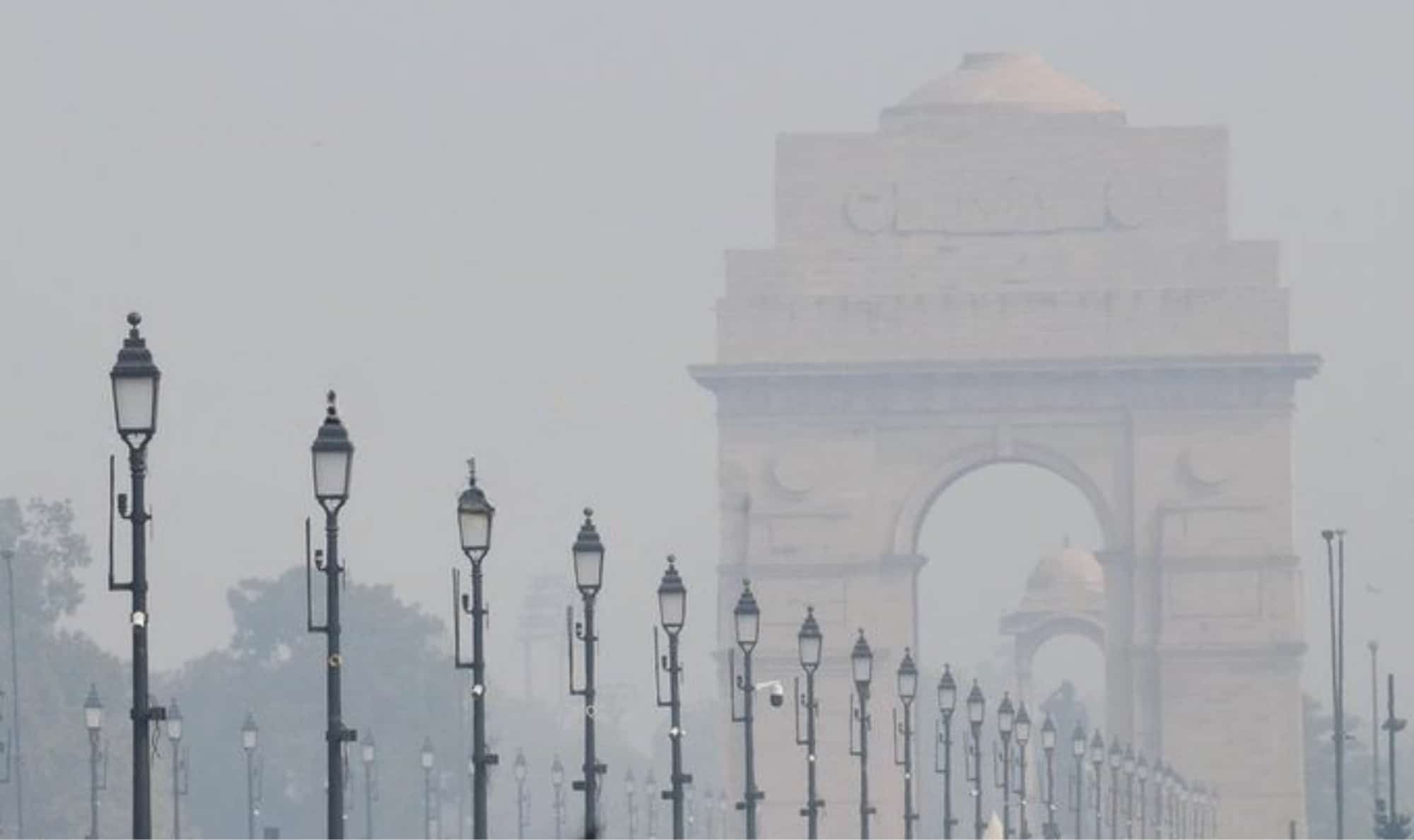
The national capital woke up to a hazy Thursday morning as the air quality remained trapped in the ‘poor’ category, with the overall Air Quality Index (AQI) settling at 226.
While parts of the city recorded relative breathability, several pockets—such as Jahangirpuri (309), Chandni Chowk (307), and Vivek Vihar (306)—flashed ‘very poor’ readings.
Understanding the Air Quality Spectrum
Under the Central Pollution Control Board (CPCB) guidelines, air quality metrics are classified into distinct tiers to alert the public:
-
0–50: Good
-
51–100: Satisfactory
-
101–200: Moderate
-
201–300: Poor (the current bracket)
-
301–400: Very Poor
-
401–500: Severe
The Post-Dussehra Spike
The sharp deterioration began mid-week, marking Delhi’s first ‘poor’ air quality day of the season. The daily average AQI touched a 100-day high of 245 on Wednesday, a steep climb from 179 recorded just days prior.
The sudden pollution surge arrived closely on the heels of Dussehra festivities, during which towering effigies packed with firecrackers were burnt across Delhi and the National Capital Region (NCR). However, environmental experts and authorities note that while the celebrations contributed to localised smoke accumulation, no direct causal link has been officially established between the effigy burnings and the regional shift in air quality, with shifting weather patterns and early winter stagnation also playing major roles.
GRAP Stage I Measures Imposed
In response to the declining air quality, the Commission for Air Quality Management (CAQM) activated Stage I of the Graded Response Action Plan (GRAP) across Delhi-NCR.
The immediate enforcement mandates aggressive action from civic bodies, including:
-
Intensified mechanised sweeping of roads and regular water sprinkling to suppress dust.
-
Strict monitoring and compliance checks at construction and demolition sites.
-
Crackdowns on open waste burning and tighter enforcement of waste collection rules.
-
A complete restriction on the use of coal and firewood in tandoors at hotels, restaurants, and open-air eateries.
With meteorological forecasts predicting that the air quality will hover in the ‘poor’ range over the coming days, citizens—particularly children, the elderly, and those with respiratory ailments—have been advised to limit prolonged outdoor exertion.