

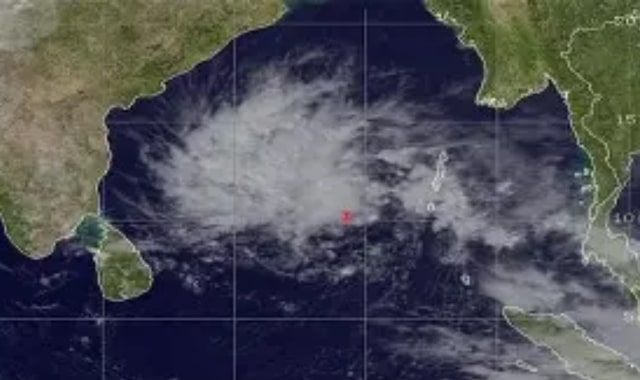
A cyclonic circulation formed over the central part of the Strait of Malacca, extending up to 5.8 km above sea level, and may trigger a low-pressure area over the southeast Bay of Bengal around November 22.
Meteorological sources confirmed that the circulation remains active from the ocean surface to the mid-troposphere. Consequently, the system is expected to influence weather patterns across the Bay of Bengal, raising the possibility of a new low-pressure zone.
The India Meteorological Department (IMD) continues to monitor the development closely. Officials stated that the circulation could intensify depending on sea surface temperatures and wind conditions. Moreover, they emphasised that the formation of a low-pressure area in the Bay of Bengal during November is common and often linked to post-monsoon cyclonic activity.
The cyclonic circulation may bring changes in wind flow and cloud formation across coastal regions. Therefore, fishermen and coastal communities have been advised to remain alert as the system evolves. Authorities highlighted that the exact impact will depend on the strength and movement of the low-pressure area once it forms.
Last year, similar circulations in the Bay of Bengal led to significant weather events, including heavy rainfall and localised flooding. As a result, experts believe that the current system could follow a comparable trajectory if it intensifies further.
The cyclonic circulation over the Strait of Malacca underscores the need for continuous monitoring of oceanic and atmospheric conditions. Furthermore, meteorologists expect the upcoming low-pressure area to provide valuable insights into seasonal weather behaviour in the Bay of Bengal.
ALSO READ: Jay Dholakia to Take Oath as Nuapada MLA