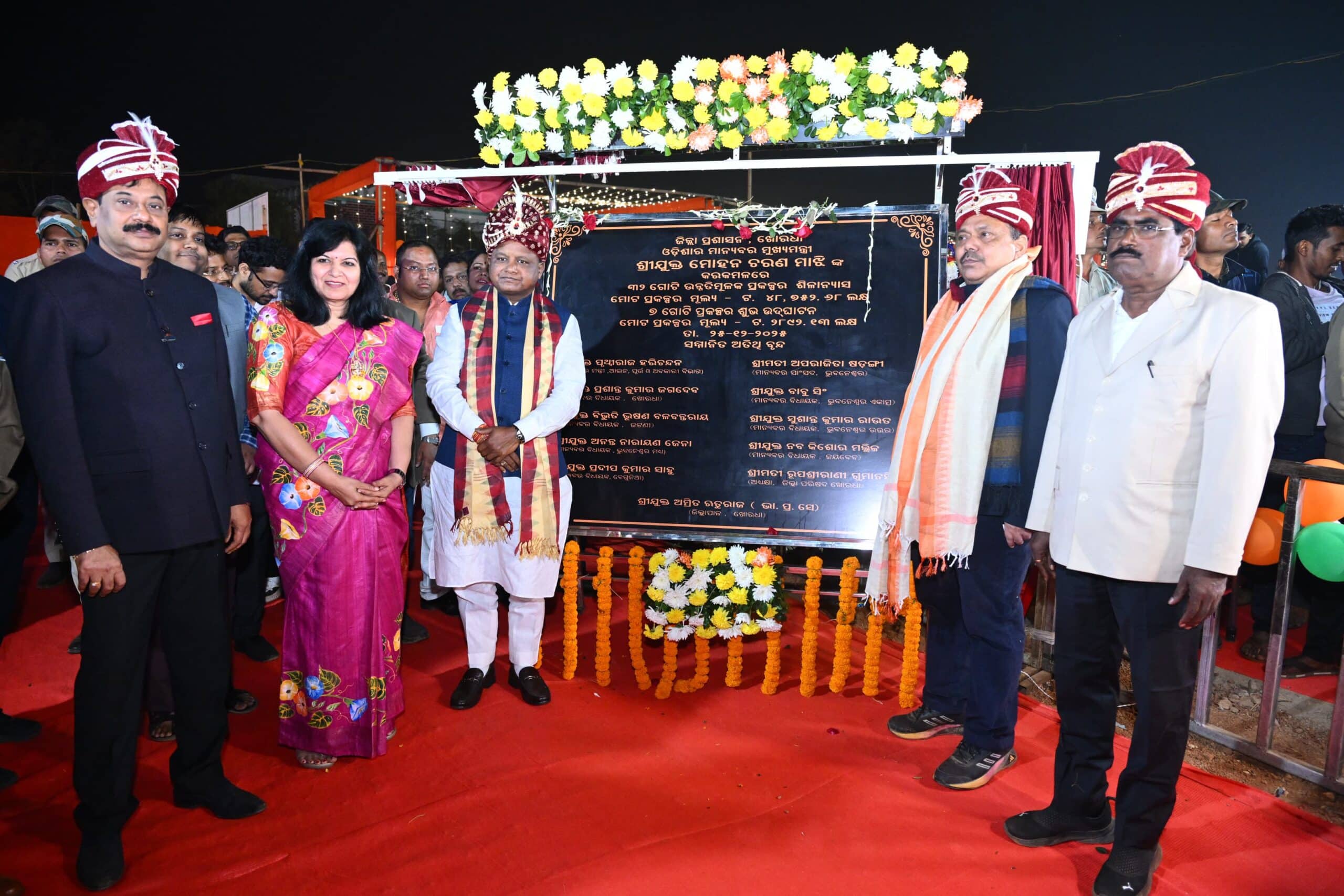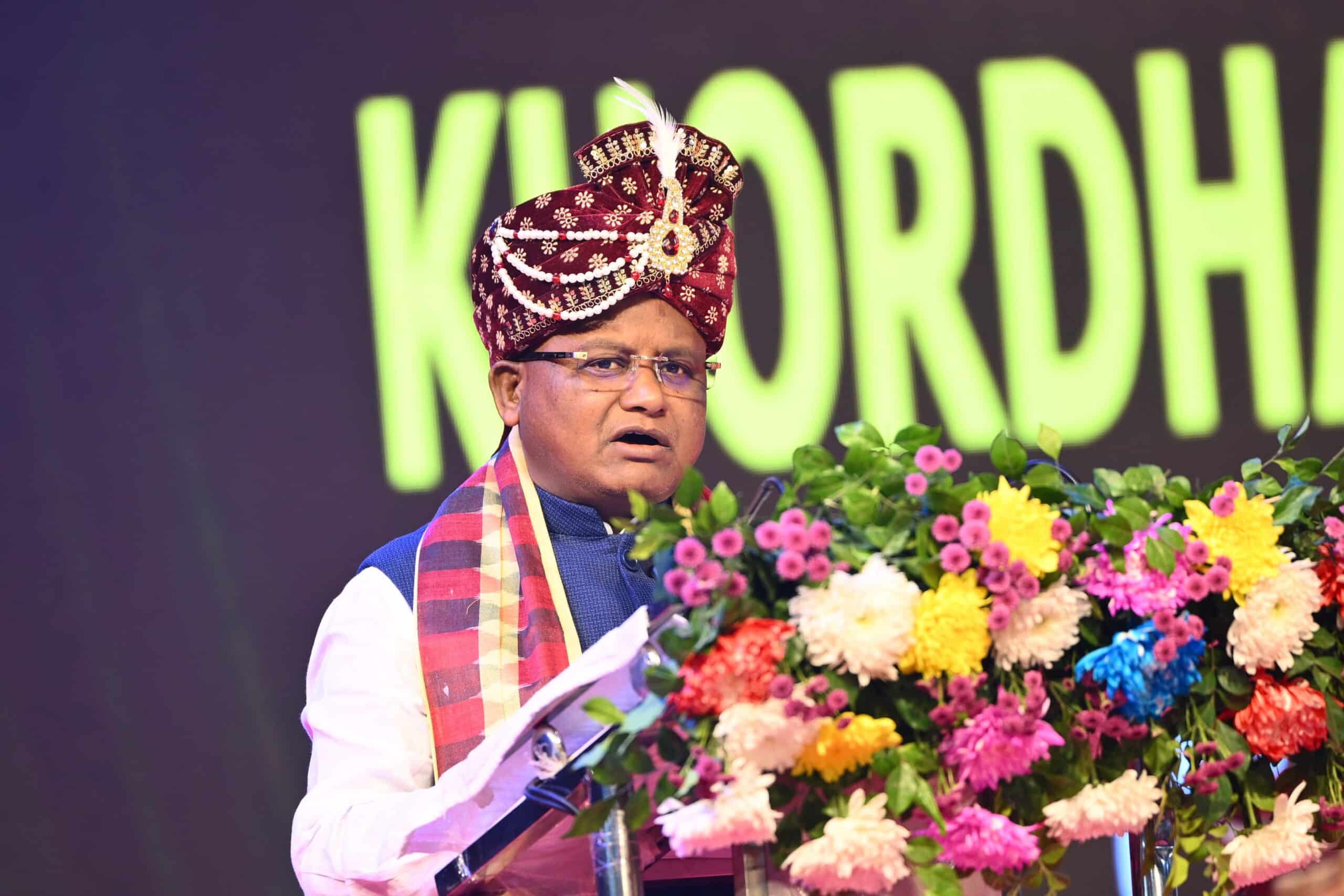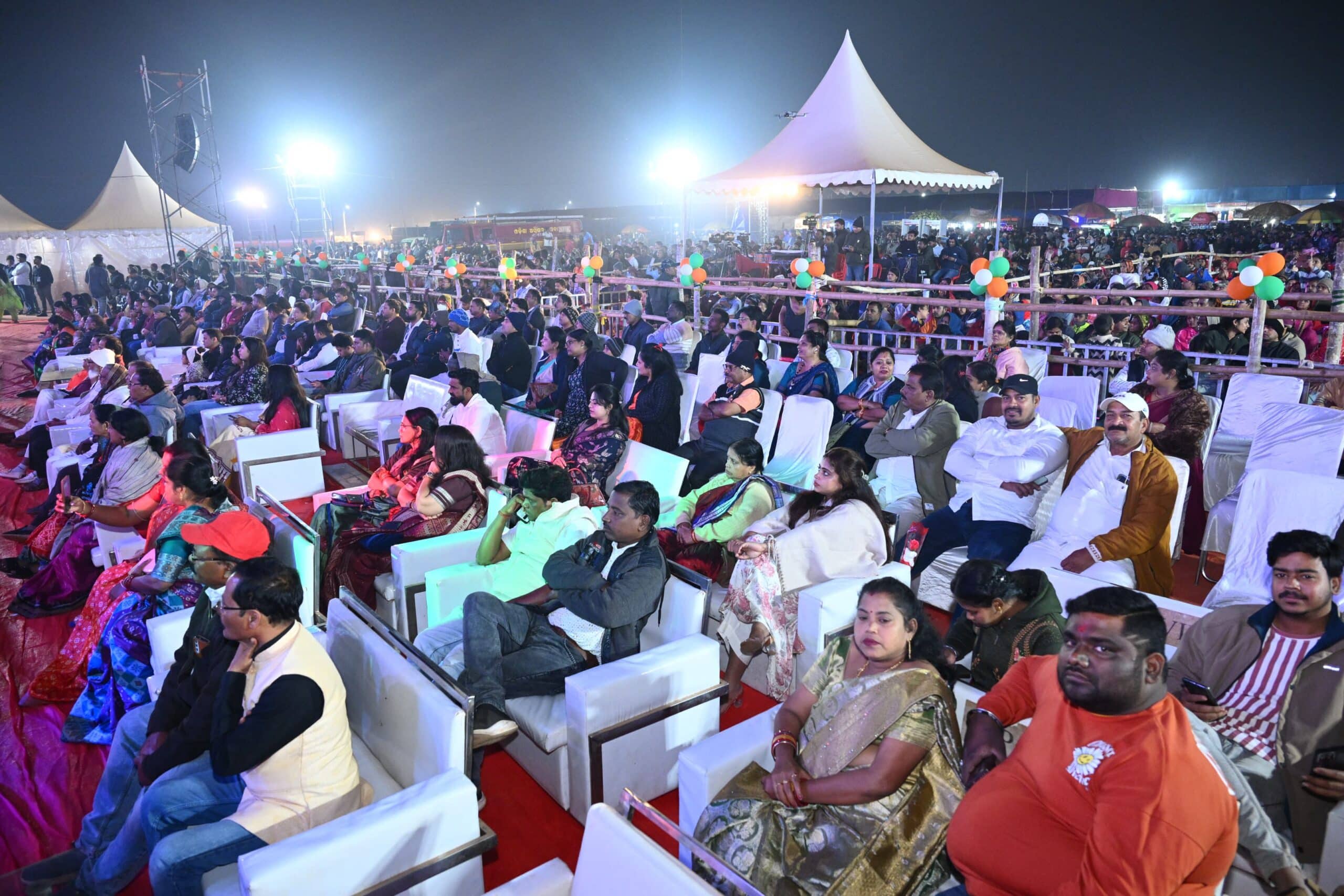

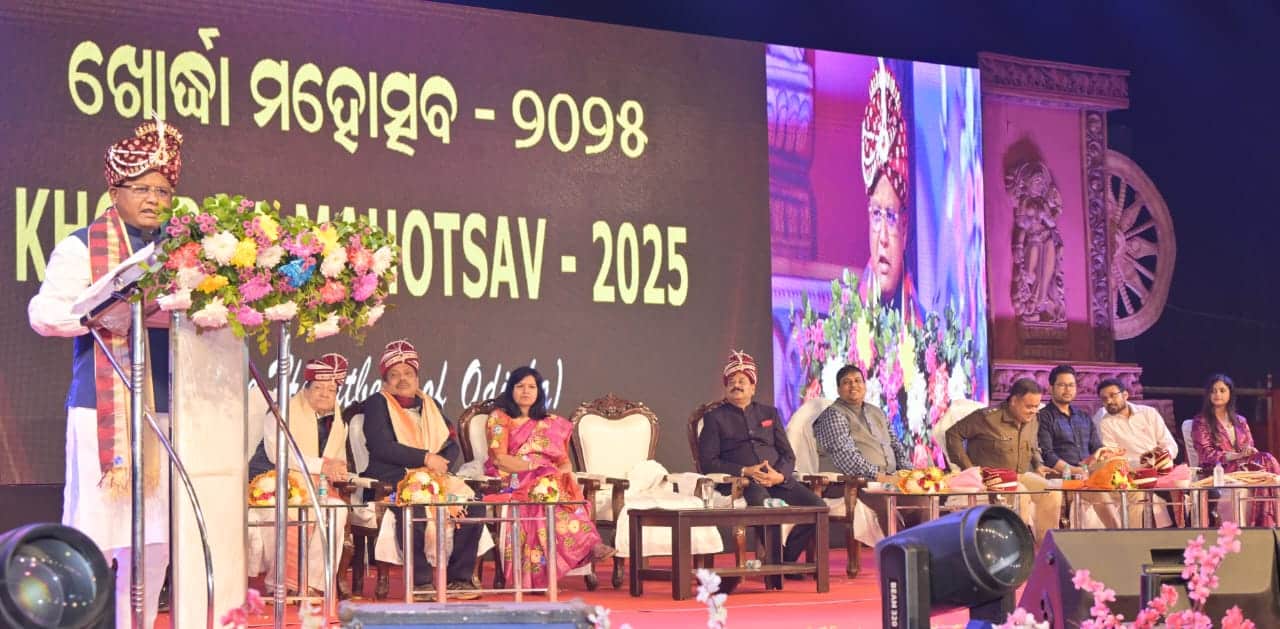
In a transformative shift from celebration to concrete progress, the Khordha Mahotsav 2025 evolved into a grand platform for development on Thursday, as Odisha Chief Minister Mohan Charan Majhi announced investments worth approximately ₹516 crore across 39 key projects for the district.
The event underscored the state government’s commitment to positioning Khordha as the “number one district” in a prosperous Odisha, with a spotlight on empowering local youth in high-tech industries like semiconductor manufacturing.
Majhi laid the foundation stones for 32 projects and inaugurated seven others during the ceremony, focusing on critical sectors such as roads, healthcare, and transportation. “Khordha Mahotsav 2025 is no longer just a festival of colors and festivities; today, it has become a stage for development,” the Chief Minister declared, emphasizing how these initiatives will propel the district’s growth.
Among the highlights, Majhi painted an ambitious picture of Khordha’s future, where the “youth of Paika soil” – a nod to the district’s storied warrior heritage – will pioneer the production of semiconductor chips. These chips, he noted, will power advanced missiles like Agni, Prithvi, and Akash, symbolizing a leap from historical valor to cutting-edge innovation. “In the coming days, semiconductor chips will be crafted in the hands of Khordha’s young generation and used in missiles like Agni, Prithvi, and Akash,” Majhi said.
The Chief Minister’s vision extends to 2036, marking the centenary of Odisha’s formation as a separate province. By then, he pledged, the state will rank among India’s top five developed states. “To realize this dream, our government has been working tirelessly from day one. Every district must prosper for a prosperous Odisha, and developed Khordha will play a pivotal role in building a developed Odisha,” he added.
Honoring Khordha’s Legacy of Courage
Majhi’s address wove in Khordha’s rich history, hailing its soil as the “brave mother’s land” – a symbol of sacrifice, renunciation, and heroism. For centuries, the district served as an administrative hub of Odisha’s governance. He recounted the Paika Rebellion of 1817, led by Bakshi Jagabandhu Vidyadhar Mohapatra, where local Paikas, farmers, merchants, and common folk rose against British tyranny – a precursor to the 1857 Sepoy Mutiny by four decades. Even earlier, in 1804, the Khordha Gada uprising under the young Raja Mukunda Deva and the valiant Rajaguru had shaken colonial rule, leaving the British authorities reeling.
“This soil of sacrifice and valor will now fuel Odisha’s economic ascent,” Majhi affirmed, linking the past to the present.
Infrastructure Push: Ring Road and Economic Corridors
A major focus was on building robust infrastructure to unlock Khordha’s potential. The Chief Minister highlighted the recent central government approval for the 111-km Capital Region Ring Road, stretching from Kakatangia in Cuttack to Rameshwar. “This road will integrate Khordha, Bhubaneswar, and Cuttack into a seamless urban expanse, transforming the region into Odisha’s economic heartbeat,” he explained. The project promises enhanced connectivity, spurring industrial and commercial activities.
Further bolstering this, the state has decided to create the Bhubaneswar-Cuttack-Puri-Paradeep Economic Region, encompassing Khordha, Puri, Cuttack, and Jagatsinghpur districts as “growth hubs.” Majhi also updated on the long-delayed Khordha-Balangir railway line, dormant for 40-50 years at a “tortoise’s pace.” Under the Modi government, it is nearing completion – 301 km already done, with the final 75 km between Dashapall and Purunakot Cuttack underway. “By next year, you may travel straight to Balangir on new trains via this line, which will become the lifeline connecting coastal and western Odisha,” he said.
Broader Industrial Agenda and Job Creation
Majhi reiterated his government’s people-centric approach: “Our government is the people’s government – yours. We respect the sentiments and aspirations of Odisha’s people and are committed to the state’s development.” To attract investments, he has held meetings with industrialists in Delhi, Mumbai, and Hyderabad, inviting them to Odisha.
New policies for industry-friendly infrastructure are in the works, alongside skill development partnerships with countries like Singapore. In April this year, Majhi himself laid foundations for 13 projects worth ₹6,000 crore in Khordha, ensuring 37,000 jobs. Diversification beyond traditional mining and metals is key, he stressed, with thrust on semiconductors, electronics, textiles, chemicals, petrochemicals, fintech, insurance tech, and tourism. “Millions of youth enter the job market annually; we must create new opportunities for them,” Majhi noted.
The event saw the presence of prominent figures, including Bhubaneswar MP Aparajita Sarangi, MLA Prashant Jagdev, former MLA Dileep Harichandan, festival convener Narendra Prusti, District Collector Amrut Ruturaj, CDO Jyoti Shankar Sahoo, and BMC Commissioner Chanchal Rana.
As Odisha accelerates toward its 2036 goal, Khordha’s Mahotsav stands as a testament to blending heritage with hyper-growth, promising a brighter, more empowered future for its people.