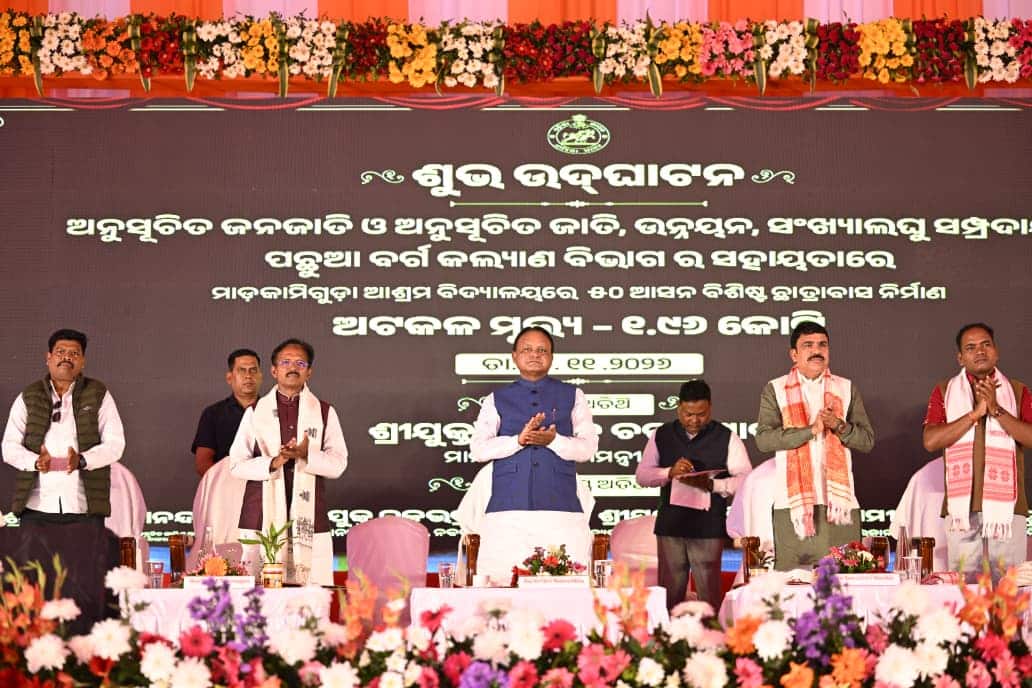
Odisha Chief Minister Mohan Charan Majhi on Sunday joined members of the tribal community in Malkangiri to celebrate Janjatiya Gaurav Divas, marking the 151st birth anniversary of iconic tribal freedom fighter Bhagwan Birsa Munda.
Addressing the gathering, the Chief Minister paid floral tributes to Birsa Munda and recalled his fearless resistance against British rule, exploitation, and social injustice. Majhi reiterated that the welfare, empowerment, and inclusive growth of Odisha’s tribal communities remain at the forefront of his government’s agenda.
In a post on the social media platform X, Majhi reflected on the enduring legacy of the tribal icon, noting that although Birsa Munda attained martyrdom at the young age of 25, his courage and sacrifice continue to inspire generations to stand up for their rights, dignity, and identity.
Highlighting the inseparable bond that tribal communities share with their land, forests, and traditions, the Chief Minister emphasised that their distinct cultural heritage and self-respect form an integral part of Odisha’s social fabric.
During the event, Majhi unveiled two books—‘Samarpan’ and ‘Janjatiya Gaurav’—which chronicle the historical struggles, sacrifices, and achievements of tribal communities. He also inaugurated several completed development projects and laid foundation stones for multiple new initiatives aimed at accelerating infrastructure and socio-economic progress across Malkangiri district.
Drawing inspiration from Prime Minister Narendra Modi’s vision of ‘Sabka Saath, Sabka Vikas’, Majhi stated that the state government is working steadily toward the balanced and holistic development of tribal regions. He spotlighted flagship welfare programmes currently driving this transformation, including:
-
Dharti Aaba Janjatiya Gram Utkarsh Abhiyan for holistic village development.
-
Mukhyamantri Janajati Jeevika Mission 2.0 to boost sustainable tribal livelihoods.
-
Eklavya Model Residential Schools to expand access to quality education.
The Chief Minister also underscored the significance of higher education reservations and targeted measures to safeguard the unique cultural heritage of Particularly Vulnerable Tribal Groups (PVTGs). Concluding his address, Majhi affirmed that empowering tribal citizens through quality education, sustainable livelihoods, and cultural preservation remains a core commitment of his administration.