Women farmers across Odisha’s Rengali command area are moving from the sidelines of rural farming to the centre of water governance, taking active roles in water distribution, canal upkeep and farm-level decision-making.
Under the Japan International Cooperation Agency (JICA)-assisted Rengali Irrigation Project, Phase-II, women are heading Women Interest Groups (WIGs), joining Chak Committees and taking elected seats in Pani Panchayats. Rather than treating irrigation strictly as a technical or male-dominated domain, these platforms are giving women a direct voice in scheduling water delivery, managing canals and resolving local water disputes.
Executed by Odisha’s Department of Water Resources, the project spans a targeted command area of 39,416 hectares across Dhenkanal, Jajpur and Kendujhar districts. In the Bhubhan and Sukinda blocks alone, 118 village-level Women Interest Groups have been established and linked to 45 Pani Panchayats, creating a structured channel for women cultivators to flag delivery bottlenecks and shape local water management.
Hands-On Training in Water and Farming
To back up institutional access with practical know-how, the Water and Land Management Institute (WALMI)—operating under the Department of Water Resources—has teamed up with the project’s Agriculture Project Management Unit (Agri-PMU) to roll out capacity-building programmes focused on participatory irrigation management, better farming techniques and income diversification.
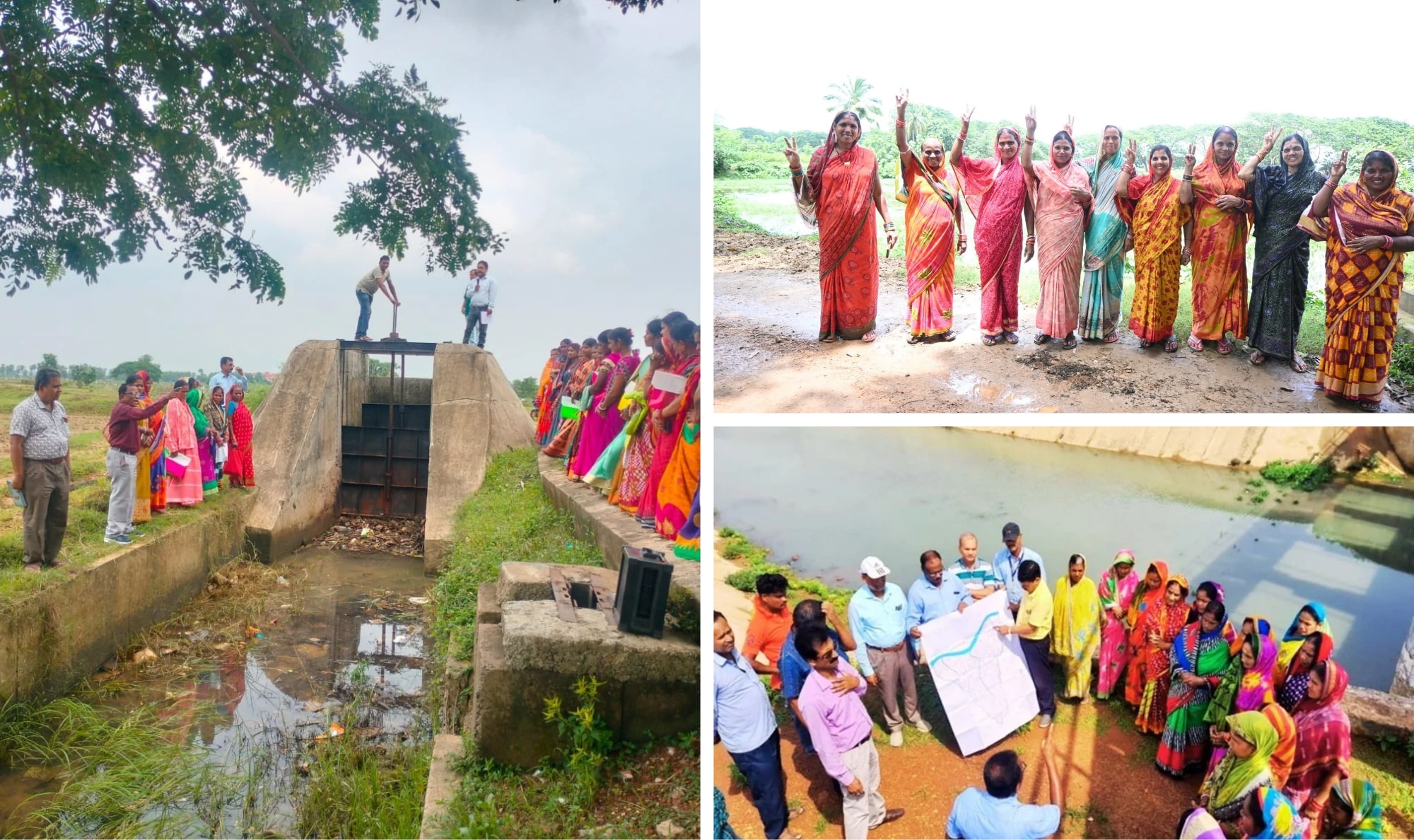
Sessions walk participants through Pani Panchayat responsibilities, canal operation and maintenance, record-keeping, fair water allocation and dispute resolution under the Odisha Pani Panchayat Act, 2002 and Pani Panchayat Rules, 2003. Beyond classroom briefings, participants take part in command area mapping, canal monitoring walks, field demonstrations and exposure visits to spot water-delivery challenges firsthand.
Broader Reach and Crop Diversification
Since 2026, WALMI has held more than 43 training programmes under the initiative, reaching roughly 1,000 women farmers alongside 1,300 other farmers. Technical support is also being extended to newly recruited Assistant Executive Engineers and Junior Engineers.
Alongside water governance, the programme encourages practical shifts in cultivation—including improved paddy methods, seed treatment, organic and climate-resilient practices, paddy straw mushroom growing and crop diversification into pulses, oilseeds and non-paddy crops. Specialists from the Agriculture and Horticulture departments, along with partner institutions, advise farmers on crop choices, government schemes, post-harvest handling and market linkages.
By pairing hands-on training with real seats at the decision-making table, the Rengali initiative is building stronger local water institutions while helping farming households adapt to shifting agricultural demands.