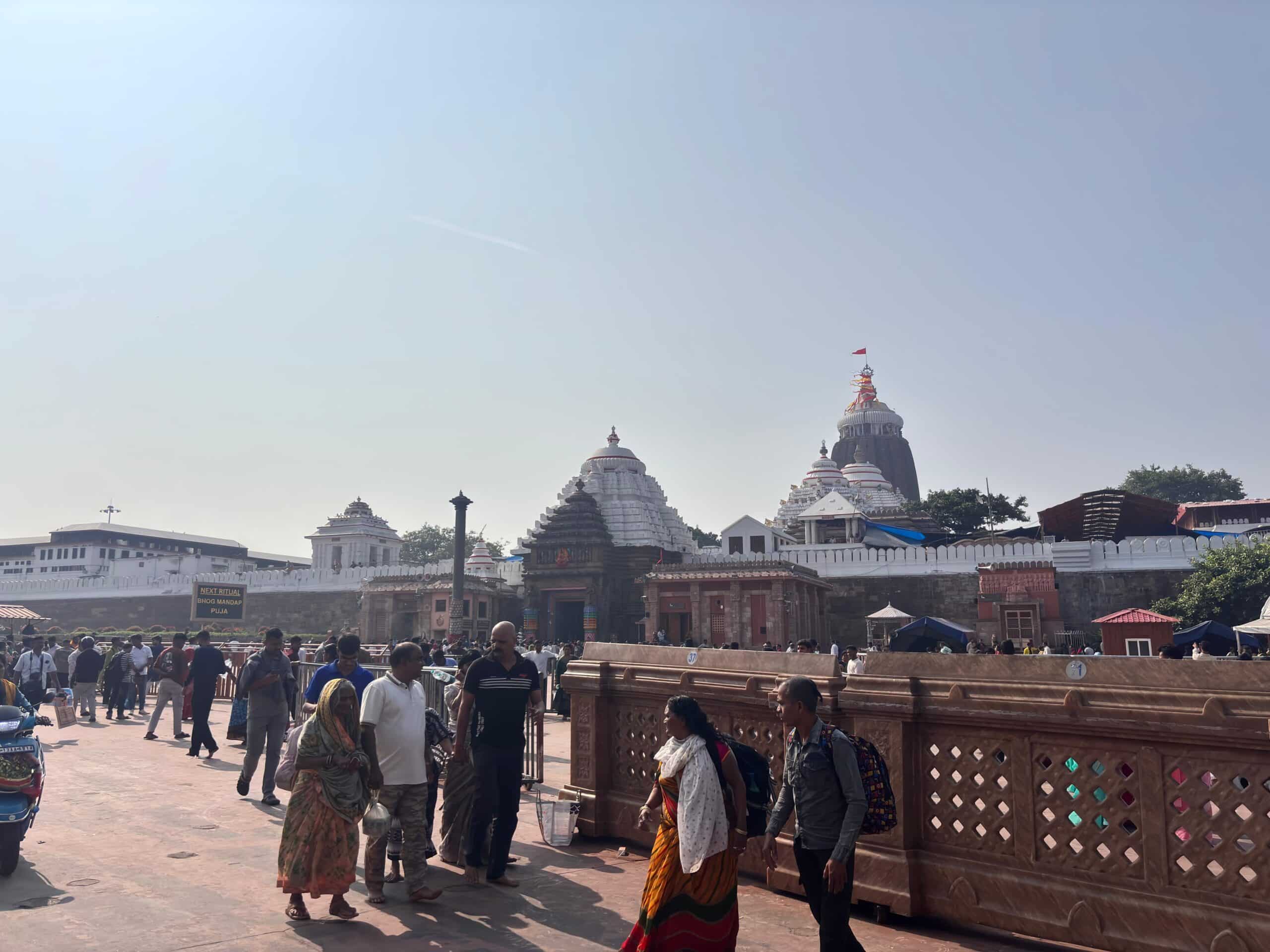
In a landmark ruling aimed at safeguarding sacred temple assets and setting the historical record straight, Member of the Odisha Board of Revenue Satyabrata Sahu has ordered the restoration of over 81 acres of prime land in Puri to Lord Jagannath.
The verdict addresses two revision petitions—SRP Case No. 101/2023 and SRP Case No. 102/2023—filed by the Shree Jagannath Temple Administration over ownership disputes spanning Hal Khata No. 222 and linked khatas in Samangara mouza under Puri Sadar tehsil. Following the order, the Puri Tehsildar was directed to revise the Record of Rights (RoR) in the name of Shree Jagannath Mahaprabhu Bije, Puri, represented through the Shree Jagannath Temple Managing Committee, Puri, and swiftly moved to initiate administrative steps to protect the parcels.
High-Value Land Near Marine Drive and Medical College
Situated within the Puri Municipal Corporation limits near Shree Jagannath Medical College and Hospital and close to the Puri-Konark Marine Drive, the land sits in a corridor of rapidly growing tourism, connectivity, and urban value. At an estimated market rate of ₹3,000 per square foot, the 81-plus acres carry an approximate valuation of ₹1,060 crore.
Service Ties vs. Transferable Ownership
At the heart of the dispute lay historical land from the deity’s Satayasihajari Mahal and its link to the traditional Kala Bethia Seva performed during the Ratha Yatra. According to the temple administration, servitors held enjoyment and occupation rights tied directly to rendering this service—not absolute, transferable ownership.
That historical link was backed by the temple’s Record of Rights (Sabik RoR), which recorded the service obligation. However, during the 1927 Sabik settlement, the plots were entered under Sthitiban status. Later claimants pointed to a 1939 auction sale and an unregistered 1942 lease deed to assert ownership, securing entries in subsequent Hal settlement records.
The Board of Revenue examined the legal question through the lens of the Shree Jagannath Temple Act, 1955, noting that Section 5 vests temple management and administration in the Managing Committee and that special statutory protections cannot be bypassed through ordinary revenue proceedings. The ruling also drew on judicial precedent, including the Supreme Court’s judgment in Committee of Management of Sri Jagannath Temple v. Siddha Math & Others ((2015) 16 SCC 542) and the Orissa High Court’s decision in Mohanlal Panch & Another v. Shree Jagannath Mahaprabhu Bije, Puri (W.P.(C) No. 16574/2011), which underscored protection against unauthorized alienation of deity property.
Encroachments Do Not Create Title
A field inquiry report submitted by the Puri Tehsildar covering 48 plots revealed unauthorized occupation and construction by various individuals across portions of the land. The Board made a clear distinction between physical possession and lawful title: neither long-standing encroachment nor permanent structures—nor prolonged entries in revenue records—can confer valid ownership where the original servitor lacked absolute alienable title.
Directing the Puri Tehsildar to verify Sabik-Hal plot links and complete the record correction after reviewing the evidence, the Board affirmed that later deeds and revenue entries cannot override the deity’s foundational rights.
Warm Reception in Puri
Beyond its commercial value along a fast-developing stretch of Puri, the land holds deep cultural and historical weight for Odisha. Across Puri, residents, devotees, and intellectuals welcomed the ruling and the Tehsildar’s prompt follow-up as a decisive step toward protecting heritage property from unauthorised occupation.