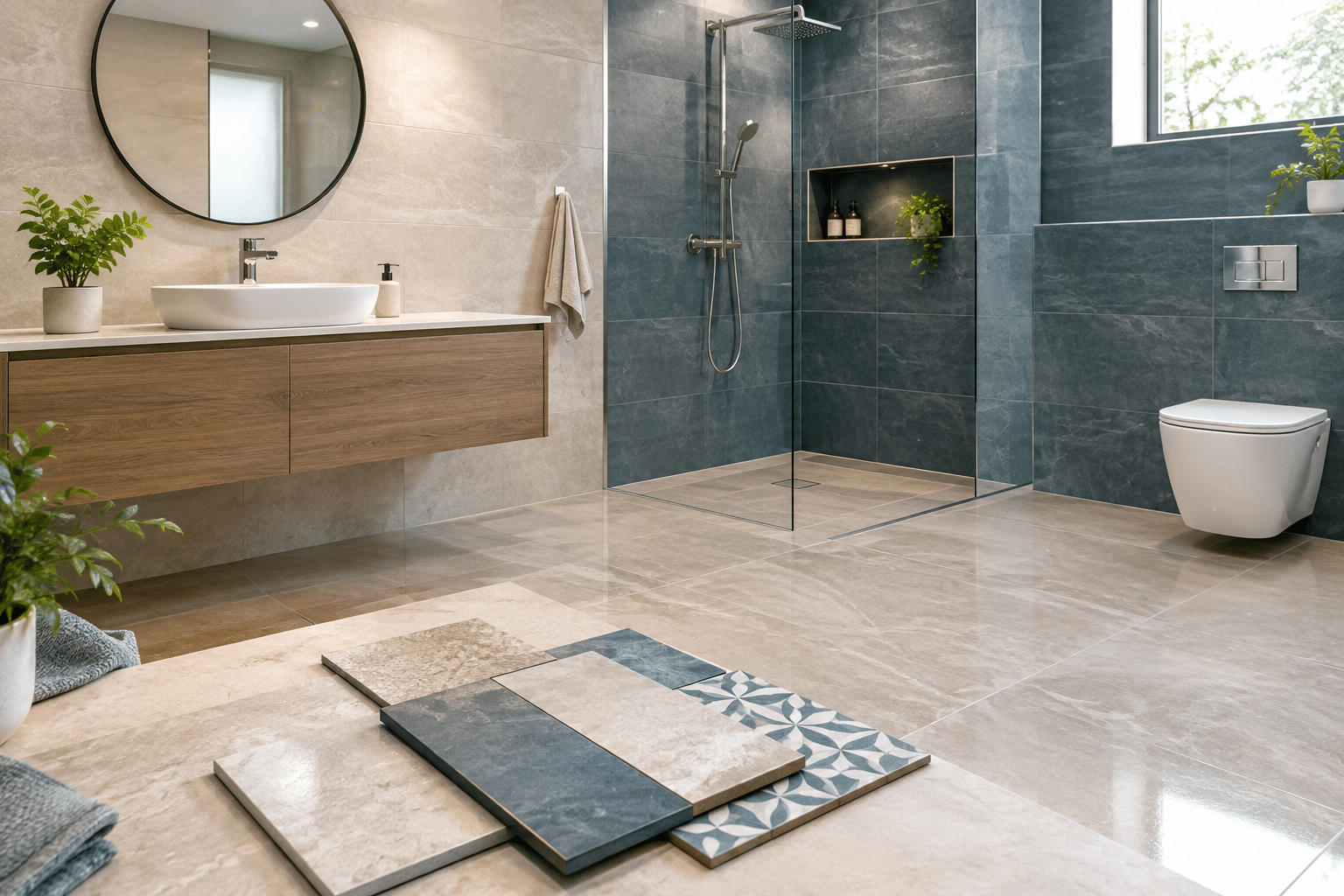
Every bathroom renovation begins with a simple question: which tiles should you use? Once you start looking, the choices can feel overwhelming. There are many colours, textures, sizes, and finishes to consider. The real challenge is not just picking individual tiles you like. It is making the floor and walls work together so the bathroom feels complete, not cobbled together.
Meera, a young architect in Pune renovating her compact 2BHK flat, ran into this exact problem. She had picked a gorgeous dark grey bathroom floor tile, only to realise the beige wall tiles she loved made the room feel disjointed. Starting over was frustrating, but it taught her something useful.
Why Matching Bathroom Wall And Floor Tiles is Harder Than It Looks
Many people choose bathroom floor tiles first because they feel more important. Floors need to withstand wear, provide grip, and define the bathroom’s look. Problems can arise when wall tiles are picked separately, weeks later, without checking the floor tiles again.
Colour photos on screens can be misleading. A warm grey on your phone may look like a cool grey in the store. A creamy white wall tile can clash with a bright white floor. To avoid issues, hold samples of both tiles together in your bathroom’s actual lighting, as different lights can change how colours appear.
How To Coordinate Colours Without Matching Exactly
A common misconception is that bathroom wall tiles and bathroom floor tiles should be identical. Exact matching can actually flatten the room and make it look monotonous, especially in smaller bathrooms.
A better approach is tonal coordination. Pick tiles that sit within the same colour family but differ in shade or texture. For example:
Meera eventually went with light cement-grey walls and a darker charcoal floor. The two shades connected visually without competing, and the contrast gave her small bathroom a sense of depth it did not have before.
Size And Proportion: What Works Where
Tile size affects how large or small a bathroom feels. Large-format bathroom floor tiles, say 600x600mm or bigger, reduce the number of grout lines and make a floor look more continuous. In a tight bathroom, fewer grout lines help the space feel wider.
For walls, the rules change. A mix of sizes can add visual interest. A large-format tile on the main wall, paired with a smaller accent strip or a mosaic border above the vanity, breaks the monotony without creating clutter.
A Practical Sizing Guide
Finish Combinations That Actually Work
The finish of a tile affects how it looks and feels. Glossy wall tiles reflect light and make small bathrooms feel brighter. Matt floor tiles offer better grip and hide water spots. Combining the two is one of the most practical and visually effective strategies.
Avoid glossy floor tiles. They look elegant in dry areas but become slippery when wet. For bathroom floor tiles, a matt or textured finish is always the safer choice.
Leading manufacturers now offer coordinated collections where floor and wall tiles are designed as a set. For instance, brands like Simpolo Tiles & Bathware offer the Spectra collection with matching floor and wall options in consistent tones, which takes the guesswork out of pairing.
Common Mistakes To Avoid
A few simple mistakes can affect the overall look of your bathroom. Keep these points in mind before finalising your tile selection.
Avoiding these mistakes will help you achieve a balanced, cohesive, and timeless bathroom design.
Lighting Changes Everything
The same tile combination looks different under warm versus cool lighting. Before finalising, test your tile samples in the actual bathroom space at different times of day. Meera made this a rule after her initial misstep, and it saved her from a second costly mistake with overly yellow wall tiles that looked beige in the showroom.
Conclusion
Coordinating bathroom wall and floor tiles is less about finding a perfect match and more about building a visual rhythm. Pick a colour family, vary the shades, mix your finishes thoughtfully, and test everything under real light. A cohesive bathroom does not need expensive materials. It needs tiles that talk to each other, and that starts with seeing them together before they go on the wall.