Odisha Chief Secretary Anu Garg on Wednesday inspected the Deras Seafood Park and told officials and exporters that the cluster must move from partial occupancy to a fully operational marine food processing and value-addition hub.
Investment, production and exports, she said, have to be tightened together if the park is to serve the State’s Blue Economy ambitions under *Bikasita Odisha 2036* and *Viksit Bharat 2047*.
At Deras, near Bhubaneswar in Khordha district, Garg sat with leading seafood exporters and heard them out on processing bottlenecks, common infrastructure, working capital and export logistics. The meeting was not a ceremonial walkthrough. She asked for a clear picture of allotted plots, units already running, plants still under construction and projects stuck at the planning stage — then issued directions to get idle facilities working again.
Officials present included Principal Secretary, Water Resources, Shubha Sarma; OPTCL Managing Director Bhaskar Jyoti Sharma; Commissioner-cum-Secretary, Fisheries and Animal Resources, Prem Chandra Choudhary; IDCO Managing Director D. Prashant Kumar Reddy; and other stakeholders linked to the park.
Deras Seafood Park is among Odisha’s flagship food-processing clusters, developed by IDCO as a specialised marine products park on the east coast. Garg’s message was blunt: common facilities that are not functioning must be revived, basic services must be strengthened, and allotted industrial units should start operations without delay. Only then, she said, can Deras become an integrated, export-oriented centre rather than a partially used industrial estate.
She also asked departments to lock in 100 per cent utilisation of the park. In her framing, unused plots and inactive common infrastructure are not just administrative loose ends; they are lost export value and lost jobs in a sector the State now treats as a pillar of the Blue Economy.
From processing sheds to high-tech farms
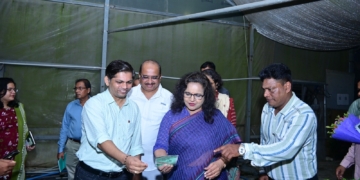
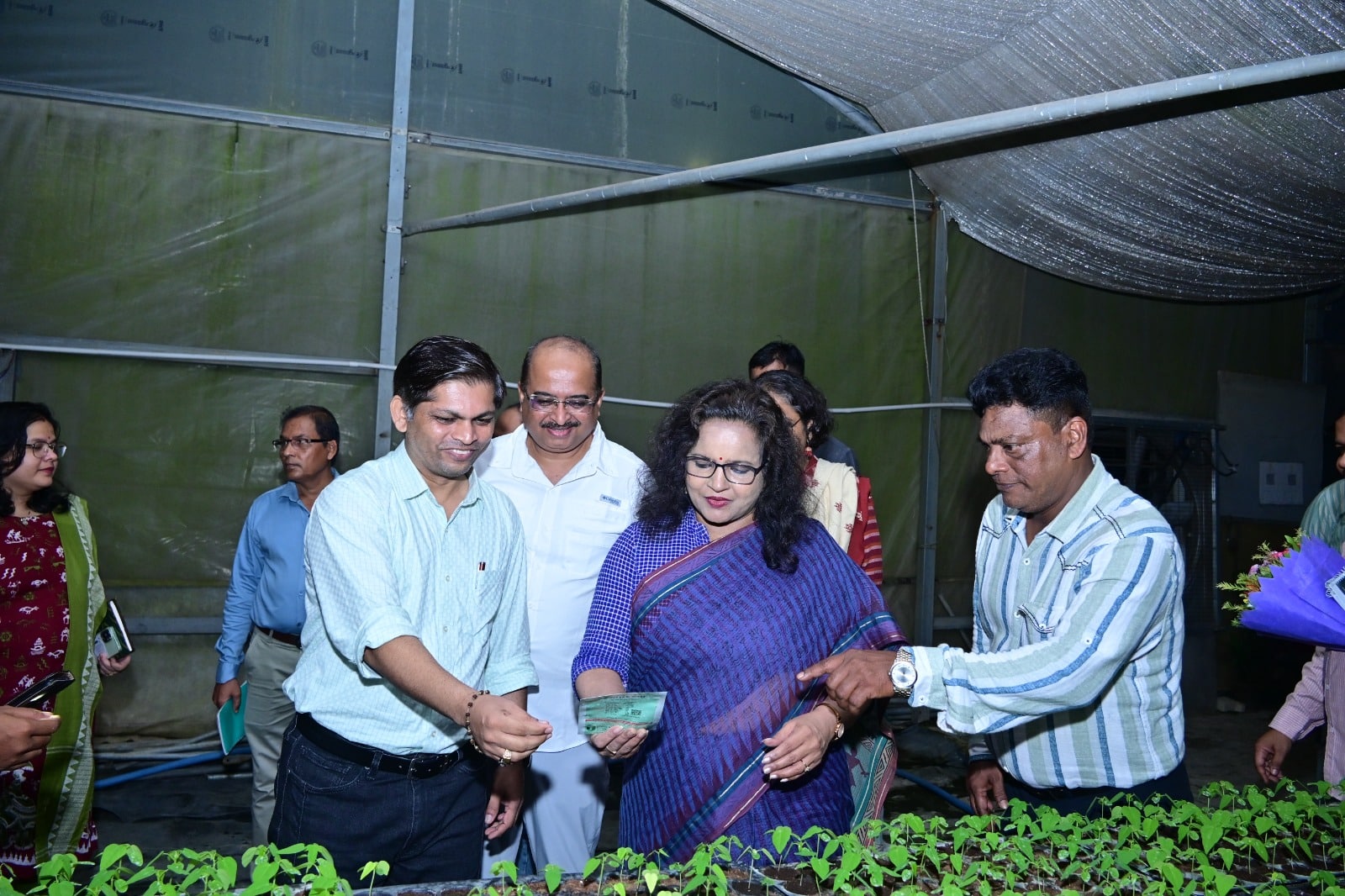
After the seafood park review, the Chief Secretary visited the Centre of Excellence on Horticulture at Deras — locally described as the Udyan Krishi Utkarsh Kendra. There she saw protected cultivation under shade nets, a papaya nursery, nearly seedless VNR Bihi papaya, dragon fruit and red banana plots, and a 10-metric-tonne solar-powered cold store.
The visit was meant to show how modern horticulture can sit beside industrial processing in the same landscape. Garg was briefed on technology-led, diversified and more sustainable farm systems, and on farmer-capacity programmes already running from the farm. Commissioner-cum-Secretary, Agriculture and Farmers’ Empowerment, Shri Sachin Ramchandra Jadhav, and Director of Horticulture Shri Kalunge Gorakh Waman were among the senior officers present.
She advised the department not to treat the Centre of Excellence as a closed demonstration and training campus. Its reach, she said, should widen. Field visits, hands-on exposure to modern horticulture and a structured agro-tourism circuit could bring students, farmers, entrepreneurs and visitors onto the same site. That, in her view, would turn Deras into a living classroom for contemporary farming rather than a facility seen only by officials and trainees.
Tourism next door
The day ended with inspections of Deras Eco Park and the Jhumuka Irrigation Dak Bungalow. Garg studied both sites for tourism potential, with Director of Tourism Deepankar Mahapatra and officers from concerned departments in attendance. The pairing was deliberate: seafood processing, horticulture and leisure tourism sit within a short radius, and the administration is now looking at Deras as a mixed-use development belt rather than a single-purpose industrial pocket.
The political and administrative backdrop is larger than one afternoon’s tour. Odisha has been pitching marine production, shrimp farming, deep-sea fishing and seafood parks as part of a long-term export push. Garg’s Deras visit puts an operational stamp on that agenda: fill the park, restart idle common facilities, listen to exporters, and fold horticulture and tourism into the same growth map.
If the directions given on Wednesday are followed through, Deras will be judged less by the number of plots allotted and more by how much seafood actually leaves the park, how many units stay in production, and how far the adjoining horticulture campus travels beyond demonstration beds.