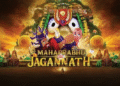

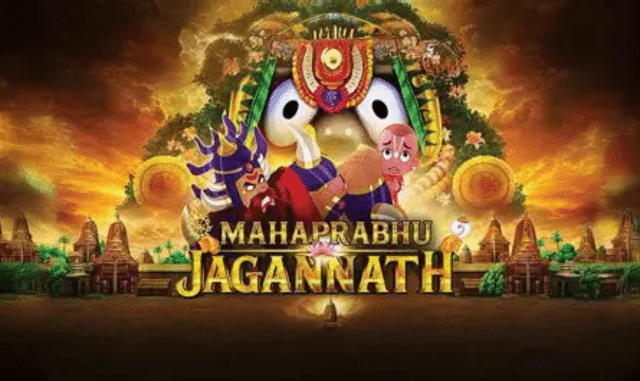
In the sacred land of Puri, where the chariot of Lord Jagannath rolls every year carrying the faith of millions, a new form of storytelling is about to unfold — an animated feature film titled *Mahaprabhu Jagannath*. Scheduled for national and international release, the movie aims to introduce children across the world to the timeless story of the Lord of the Universe.
Yet a gentle but firm voice from Odisha has risen to ask a simple question: Will the film carry the living truth of Mahaprabhu, or will it reshape sacred tradition for cinematic thrill?
Mrinalini Padhi, a respected lawyer, former member of the Odisha State Consumer Disputes Redressal Commission, and long-time advocate for cultural heritage, has issued a moving appeal. “Jagannath is not merely the presiding deity of the Srimandir,” she writes. “He is the soul of Odia identity, the symbol of India’s cultural synthesis, and the unwavering centre of devotion for crores of devotees. His story is not just a plot for a film — it is the story of a civilisation.”
Padhi acknowledges the power of animation. In an age when children’s first classroom is often a screen, a high-quality animated film rooted in scripture, Madala Panji, temple niti and unbroken tradition could become a beautiful bridge between young minds and Mahaprabhu. But if imagination overwrites authenticity, she warns, education risks turning into confusion.
The concern is not abstract. On 6 July 2026, the film’s producer, Durga Prasad Dalai, and his creative team sat with representatives of the Shree Jagannath Temple Administration (SJTA). In the presence of Gajapati Maharaja Dibyasingha Deb, Chairman of the temple managing committee, several sequences and narrative elements were flagged for not aligning with shastra, temple tradition and established niti.
The minutes of that meeting record a clear assurance: the producer expressed readiness to implement the necessary modifications under the guidance of scholars nominated by SJTA before releasing the film.
Padhi emphasises that this is not a battle between art and faith. Artistic freedom is a proud pillar of democracy, yet when the subject is a living religious tradition cherished for centuries, creativity carries responsibility. “Children believe what they see,” she notes. “A child who has never visited Puri, never read the Madala Panji, may accept the film’s version as the true history of Mahaprabhu. Who then bears the moral burden of that error?”
She reminds us that India’s Constitution protects both the freedom to create and the freedom to practise and preserve religion. The Supreme Court has repeatedly held that liberty and responsibility walk together. The SJTA, established by law to safeguard the temple’s rituals and heritage, is not a bureaucratic formality — it is the institutional guardian of a tradition older than many nations.
With the film now cleared by the Supreme Court for release on or after 28 July 2026, Padhi’s message is timely and constructive: if the promised revisions are not yet complete, the producer has a rare opportunity. A short voluntary delay would not be defeat. It would be an act of reverence — for culture, for public faith, and for the film’s own lasting legacy.
A work that stays faithful to scripture, Madala Panji, living tradition and careful research can rise far beyond commercial success. It can become a trusted companion for future generations, a living messenger of India’s spiritual heritage.
“Great art does not become immortal only by winning awards,” Padhi concludes. “It becomes immortal by winning the trust of the people. Let the curtain rise — but only after truth has triumphed. For the story of Mahaprabhu is not fiction. It is the memory of a people, the consciousness of a civilisation, and the unshakeable faith of countless devotees.” Jai Jagannath.