

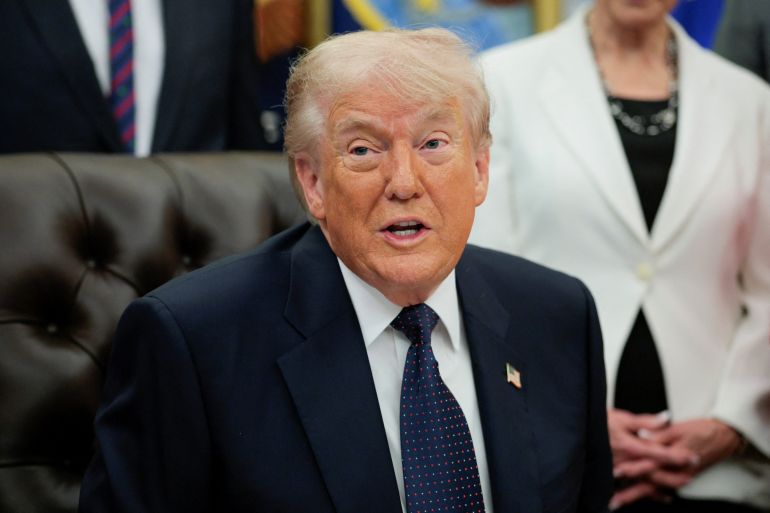
US President Donald Trump has sharply criticised the US Senate after lawmakers approved a war powers resolution aimed at limiting military action against Iran, arguing that the move could undermine ongoing diplomatic efforts.
Calling the vote “poorly timed” and “meaningless,” Trump said the resolution risks weakening the United States’ position as negotiations continue with Iran over a broader agreement to end tensions in West Asia.
Trump Says Senate Vote Sends Wrong Signal
In a statement posted on social media, Trump expressed frustration with the Senate’s decision, claiming it complicated discussions with Tehran at a crucial stage.
According to Trump, Iranian officials questioned the significance of the Senate vote during ongoing talks, prompting concerns that the resolution could be interpreted as a sign of division within the United States.
He argued that lawmakers had made his administration’s negotiating efforts more challenging, despite what he described as progress in discussions with Iran.
What Is the War Powers Resolution?
The Senate approved the measure by a narrow 50-48 vote. The resolution seeks to restrict military engagement with Iran without congressional approval.
Although the resolution carries symbolic and political significance, it does not automatically change US policy or legally halt military operations.
The vote nevertheless highlights growing debate within Washington over America’s approach toward Iran and broader Middle East policy.
Republicans Break Ranks
The resolution gained support from several Republican senators who voted alongside Democrats.
The Republican lawmakers who backed the measure were:
- Susan Collins
- Lisa Murkowski
- Bill Cassidy
- Rand Paul
Trump criticised the lawmakers, accusing them of undermining his administration’s strategy toward Iran.
US-Iran Talks Continue
The criticism comes as Washington and Tehran continue discussions on the technical details of a broader agreement aimed at reducing tensions and preventing further conflict in the region.
While both sides have reportedly made progress, significant issues remain unresolved.
Analysts say the Senate vote reflects concerns among lawmakers about executive authority in military decisions and the long-term direction of US-Iran relations.
Growing Debate Within Republican Party
The issue has also exposed differing views within the Republican Party.
Some conservatives have supported a tougher approach toward Iran, while others have argued for greater congressional oversight of military actions.
Earlier, Senator Ted Cruz described military pressure on Iran as one of the most significant policy decisions of Trump’s second term but warned against any agreement that could strengthen Tehran’s position.
What Happens Next?
Despite the Senate vote, ongoing negotiations between the United States and Iran are expected to continue.
The resolution is unlikely to have an immediate impact on policy, but it underscores the political challenges facing the administration as it seeks to balance diplomacy, security concerns and domestic political pressures.
With negotiations entering a critical phase, both Washington and Tehran will be closely watching developments in the coming weeks.