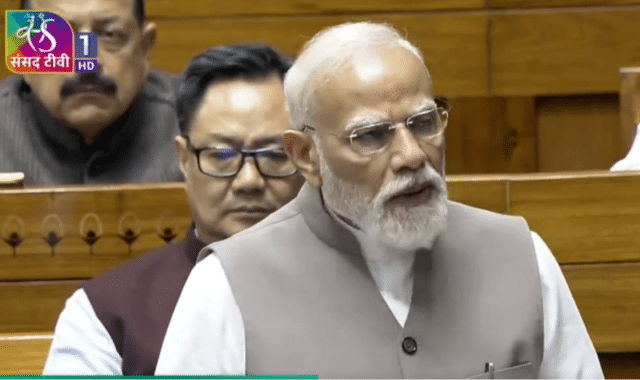
Prime Minister Narendra Modi addressed the Lok Sabha today on the escalating conflict in West Asia, now in its fourth week following U.S. and Israeli military strikes on Iran that began on February 28, 2026.
The war has severely disrupted global energy supplies, with Iran effectively restricting transit through the Strait of Hormuz—a critical chokepoint for approximately 20-30% of the world’s oil and gas—leading to sharp declines in tanker traffic, soaring prices, and widespread economic concerns.
In his speech, PM Modi described the situation as “concerning” and noted its adverse impact on the global economy and human lives, with the entire world calling for an early resolution. He emphasised India’s heightened stakes, including nearly one crore Indians living and working in Gulf countries and a large number of Indian crew members on commercial vessels in the region.
Key Highlights from PM’s Address:
- Over 3,75,000 Indians have been safely evacuated since the conflict began, including around 1,000 from Iran (over 700 of whom are medical students).
- The government has activated extensive consular support, 24/7 helplines, regular advisories, and direct assurances from West Asian leaders on the safety of Indians, with medical care provided to the injured and assistance to bereaved families.
- Energy security measures include diversified imports (expanded from 27 to 41 countries over the past decade), a Strategic Petroleum Reserve exceeding 53 lakh metric tonnes (with expansions underway), increased domestic refining capacity, and progress in alternatives like ethanol blending (now ~20%), railway electrification, metro expansion, and renewables (half of installed capacity, with solar surging to 140 GW).
- Supplies of petrol, diesel, LPG, and fertilizers are being prioritized to minimize inconvenience to ordinary families, despite challenges in the Strait of Hormuz.
- Agricultural safeguards include new urea plants, diversified fertilizer imports, Nano Urea promotion, natural farming, and solar pumps under PM-KUSUM.
- Power sector preparedness features record coal production, adequate stocks, and renewable energy milestones (total capacity over 250 GW).
- Diplomatically, India advocates de-escalation, dialogue, and peace, opposes attacks on civilians and infrastructure, and deems obstructions in international waterways unacceptable. PM Modi has personally engaged with regional leaders to urge reduced tensions and safe passage for ships.
- Internally, security agencies are on high alert across coastal, border, cyber, and strategic domains to counter any exploitation of the crisis.
The Prime Minister stressed that India’s energy diversification and domestic production strategies over the past decade have proven vital in mitigating the crisis. He expressed confidence in India’s economic fundamentals and a multi-pronged strategy (short-, medium-, and long-term) involving inter-ministerial coordination to address import-export challenges. He called for national unity, vigilance against misinformation, hoarding, or black-marketing, and cooperation from states to ensure stability amid prolonged global difficulties.
PM Modi concluded by reaffirming India’s commitment to humanity, peace through diplomacy, and collective resilience, urging the nation to stand united as it did during the COVID-19 pandemic.