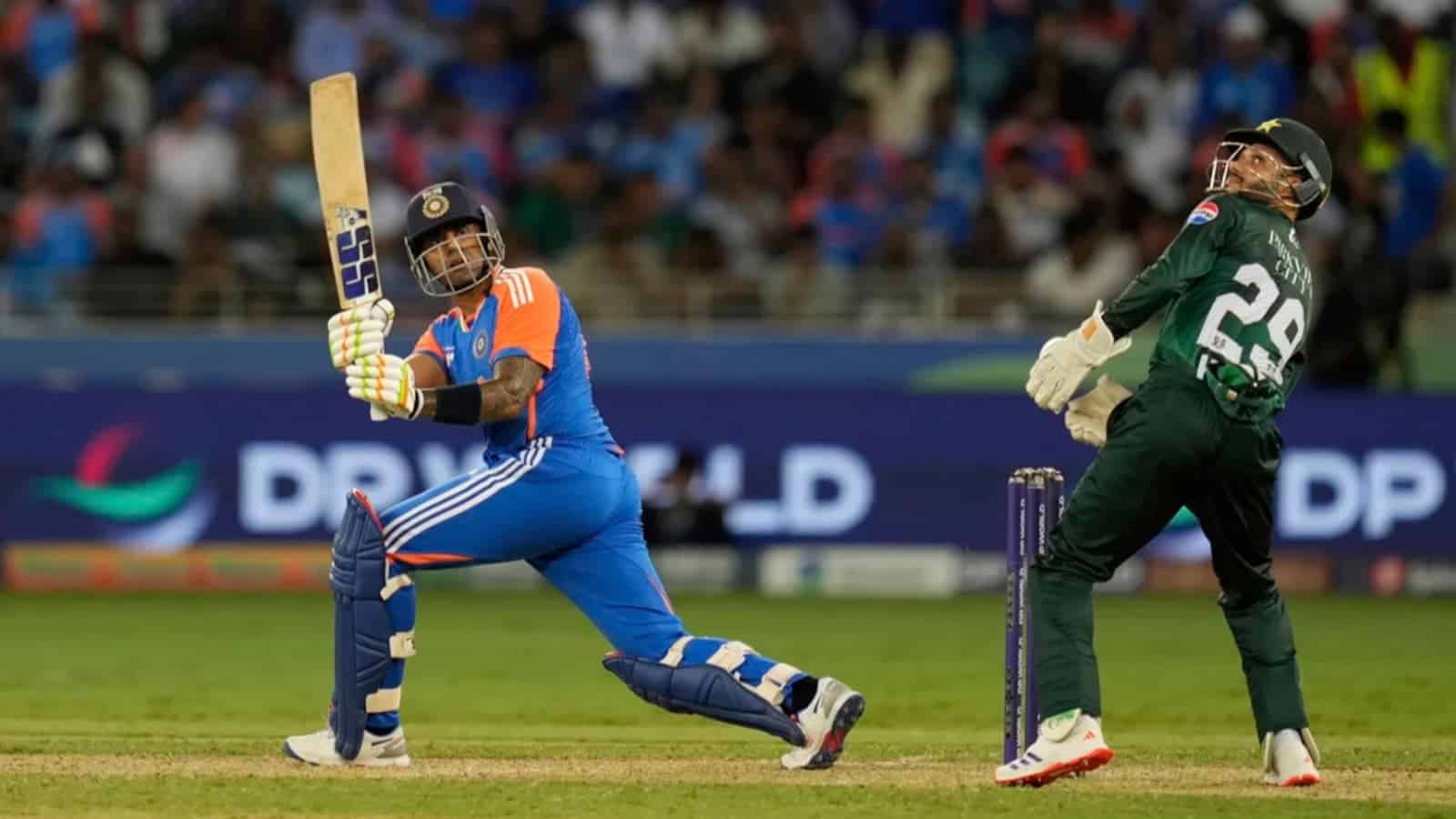
Despite securing two convincing victories, India enter their high-profile T20 World Cup 2026 clash against Pakistan with areas of concern — particularly against spin bowling.
Wins over the United States and Namibia in Mumbai and Delhi have ensured momentum, but India’s batting unit has not appeared as dominant as it did in recent bilateral series against South Africa and New Zealand. While half-centuries from Suryakumar Yadav, Ishan Kishan and Hardik Pandya provided stability, periodic collapses have exposed vulnerabilities that stronger opponents could exploit.
Batting Concerns Surface Despite Wins
At the Wankhede Stadium in Mumbai, India were pushed to 77 for six against the United States before Suryakumar’s rescue effort turned the tide. The pitch offered lateral movement and turn, testing stroke play. In Delhi, a tacky surface at Arun Jaitley Stadium contributed to two mini-collapses against Namibia, even though India ultimately posted a commanding total.
Namibia captain Gerhard Erasmus and left-arm spinner Bernard Scholtz triggered the first slowdown, combining discipline with variation rather than dramatic turn. Their success highlighted an emerging theme — India’s difficulty in handling intelligent spin on surfaces offering grip.
The late five-wicket collapse against Namibia, including two run-outs, did not change the result but underscored lapses in concentration at critical moments.
Pakistan’s Spin Depth Presents Greater Challenge
The real examination now awaits at R. Premadasa Stadium, where India face Pakistan on Sunday. The Colombo surface traditionally aids spin, and Pakistan’s attack appears tailor-made for such conditions.
Pakistan fielded five spinners in their previous match at the venue — an approach that yielded immediate success. Their spin arsenal includes:
-
Shadab Khan (leg-spin)
-
Abrar Ahmed (leg-spin)
-
Saim Ayub (off-spin option)
-
Mohammad Nawaz (left-arm orthodox)
-
Usman Tariq (slinging off-breaks)
Usman Tariq, relatively new to international cricket, has impressed with control and variation, maintaining a tight economy rate while collecting wickets. His unconventional release and measured approach mirror the type of bowlers who have unsettled India earlier in the tournament.
Tactical Focus Ahead of India vs Pakistan
India’s think tank will likely address three critical areas before the Pakistan encounter:
-
Rotating strike consistently against spin
-
Avoiding clusters of wickets in middle overs
-
Improving communication to prevent run-out pressure
While neither USA nor Namibia possessed the depth to capitalize fully on India’s batting lapses, Pakistan’s balanced attack and experience make them a far sterner opponent.
High-Stakes Clash in Colombo
An India vs Pakistan contest at the T20 World Cup always carries emotional intensity and tactical intrigue. This time, the battle may hinge on how effectively India counter Pakistan’s multi-dimensional spin unit on a surface expected to assist turn.
If India’s batters adapt quickly and apply collective composure, they can neutralize the threat. However, any repeat of the earlier collapses could shift momentum dramatically in Pakistan’s favor.